
Coastal women in Bangladesh lead seed preservation movement to boost local food security
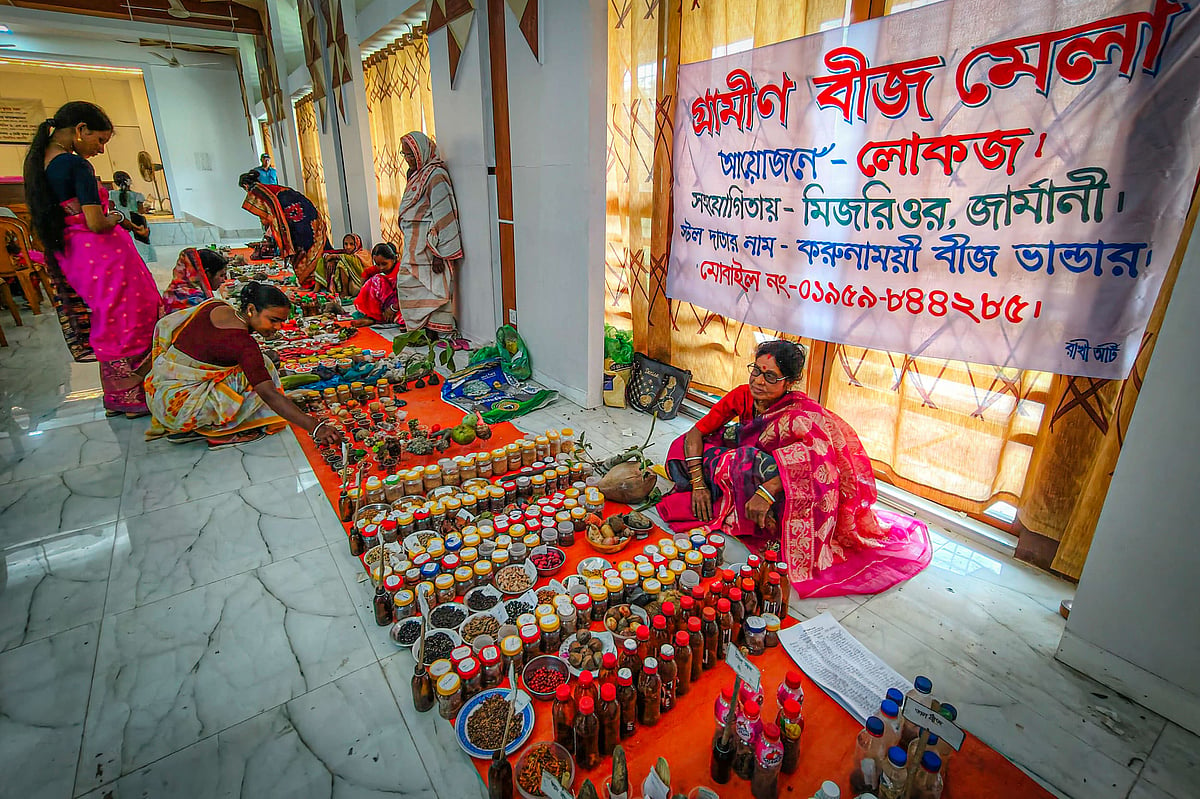
Photo Collected
In the remote village of Shukdara, Karuna Mondal guards a collection more precious to her than currency: 316 varieties of native seeds. Housed in glass bottles and plastic containers, these seeds represent a growing grassroots movement across Bangladesh’s Khulna region, where women are reclaiming agricultural sovereignty by preserving indigenous crops that were once on the verge of disappearing.
For generations, rural women practiced seed saving as an isolated necessity. Over time, however, these traditional habits eroded as farmers became increasingly reliant on expensive, commercial hybrid seeds. Recognizing this trend, the local development organization “Lokoj” began mobilizing women in the Batiaghata sub-district in 2010. By introducing structured training, seed-sharing networks, and annual seed fairs, the initiative has successfully spread across 17 villages in Batiaghata and parts of Dacope, fostering a culture of mutual reliance.
বিজ্ঞাপন
The impact of this shift is visible in the resilience of local farmers. Karuna Mondal notes that she no longer depends on the marketplace for her seasonal plantings. Instead, she exchanges surplus seeds with neighbors, effectively reducing production costs and eliminating the need for heavy chemical fertilizers. Lakshmi Rani Mondal, who maintains a private seed bank of roughly 470 varieties, echoes this sentiment, observing that the revival of native crops has significantly reduced disease outbreaks in the fields.
Beyond agriculture, non-governmental organizations are providing a vital lifeline for Khulna’s coastal population, particularly in the face of acute water scarcity and climate change. In the Dacope sub-district, high salinity levels—exacerbated by catastrophic cyclones like Aila in 2009—have rendered groundwater sources unusable and deep-tube wells ineffective. Consequently, rainwater harvesting has become a primary survival strategy.
বিজ্ঞাপন
Government data from the Department of Public Health Engineering (DPHE) indicates that over 5,800 rainwater harvesting systems have been installed in Dacope alone over the past five years. Supplemented by an additional 10,000 systems distributed by various development partners, these tanks are transforming the lives of residents like Selina Begum and Anija Begum, who previously walked kilometers daily to fetch drinkable water.
The scope of development support in Khulna extends deep into the health sector. The Reverend Abdul Wadud Memorial Hospital in Rupsha, operated by the Christian Service Society (CSS), provides critical medical services to a region where healthcare access is often limited. Established in the aftermath of the nation’s independence, the organization has evolved into a comprehensive provider, offering everything from specialized surgeries for cleft patients to eye care and leprosy rehabilitation.
Currently, approximately 70 local, national, and international organizations operate within the Khulna district, focusing on disaster management, climate adaptation, and socioeconomic empowerment. Experts, including Professor Anwarul Qadir of the Sundarban Academy, highlight the vital role these organizations play in filling the gaps left by traditional infrastructure. While concerns regarding the coordination of these myriad efforts occasionally arise, local authorities acknowledge that these agencies remain indispensable partners in helping vulnerable communities navigate the escalating challenges of climate change and environmental degradation.
0%
0%
0%
0%