Marginalized Gorait ethnic community in Bangladesh struggles with landlessness and poverty
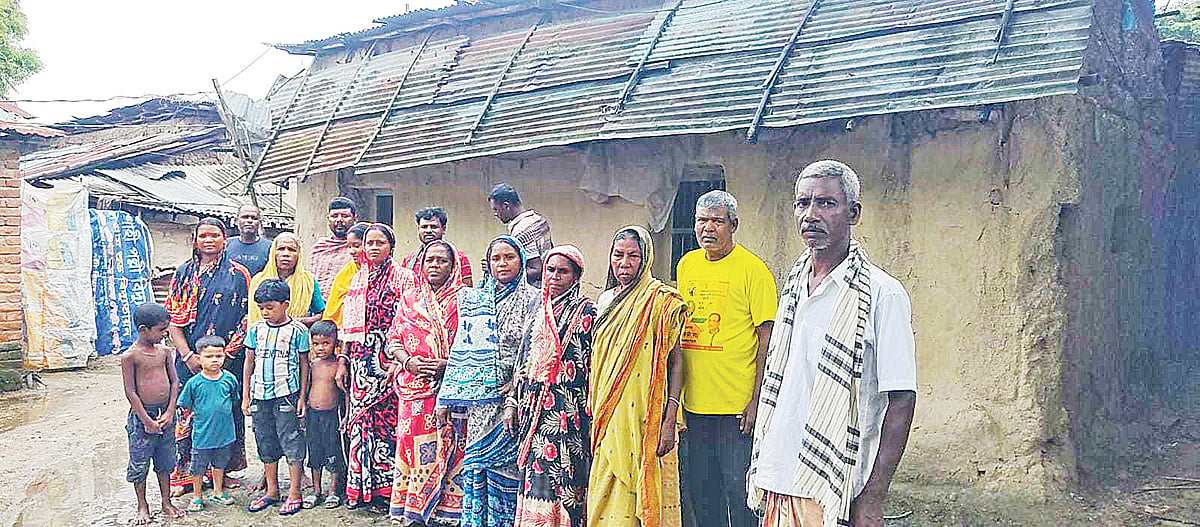
Photo Collected
The Gorait, a marginalized ethnic minority group residing in the northern regions of Bangladesh, are facing a severe existential crisis characterized by widespread landlessness and extreme poverty. Numbering approximately 4,000 to 4,500 people, the community is scattered across 20 to 25 villages in the districts of Naogaon, Rajshahi, Sirajganj, and Bogura.
Hingu Murmu, president of the North Bengal Indigenous Forum, noted that the ancestors of the Gorait migrated to the Barind Tract from Nagpur, India. Historically, the community cleared dense forests to cultivate land, but over generations, they have lost ownership of these territories. While the government officially recognized the Gorait as an ethnic minority under the Small Ethnic Groups Cultural Institution Act in 2010—a list later expanded to 50 groups in 2019—legal recognition has yet to translate into significant socio-economic advancement for the group.
In Godagari, Rajshahi, the village of Mandail serves as one of the largest Gorait settlements. Local residents and community leaders, including Monam Sardar and Haren Sardar, report that the vast majority of the approximately 100 Gorait families in the area are landless, residing on government-owned khas land. Similar conditions persist in nearby Serupara and Daldala, where the overwhelming majority of families lack any personal landholdings.
Sirajul Islam, headmaster of Mandail High School, emphasized that the Gorait face significant barriers to education. He noted that the land upon which the school is built was once owned by Gorait families, yet today their children often attend classes on empty stomachs. Due to grinding poverty, many students drop out before completing their secondary education, with young girls frequently leaving school due to child marriage. Teachers often intervene to cover examination fees for the few students who reach the SSC level.
Elderly community members, such as 91-year-old Saresh Sardar, recount a history of displacement. Many Gorait were forced to flee during communal riots in 1962, while others returning to the region following the 1971 Liberation War discovered their ancestral lands had been occupied by others. In the Naogaon district, particularly the Niamatpur upazila, the situation remains equally dire, with nearly 3,700 Gorait living in 15 to 16 villages with almost no agricultural land to sustain them.
For younger, educated members of the community, such as 41-year-old Makhan Sardar, the accounts of their ancestors owning cattle and vast harvests of grain feel increasingly like folklore. Most Gorait now survive as agricultural day laborers, clinging to small parcels of government land as their only remaining foothold in the region.
0%
0%
0%
0%