Veteran Folk Musician Struggles to Sustain Legacy Amidst Poverty and Failing Health
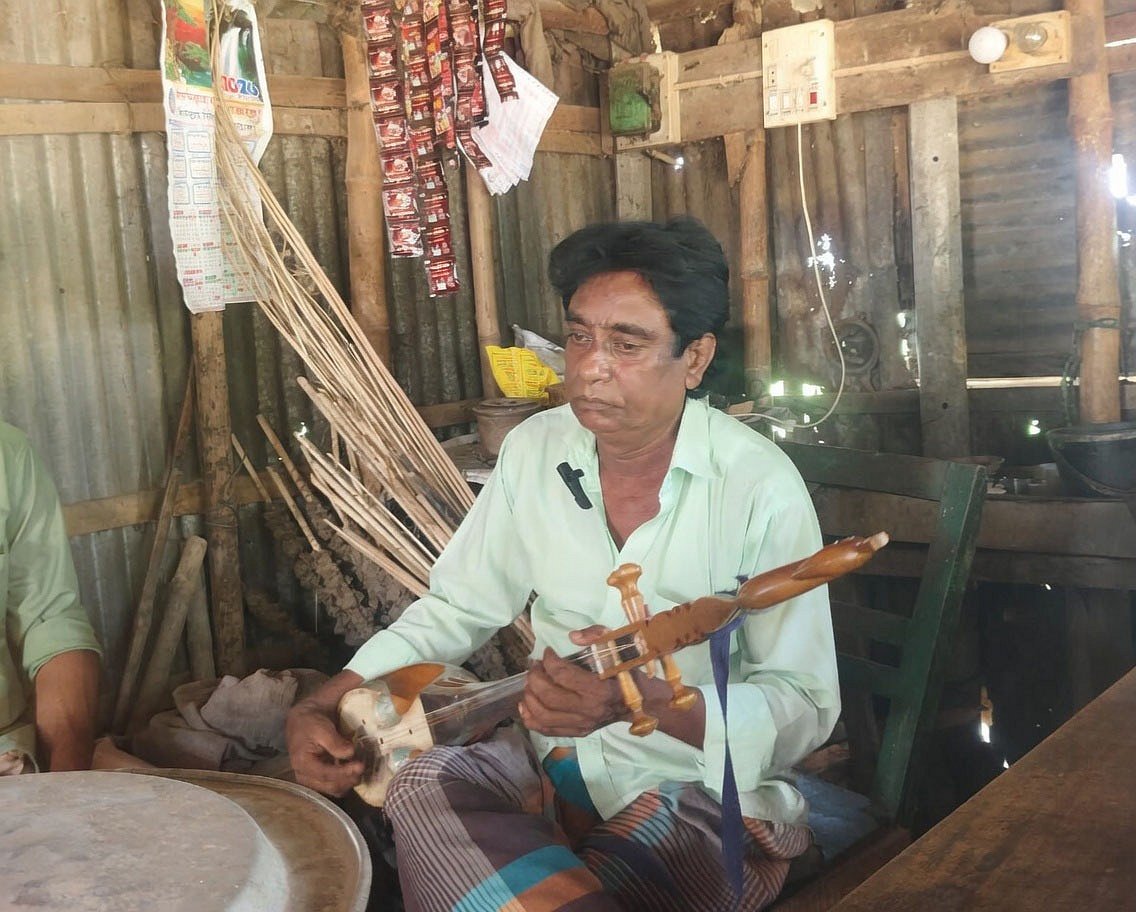
Photo Collected
Sixty-five-year-old Abdus Samad Mollah walks the earthen paths of Ekdala Samaspur village in Rajshahi’s Bagmara upazila each day, his modest frame accompanied by a worn shirt, sandals, and his constant companion: a hand-crafted dotara. While the instrument serves as a testament to his lifelong devotion to folk music, Mollah’s daily life is a grueling struggle against systemic poverty, chronic illness, and the encroaching silence of age.
Mollah’s journey into the arts began in his youth, leading him to a career in regional theater. In 1986, he joined the “Jahanara Opera,” where he rose to prominence as a lead actor. He later pivoted to the role of “Bibek”—the conscience character in traditional folk dramas—earning widespread acclaim for his performances across the country. However, the physical toll of the stage, particularly the strain the long, mournful songs placed on his vocal cords, eventually forced him to abandon acting.
বিজ্ঞাপন
Refusing to sever his ties to music, Mollah transitioned into a musician. When his troupe dissolved in 2002, he continued to play the dotara, eventually gaining recognition as a listed artist for Bangladesh Betar in 1998 and Bangladesh Television in 2019. Despite this formal recognition, the accolades never translated into financial stability. Today, he rarely receives invitations to perform, and his primary source of income remains a small, struggling tea stall in the village market.
The reality of his daily existence stands in stark contrast to his cultural legacy. With his shop lacking basic amenities like electric fans or a television—standard features in neighboring businesses that draw away his customers—Mollah earns barely 250 to 300 taka per day. This meager income is insufficient to sustain his five-member family or provide treatment for his worsening health, which includes complications involving his lungs, kidneys, and diabetes.
বিজ্ঞাপন
Despite these hardships, local residents describe Mollah as a man of rare character. Retired teacher Jamal Uddin, who has known Mollah for decades, speaks of his lifelong commitment to bringing joy to his community. Villagers continue to frequent his stall, drawn as much by his warmth and character as by the melodies he plays on his dotara during slow afternoons.
As he prepares for another day of labor, Mollah admits that the weight of his physical ailments is becoming difficult to ignore. Surrounded by the very instrument that defined his life, he expressed a quiet fear that his music might soon be silenced by the reality of his poverty. Community leaders, including Bagmara Press Club President Rashedul Haque, have noted that while Mollah remains too proud to ask for charity, his contributions to local culture and his refusal to succumb to his circumstances make him a figure who deserves greater institutional support.
0%
0%
0%
0%