
From the forest to the market, why is there so much talk about the fruit?
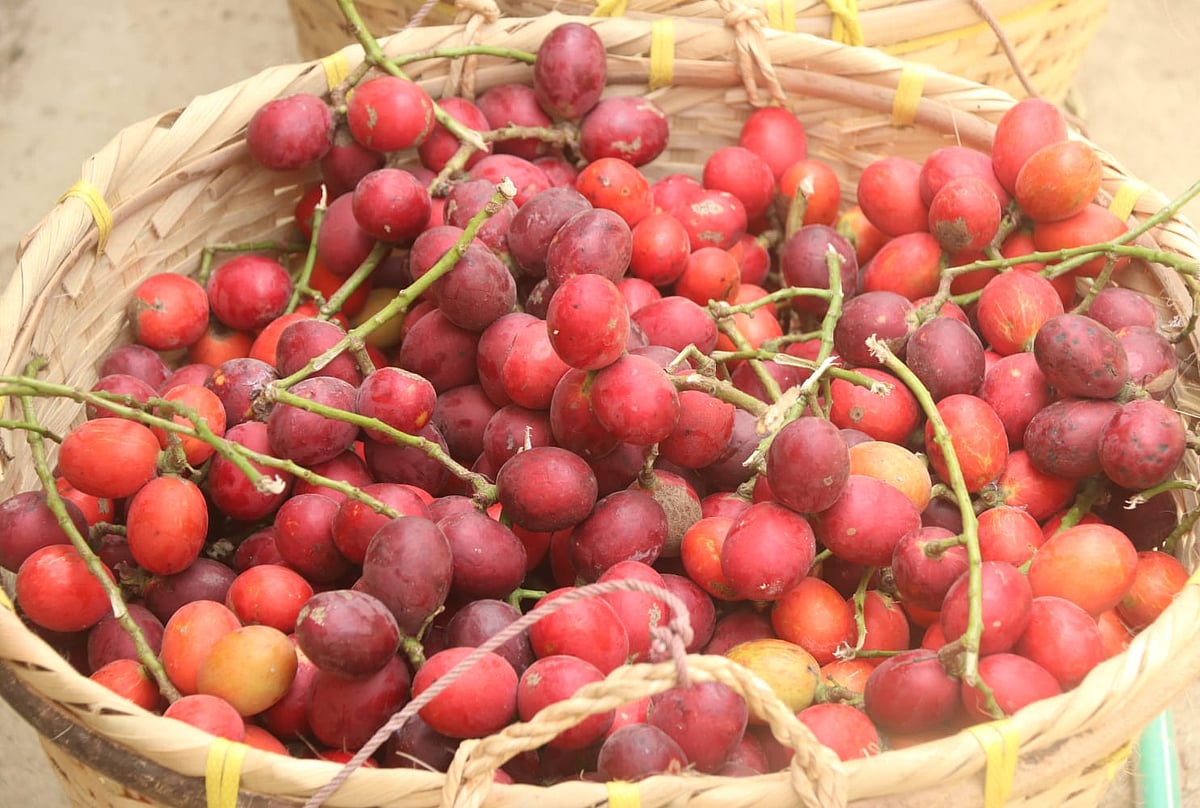
Photo Collected
‘Raktaphal’, a wild fruit known from the hill forests, is now becoming popular in the plains as well. Demand for the fruit, known for its bright blood-red color, has increased manifold following a social media campaign. Farmers are now commercially cultivating the fruit known locally in different areas of Chittagong Hill Tracts. Studies in India have found the presence of antioxidants, potassium and various nutrients in it. Despite the increase in production, it is still considered an endangered plant, so agriculture officials have urged conservation.
Blood result! You may be surprised to hear the name. It is not a fruit made of blood. The name blood fruit is due to its bright red color like blood. This wild fruit grown in the mountain forests has been known to the people of Chittagong Hill Tracts for many years. But now it is slowly spreading in plains. The demand has also increased after the discussion on social media about the name, color and nutritional value.
Raktphal is now regularly being sought from various online fruit sellers in Chittagong and Dhaka. But as the production is less compared to the demand, the sellers are struggling to supply. The people of the plains know it as Raktaphal, but it has different names in the hill towns. It is ‘Rosco’ to Chakmas, ‘Taichak’ to Tripuras, ‘Ranguchi’ to Marma. Some also call it as ‘Rakt Gota’, ‘Lalgula’. English name is blood fruit. Called as ‘Khun Phaal’ in Hindi.
Fruit in bunches like grapes. Slightly larger in size. Green when raw, red like blood when ripe. Sour-sweet taste. Once this fruit was found only in the deep forests of the mountains. Now hill farmers are also cultivating it in their home yards.
Some food vlogger Pahari has posted videos and pictures of this fruit on social media Facebook. Even a few doctors promote advisory videos on the virtues of this fruit.
Since then, people’s interest in the fruit has increased, said Sarwar Hossain, director of the online platform named ‘Kaptai Bazar’. Through this platform he sells mountain fruits, fish, honey, meat etc.
Sarwar Hossain said to Prothom Alo that the demand and promotion of blood products has increased a lot this year compared to last year. They are getting good response due to such promotion on Facebook. Receive regular orders from different regions of the country including Chittagong-Dhaka. They collect this fruit directly from different markets of Rangamati.
A group of researchers in India studied blood products. By analyzing the fruits of five hilly regions of Meghalaya, India, they published detailed information on nutritional value, chemical properties and safety. The research was published last year in the Netherlands-based Journal of Agriculture and Food Research.
According to the study, Haematocarpus validus is an important nutritious fruit of Southeast Asia. The texture, taste, nutritional quality and chemical properties of the fruit change with altitude. As a result, a maximum of 1.5 percent protein and 1 thousand 890 mg of potassium were found per 100 grams. It also contains high levels of polyphenols and flavonoids, which act as powerful antioxidants.
The study also found the presence of certain substances like phytates, oxalates, saponins and nitrates. However, researchers say, the effect of these ingredients is limited. Toxicity tests conducted in laboratory rats also showed no harmful effects. According to the study, the blood pulp is safe for consumption and has the potential to be used in food products, nutritional products and pharmaceuticals in the future.
The researchers observed that the 300m altitude area of Western Garo Hills in Meghalaya, India, resulted in the highest sweetness, firmness and yield. At the same time, calcium, magnesium, potassium and iron levels were also highest in that area.
This fruit comes in the market on the eve of monsoon. This fruit was once only found in the mountain forests. Demand has increased with time. Therefore, the fruit of this tree is now being placed in people’s yards from the forest. Many have planted vines of this tree. Getting results regularly.
Lakshmi Narayan Chakma, a farmer from Naniarchar in Rangamati, now cultivates blood fruit commercially. Once he cultivated various fruits including paddy and sweet potato, but 12 to 15 years ago blood was added to his land.
Lakshmi Narayan Chakma told Prothom Alo, “Earlier I used to pick up fruits from the mountain forests and sell them. But the results were less. Later I saw that people’s demand is increasing. Then I brought vines from the forest and planted them on my land. After a few years, the results started coming.
Lakshmi Narayan Chakma said that currently there are about 15 trees in his garden. Not all trees bear equal fruit. Still get 300 to 400 kg of fruit per year. At the beginning of the season, it was sold at Tk 400 to Tk 500 per kg, but now it is being sold at Tk 300 at the end of the season. He said, “The cost of cultivating this fruit is low. It does not require much care. The price is also good. So now many people are showing interest.
Zenit Chakma sells fruit at Banrupa market in Rangamati. Almost all seasonal fruits are available in his shop. Now available are mango, blood fruit etc. He now sells 40 to 50 kg of blood pulp every day. He sent fruits not only to Rangamati but also to Chittagong.
Zenit Chakma said, earlier only local people used to buy. Now orders also come from Chittagong. Many people look for pictures on social media. Some days 300 to 400 kg have to be sent out of Rangamati. However, many times they cannot collect enough fruits from the local market and cannot send them as per the demand.
Zenit Chakma said that at the beginning and end of the season, the fruit is sold at Tk 600 to Tk 700 per kg. In the middle, the price is 300 to 400 taka. He collected fruits from the farmers of different upazilas of Rangamati and brought them to the city to sell them.
Deputy Director of Rangamati Agricultural Extension Directorate. Moniruzzaman said, it is mainly the fruit of the mountain forest. There is still no official record of the production of raktaphal. However, compared to the last time, this time the market is showing more than twice the results. Demand has also increased.
This agriculture official said that last year, where per kg fruit was sold at 700 to 800 taka, this time it is being sold at 250 to 400 taka. As production increased, the price decreased slightly. He also said that it is a creeping plant. At first it is a creeper, but later it becomes hard like wood. It is an endangered plant. So it is important to save.
Although there is no official program from the Department of Agricultural Extension, farmers are being encouraged at the individual level, said Md. Moniruzzaman. According to him, the season of blood fruit is from the last week of April to June.
This agriculture officer mentioned that there has been no major scientific research on nutritional quality in the country yet. But according to him, raktaphal has a lot of iron, vitamins and minerals. Increasing demand, now the hill farmers are bringing vines from the forest and planting them on their land. Results are available within four to five years.
0%
0%
0%
0%