



Angel Trumpet Blooms: A Tropical Beauty with a Toxic Secret
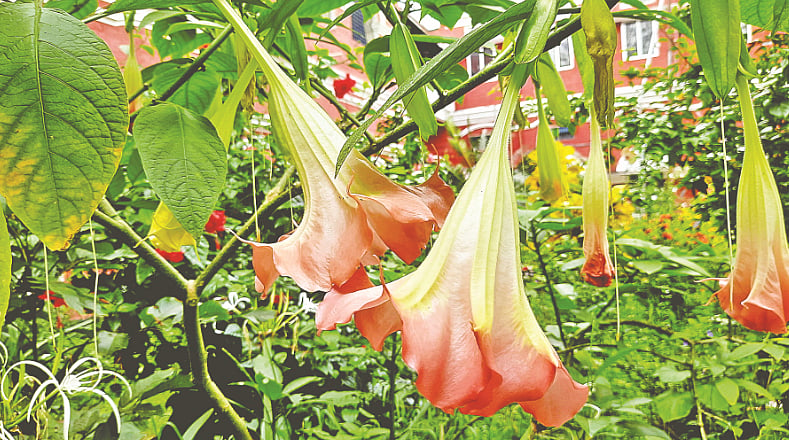
Photo Collected
Botanical enthusiasts and visitors to the historic Anand Mohan College in Mymensingh have recently been captivated by the striking appearance of the *Brugmansia suaveolens*, widely known as the “Angel’s Trumpet” or the locally named *Rajghanta*. The shrub, which features distinct, downward-hanging, bell-shaped flowers in shades of white, pale yellow, and pink, has become a notable fixture in both the college’s botanical gardens and surrounding campuses in the region.
Native to the tropical regions of South America, particularly Brazil, the *Brugmansia* has gained popularity worldwide as an ornamental plant due to its aesthetic appeal and intense fragrance. Belonging to the *Solanaceae* family, this perennial shrub can reach heights of three to five meters. Its large, ovate leaves complement the impressive blooms, which can measure between 20 and 30 centimeters in length.
বিজ্ঞাপন
The plant is particularly noted for its nocturnal behavior; while the flowers remain relatively scentless during the day, they release a potent, sweet aroma after sunset. This evolutionary trait is designed to attract night-flying moths and other pollinators. Under the cover of darkness, the plant transforms garden spaces into fragrant, ethereal environments.
While historically utilized in some indigenous cultures for limited medicinal applications to treat pain and asthma, its use is strictly regulated in modern medicine. The plant is inherently toxic; all parts, including the leaves, flowers, fruit, and seeds, contain potent alkaloids such as scopolamine and atropine. Ingestion or improper contact can lead to severe hallucinations, paralysis, or even death, necessitating significant caution for households with children or pets.
বিজ্ঞাপন
Despite its toxicity, the *Brugmansia* remains a prized specimen for those capable of providing appropriate care. It thrives in humid climates with well-drained loamy soil and requires ample sunlight. Regular pruning after the rainy season is recommended to maintain the plant’s structure and encourage robust flowering in subsequent seasons. As the plant is easily propagated through stem cuttings, it continues to find its way into diverse botanical collections as a testament to nature’s balance between profound beauty and hidden danger.
0%
0%
0%
0%