
Jahangirnagar University researchers develop low cost Den X trap to curb Aedes mosquito breeding
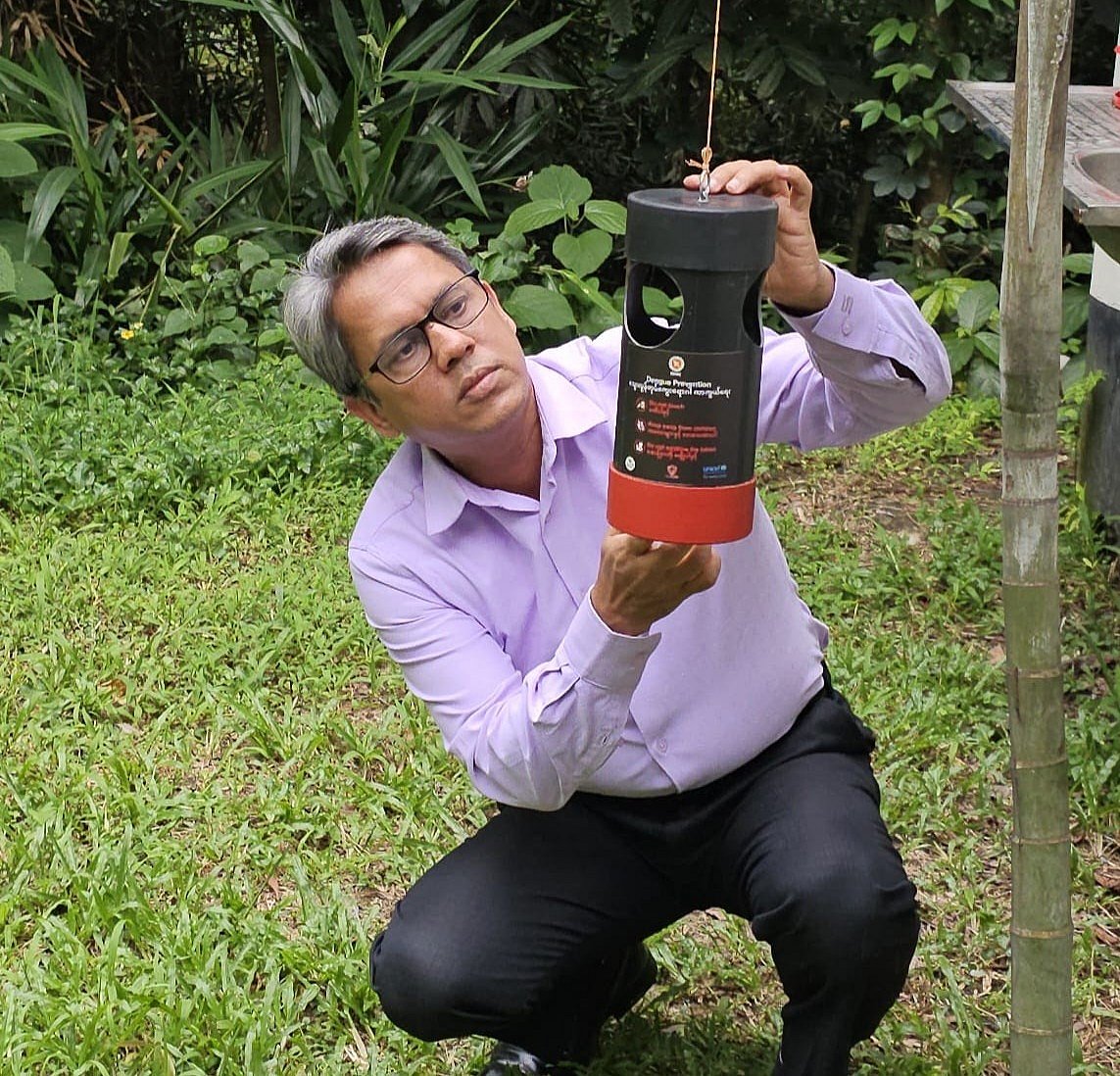
Photo Collected
Researchers at Jahangirnagar University have developed a low-cost, eco-friendly mosquito control device dubbed the “Den-X Trap,” designed to curb the breeding of Aedes mosquitoes, which are responsible for spreading dengue. The trap utilizes locally sourced botanical extracts to attract female mosquitoes, which then lay their eggs in an environment that prevents the larvae from developing, effectively breaking the reproductive cycle.
The project, led by Professor Kabirul Bashar of the university’s Department of Zoology, follows five years of rigorous research and testing. The device consists of a black-and-red plastic pipe containing water and a specialized, plant-based formula. The design intentionally mimics an ideal breeding ground, tricking mosquitoes into depositing eggs that subsequently perish due to the internal components of the trap.
Professor Bashar noted that the initiative was born out of a need for a sustainable alternative to expensive, imported mosquito control technologies, which can cost between 22,000 and 150,000 BDT per unit. By replacing costly foreign chemicals with indigenous plant extracts and using affordable materials, the research team aimed to create a solution suitable for mass implementation in a dengue-prone nation like Bangladesh.
The development process involved extensive testing of various materials, including clay, bamboo, and plastic bottles, before finalizing the current pipe-based design. The choice of colors and the botanical lure were determined through empirical observation of Aedes mosquito behavior. The resulting device requires no electricity, batteries, or motors, making it highly accessible for residential and outdoor use.
Field trials have been conducted across diverse locations, including the Jahangirnagar University campus, residential areas in Savar, Dhaka city, and the Korean Export Processing Zone (KEPZ) in Chattogram. According to researchers, each trap has successfully intercepted an average of 300 to 350 Aedes mosquito larvae per week during peak seasons.
The Den-X Trap is currently being deployed in the Rohingya refugee camps in Cox’s Bazar as part of a dengue prevention program funded by UNICEF. Approximately 3,000 units have been installed, with a comprehensive survey of their efficacy expected by November.
While the research team advocates for the trap as a vital component of integrated vector management, they emphasize that it is not a substitute for traditional measures. Public health efforts, such as eliminating stagnant water, maintaining environmental hygiene, and the targeted use of insecticides, remain essential. According to Professor Bashar, the strategic placement of four traps in the corners of a home can significantly disrupt local mosquito populations, offering a promising tool in the ongoing struggle against dengue outbreaks.
0%
0%
0%
0%