
Australian Gold Vine Gains Popularity in Bangladesh Gardens as Decorative Ornamental Climber
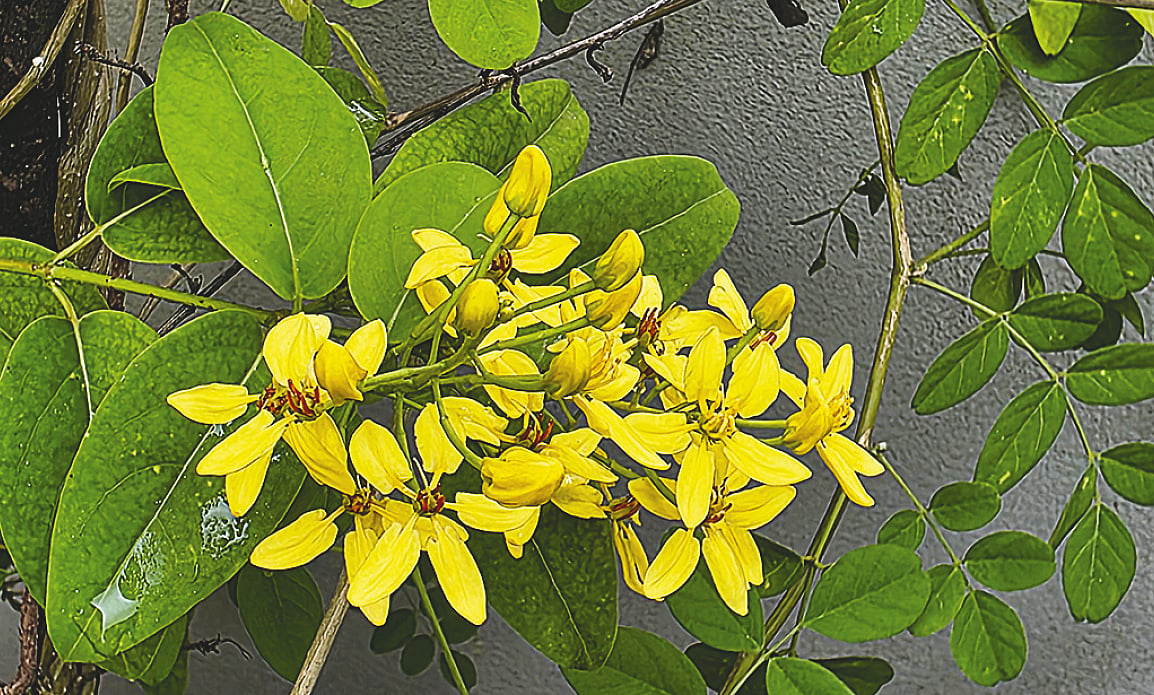
Photo Collected
The Australian Gold Vine, scientifically known as *Tristellateia australasiae*, is gaining popularity among gardening enthusiasts in Bangladesh for its vibrant, star-shaped yellow blossoms. Often referred to locally as “Sonalata,” this climbing, evergreen perennial belongs to the Malpighiaceae family and is becoming a common sight in urban rooftop gardens and commercial nurseries across the country.
Originally native to regions spanning from Southeast Asia to Australia and New Caledonia, the plant is characterized by its rapid growth and woody vines that can extend up to 10 meters. In its natural habitat, it is frequently found in coastal forests and humid wetlands. In Bangladesh, however, it is cultivated primarily for its aesthetic appeal, blooming profusely throughout the year, with peak flowering periods occurring during the summer and monsoon seasons.
The plant produces dense clusters of bright, golden-yellow flowers, each featuring five petals and a distinct red-tipped stamen at the center. These odorless flowers grow in racemes that can contain up to 30 blossoms each. The foliage consists of smooth, spear-shaped leaves that can reach lengths of 15 centimeters. As the plant matures, it develops winged, star-shaped capsules that turn brown upon ripening, containing seeds that, alongside stem cuttings, serve as the primary methods for propagation.
Beyond its ornamental value, the plant is noted for certain medicinal properties. In several regions within its native range, local practitioners utilize the plant’s underground rhizomes to prepare traditional tonics, which are believed to enhance blood health by supporting the production of red and white blood cells.
Botanists and horticulturists advise using the common name “Sonalata” to avoid confusion with other local species. The name “Sonajhora” is sometimes used by nursery staff, but experts warn that it should be avoided to distinguish it from the “Sonajhuri” (Golden Shower) creeper. Furthermore, the name “Swarnalata” is inappropriate as it refers to a well-known parasitic vine indigenous to the region.
As the Australian Gold Vine continues to integrate into Bangladesh’s horticultural landscape, its combination of resilience and striking visual contrast—highlighted by its golden petals and subtle crimson stamens—secures its position as a favored choice for domestic gardeners.
0%
0%
0%
0%