

Shrinking Habitat and Food Scarcity Fuel Human-Elephant Conflict in Bangladesh Forests
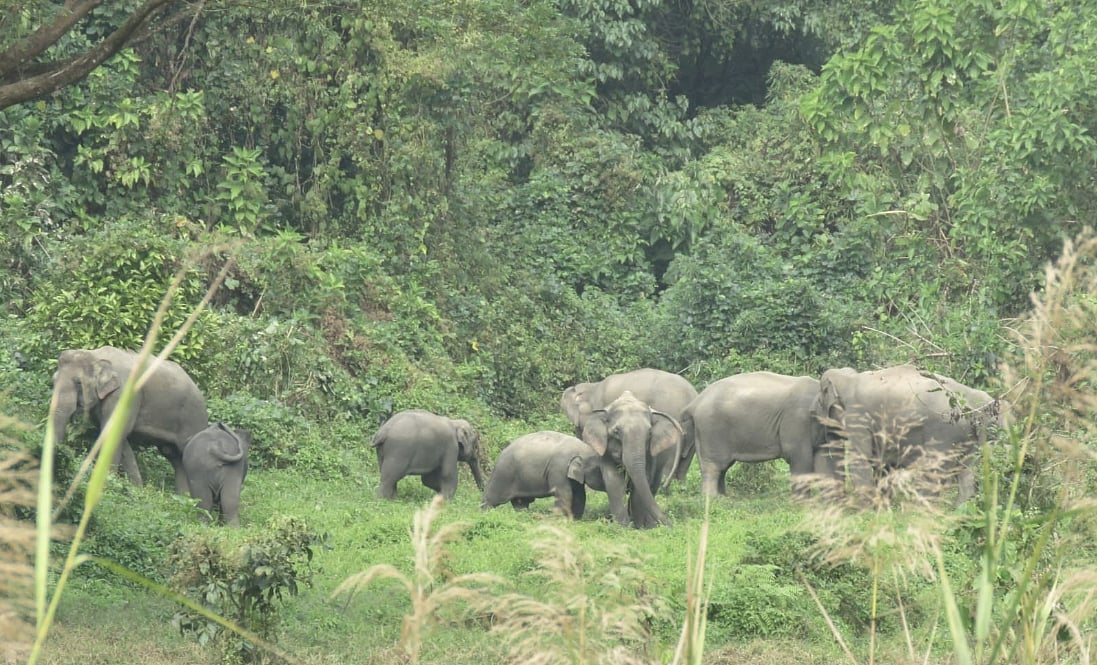
Photo Collected
Widespread habitat loss and the depletion of food sources in the forests of Chattogram, Cox’s Bazar, and the Chittagong Hill Tracts are driving endangered Asian elephants into human settlements, fueling an increase in lethal human-wildlife conflict. Conservationists and forestry experts are now calling for an urgent nationwide census of the elephant population, alongside the immediate restoration of protected corridors and native vegetation.
An adult Asian elephant, scientifically known as *Elephas maximus*, requires between 150 and 200 kilograms of food daily, spending up to 15 hours foraging for a diverse diet that includes bamboo, wild bananas, grasses, shrubs, and tree bark. However, researchers point out that the rapid degradation of forests—caused by illegal logging, land encroachment, infrastructure development, and the expansion of monoculture plantations—is stripping these animals of their natural sustenance.
Data from Global Forest Watch indicates that the Chattogram division has lost approximately 260,000 hectares of tree cover since 2001, representing 20 percent of its forest area as of 2000. As natural bamboo groves and shrubs disappear, elephants are increasingly encroaching on agricultural lands, causing significant damage to crops and properties. In the Chunti protected forest area, reports confirm that even designated elephant feeding grounds have been compromised by human activity.
Professor M.A. Aziz of Jahangirnagar University, a noted wildlife expert, emphasized that elephants thrive in diverse ecosystems rather than dense, canopy-heavy forests. He warned that the loss of migratory corridors—long-established paths used by herds to move between forests in search of seasonal food—has left many populations isolated. “Elephants are a ‘keystone species,'” Professor Aziz stated. “When their corridors are blocked by roads, settlements, or, in the case of the Cox’s Bazar region, sprawling Rohingya refugee camps, the genetic diversity of the herds is threatened, and the entire forest ecosystem suffers from reduced biodiversity.”
The impact on human communities is equally severe. According to the Divisional Forest Officer for Wildlife Management and Nature Conservation, Abu Naser Mohammad Yasin Newaz, the department has paid over 26.3 million taka in compensation to 418 victims of elephant attacks over the past three years.
While the Forest Department has proposed developmental projects to plant elephant-friendly vegetation and create artificial water bodies, officials acknowledge that systemic challenges remain. Mihir Kumar Do, the Conservator of Forests for the Chattogram region, noted that issues such as land encroachment and infrastructure expansion require high-level policy interventions.
Experts maintain that protecting existing natural forests is more critical than planting new trees. They advocate for strict enforcement against the unauthorized collection of forest resources and the integration of local communities into conservation efforts. Without a comprehensive new census and a strategic plan to secure remaining corridors, scientists warn that the survival of the endangered Asian elephant in Bangladesh remains precariously balanced against the accelerating pace of regional deforestation.
0%
0%
0%
0%
More News from Science