

Moulvibazar Eco-Park Preserves Evergreen Serenity Amidst Urban Proximity
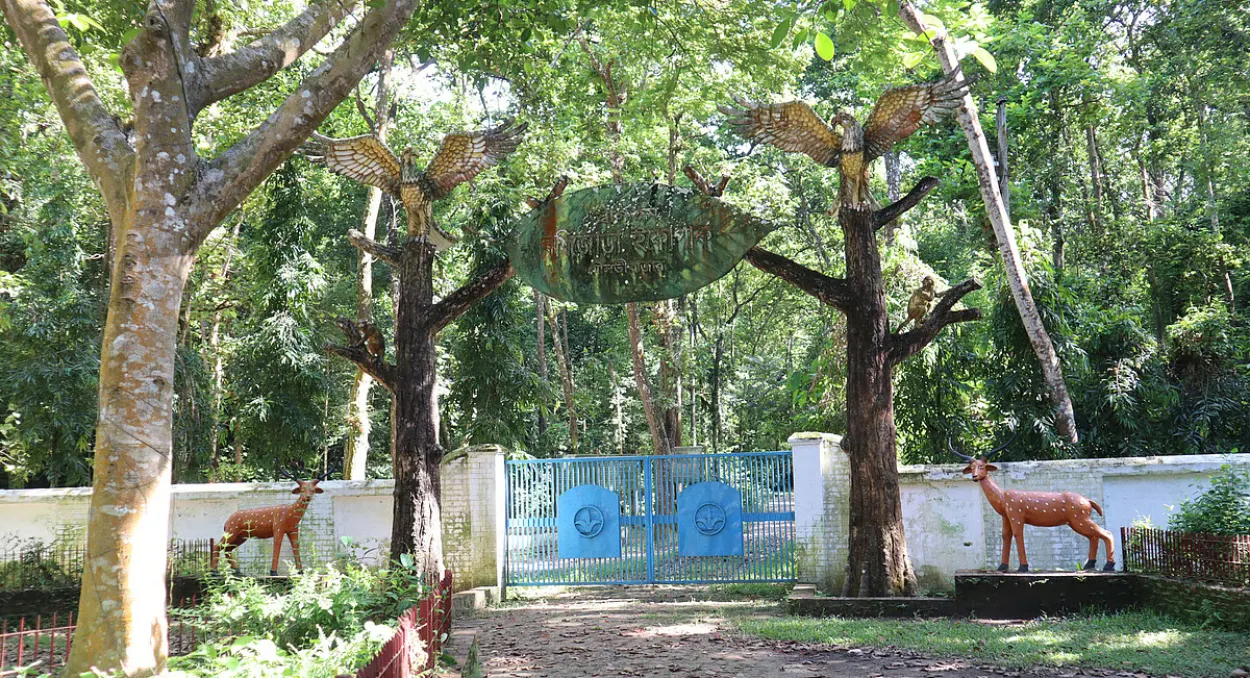
Nestled just two to three kilometers east-south of Maulvibazar town, the evergreen expanse of Barshijora Ecopark stands as a quiet sanctuary amid encroaching human settlements and urban noise. Spanning 887 acres of rolling hillocks in Maulvibazar Sadar Upazila, the forest was originally declared a reserved forest in 1916 before the government designated it an ecopark in 2006. A paved road cuts directly through the wooded terrain, flanked by dense canopies that cast deep midday shadows and filter sunlight into scattered golden patches across the tarmac.
Visitors entering the park through its weathered, moss-covered concrete gateway—adorned with sculptures of deer, a monkey, and an eagle—are greeted by narrow brick-paved trails winding through a rich variety of flora. The forest canopy shelters an array of tree species, including sal, garjan, shimul, bonak, teak, jarul, chikrashi, bahera, amlaki, and ironwood. Sunlight plays hide-and-seek with the shadows as gentle breezes rustle the leaves, breaking the profound afternoon stillness of the wooded trails where locals occasionally pass by on foot.
Historically, the ecosystem supported diverse wildlife, including leopards, barking deer, and hoolock gibbons, alongside monkeys, langurs, jackals, fishing cats, otters, squirrels, porcupines, civets, pangolins, monitor lizards, hares, and various snakes. While local bird species such as doves, mynas, parakeets, weaver birds, egrets, oriental magpie-robins, drongos, kingfishers, kites, and woodpeckers still punctuate the quiet with their calls, the current population levels of many mammals remain unverified amid mounting pressure from surrounding human habitations and increased foot traffic. Small streams within the park, mostly dry during the midday heat, are expected to swell only during seasonal rains.
Despite the shrinking habitat and the disappearance of apex mammals like leopards, subtle signs of resilience persist within the natural landscape. Along the fringes of the return path, small pink wild ginger flowers bloom vibrantly against the deep green backdrop, serving as a poignant reminder that the forest, its resident birds, and native flora continue to endure as authentic neighbors to the nearby urban sprawl.