

The zamindari mentality embedded in the bureaucracy must be broken
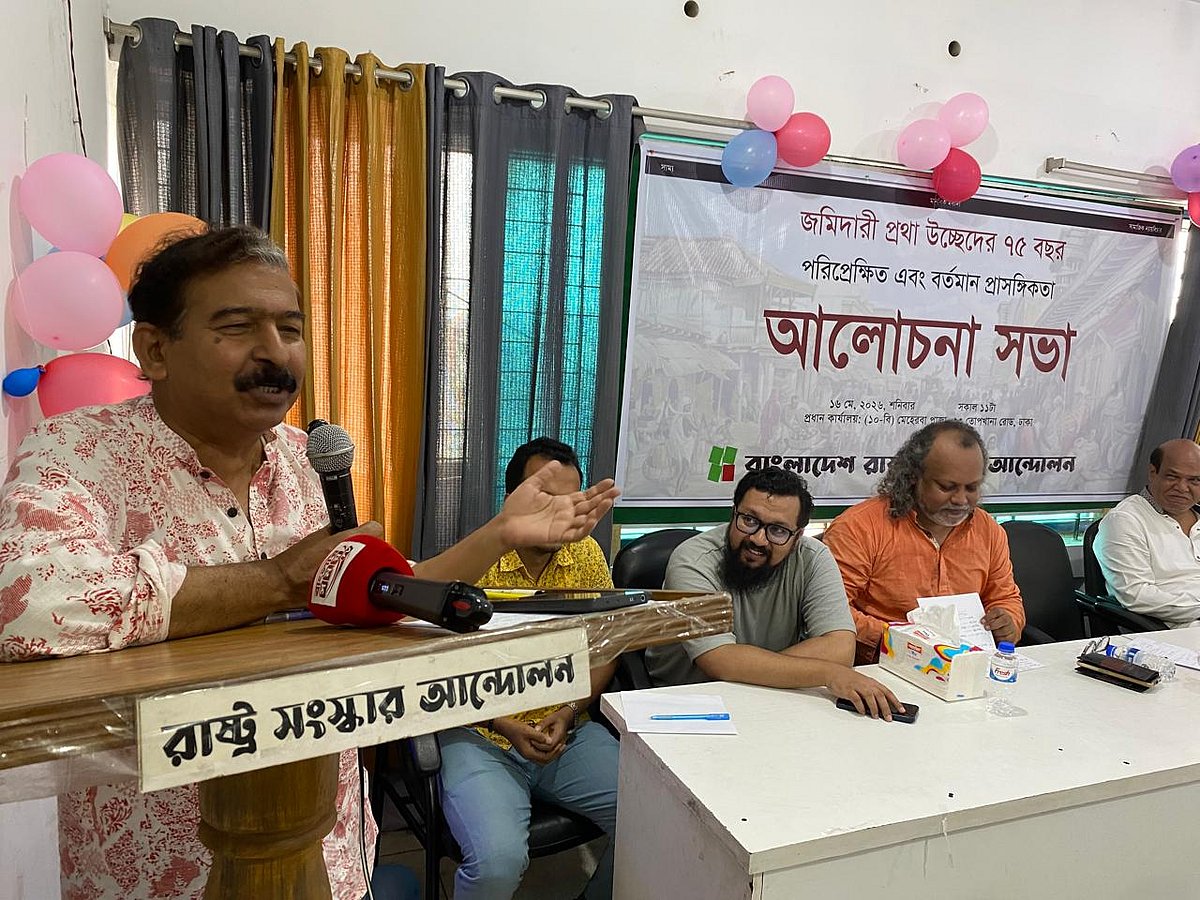
Photo Collected
Even though the zamindari system has been abolished, the zamindari mentality is embedded in the bureaucracy. The influence of Zamindari system is still in administration and politics. The state must be freed from this influence. The movement for state reform should continue to establish real rights of citizens. Abolition of Zamindari system should be celebrated.
President of the party Hasnat Qayyum said this at the discussion meeting organized by the Bangladesh State Reform Movement on the occasion of the 75th anniversary of the abolition of zamindari system. This discussion on ’75 years of eviction of zamidari system: perspective and present relevance’ was organized at the party’s office at Topkhana Road in the capital in the morning.
বিজ্ঞাপন
In British India Lord Cornwallis introduced Zamindari system in 1793 through permanent settlement. In 1950, the ‘State Acquisition and Tenancy Act’ came to an end after a long struggle. The following year on 16 May 1951 the Act was gazetted and came into force. Accordingly, Saturday was the 75th anniversary of the abolition of the Zamindari system.
Hasnat Qayyum said, the longest period in the history of India, about one and a half hundred years, there has been a movement-struggle against this zamindari system. Fakir, sannyasi, nanka, nachol, tevaga, tonk — under various names, there have been movements against the zamidari system in various places. These movements were mainly farmers’ movements. It was only through the abolition of the zamindari system that the people here became ‘citizens’ from ‘subjects’. The ground came under their feet. All movements, including the freedom movement, have been carried out in the later times with the strength of standing on that ground. This is why we should celebrate the achievement of zamindari system as a great victory. It hasn’t been done in a long time. But if Bangladesh is to become a people’s state, the influence of the zamindari system still in the administration and politics must be ended. That is why it is necessary to highlight the significance of this day and celebrate it on a wider scale.
বিজ্ঞাপন
Anthropologist Bakhtiar Ahmed, professor of Independent University, discussed in depth about the zamindari system and tax system. He said that the main aim of the British zamindari system was to collect a large amount of rent. The farmer did not own the land. The British used land as a commodity through permanent settlements. The land had no direct relation with the zamindars. No one cared about the life and death of the farmer. The famine and famine of 1772 resulted in the loss of a large number of peasants’ lives, but in 1773 the collection of rents increased greatly.
This teacher said that the zamindari system does not exist now. ‘Khajna’ has now come as ‘tax’ in civil life. States pay taxes to ensure the safety and well-being of their citizens. But the question of how much this tax is being used for public welfare must now be strongly raised.
Senior lawyer Mokchedul Islam believes that even though the zamindari system done by the British has been abolished, there are still many laws that need to be reformed. He said, tyranny is being created by illegal use of these laws. Unlawful use of law should be prevented. In addition, we now have to think about the reality, how much it is possible to obey the law. In order to make the state prosperous, it is very important to spread real education, reform the law and the state.
Sahul Ahmed, a writer and researcher of the young generation, said that the state reform is now being discussed from many sides. The ‘Bangladesh State Reform Movement’ has played a role in making this poison negotiable. Now we have to build a movement to reform the bureaucracy. Because the feudal mentality is deeply rooted in the bureaucracy. Every bureaucrat, small and big, psychologically thinks of himself as a landlord. Their power has reached such a point that they have no way to criticize anything. They have no accountability. How much responsibility they have towards the common people from the taxes paid by the common people for their salaries, training, foreign trips, luxurious lifestyles, should be brought forward now. To be openly discussed; It is now the demand of time.
Mahabubul Alam Chowdhury, general secretary of non-violent mass movement Bangladesh, said that there is no zamindar, now there are officials of various levels of land affairs. Registrar, Sub-Registrar etc. Their violence, the sufferings of the land office, the exploitation have made the lives of the common people miserable. People have not yet been freed from this cycle. It will indeed be a great task to free the nation from this scourge.
Politician Manjur Qadir, Md. also participated in the discussion. Sohail, Haripad Das, Sirajul Islam etc. Directed by Didar Bhuiyan.
0%
0%
0%
0%