

Solar power transforms Bangladesh agriculture as farmers shift from diesel to renewable energy
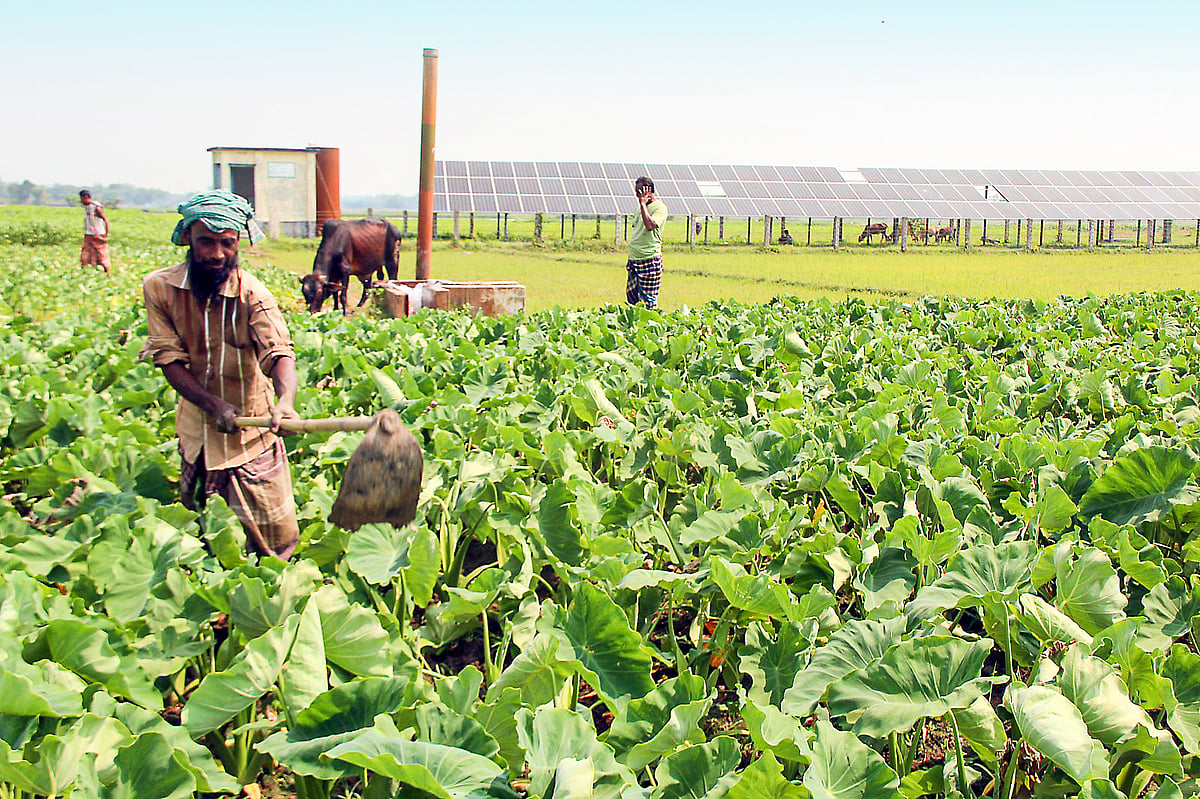
Photo Collected
Bangladesh is gradually embracing solar-powered irrigation and agricultural technology as a sustainable alternative to the country’s heavy reliance on fossil fuels. While solar systems currently cover only about 1 percent of irrigated land, pilot projects like the one in Dhীতপুর, Mymensingh, are demonstrating how renewable energy can transform rural economies by reducing production costs and enhancing food security.
At the Dhীতপুর site, a 17-kilowatt solar array now powers irrigation pumps for at least 70 farmers, effectively replacing the unpredictable and costly diesel-reliant systems that previously plagued the region. Developed through a collaboration between the Bangladesh Agricultural Development Corporation (BADC), Bangladesh Agricultural University, and Birmingham City University, the hub serves as a multipurpose facility. Beyond irrigation, the infrastructure supports grain threshers, solar dryers, and small-scale cold storage units, offering farmers a holistic solution to post-harvest losses.
বিজ্ঞাপন
The shift toward solar technology carries significant economic implications. According to data from the Sustainable and Renewable Energy Development Authority (SREDA), approximately 80 percent of Bangladesh’s 1.5 million irrigation pumps run on diesel. The country consumes roughly 1.25 million tons of diesel annually for irrigation, costing the national exchequer approximately 4.5 billion taka. Farmers bear the brunt of these costs, which are susceptible to volatile international oil prices. In Dhীতপুর, farmers have reported irrigation costs dropping from 800 taka per *katha* with diesel to 300 taka with solar power, providing a substantial buffer against inflation.
International organizations are taking note of this potential. A study by the International Water Management Institute (IWMI) indicates that solar-powered pumps can reduce irrigation costs by 20 to 30 percent. Furthermore, experts are integrating these systems with “Alternate Wetting and Drying” (AWD) techniques to optimize water usage and significantly reduce methane emissions from paddy fields, aligning national agricultural goals with global climate commitments.
বিজ্ঞাপন
The Infrastructure Development Company Limited (IDCOL) has been a primary driver of this transition, offering grants and credit facilities to incentivize farmers to move away from diesel. However, the adoption rate remains constrained by limited funding and the need for more robust policy frameworks. Recent reports from the Asian Development Bank (ADB) suggest that scaling up solar irrigation to 45,000 pumps by 2030 could save Bangladesh roughly 1 million tons of diesel consumption annually and prevent the emission of 3 million metric tons of greenhouse gases.
Despite the promise, challenges persist. Many solar installations sit idle during the off-season when irrigation is not required. Energy experts, including Dipal Chandra Barua of the Bright Green Energy Foundation, advocate for integrating these systems with the national power grid. By allowing farmers to sell surplus electricity back to the grid, the infrastructure would become more economically viable and attract further investment from financial institutions.
As global climate risks escalate, the experience of farmers like Taijul Islam in Mymensingh serves as a blueprint for the future. While the transition away from fossil fuels in the agricultural sector remains a long-term endeavor, the successful integration of renewable energy at the farm level offers a pragmatic path toward long-term sustainability, reduced import dependence, and more stable food prices for the nation.
0%
0%
0%
0%