

Rare leopard cat captured on camera in Bangladesh as habitat loss threatens population
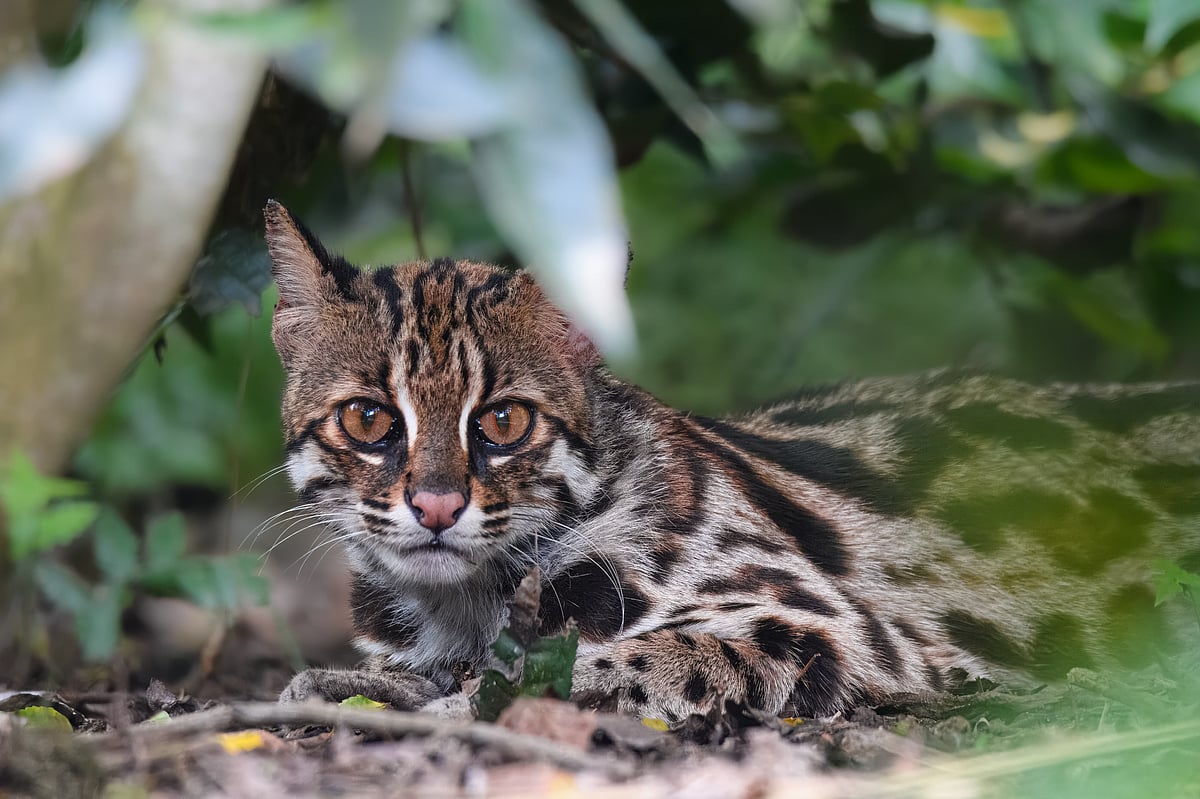
Photo Collected
Wildlife photographer Kajol Hazra successfully captured rare photographs of a leopard cat—scientifically known as *Prionailurus bengalensis*—in the lush tea gardens of Srimangal, Moulvibazar, on May 14. The encounter followed a patient stakeout by Hazra, who had been tracking the elusive feline through the dense foliage of the region, which borders the Lawachara National Park.
The leopard cat, a species known for its striking resemblance to a miniature leopard, is increasingly rare in the wild. Hazra, who first documented the animal in Lawachara four years ago, noted that sightings have become significantly less frequent over time. He attributed this decline to the destruction of forest habitats, the narrowing of natural corridors, and rising conflicts between humans and local wildlife. He stressed that urgent, effective conservation initiatives are required to secure the safety and survival of these animals.
According to Sajal Deb, director of the Bangladesh Wildlife Foundation, the leopard cat plays a vital role in maintaining ecological balance but is currently under severe threat. Deb explained that the degradation of natural habitats frequently forces these animals into human-populated areas, where they often suffer injuries or fatalities. Recently, the foundation rescued an injured leopard cat, which was subsequently handed over to the forest department for care.
Morphologically, the leopard cat is small, typically weighing between three and four kilograms with a body length ranging from 39 to 66 centimeters. Its coat features a yellowish upper body with white underparts, adorned with distinctive black spots that elongate into stripes along the neck. Equipped with relatively long legs, the species is highly adept at both climbing trees and swimming.
Primarily nocturnal, though occasionally active during dawn and dusk, the leopard cat is a solitary hunter that preys on insects, birds, and small vertebrates. The species is known for its reproductive behavior, with mating pairs often forming long-term bonds between February and May. After a gestation period of approximately 60 to 70 days, a female typically gives birth to two to four cubs. In protected environments, the leopard cat has an average lifespan of about 13 years, though their survival in the wild remains increasingly precarious due to environmental pressures.
0%
0%
0%
0%