



Rare Glossy Ibis Breeding Colonies Emerge Across Northern Bangladesh
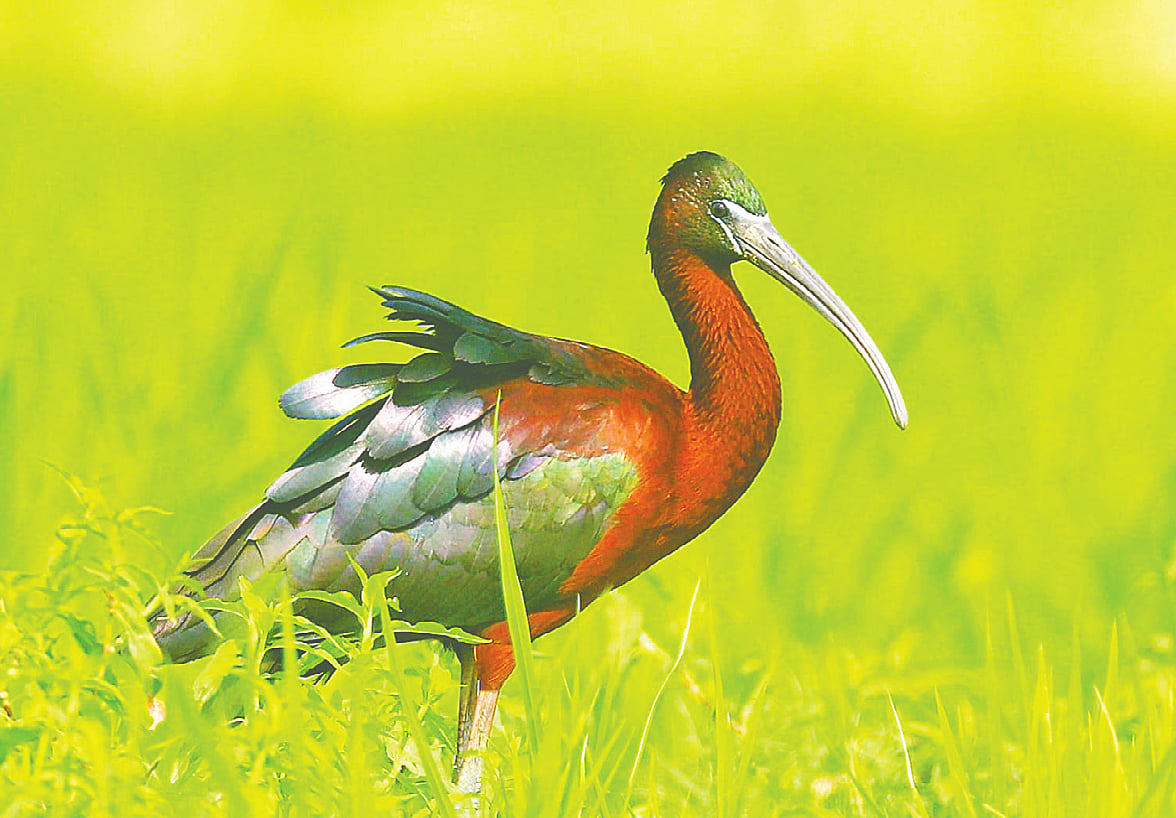
Photo Collected
The Glossy Ibis, a migratory species once considered a rare visitor to Bangladesh, is increasingly establishing nesting colonies within the country, signaling a significant shift in the avian distribution of the region. Traditionally observed only during the winter months, these birds were once primarily spotted foraging in wetlands, riverbanks, and marshy agricultural fields. However, recent observations by ornithologists and bird enthusiasts indicate that the species is now choosing to stay and breed in local habitats.
The emergence of these colonies was first documented in Joypurhat in 2023, where researchers observed the birds congregating near residential areas, bamboo thickets, and suburban ponds. This trend has continued, with sightings reported in Lalmonirhat and the Mirbagh area of Rangpur. During an expedition to Mirbagh in late April, observers successfully located a significant nesting colony situated in trees surrounding local homes. The birds appear to have adapted to these human-proximate environments, successfully raising their young despite the proximity of residential activity.
Ornithological researcher Shibli Sadik suggests that the presence of these birds in Bangladesh may be attributed to a combination of favorable food availability and the degradation of their historical habitats elsewhere. The species, known scientifically as *Plegadis falcinellus*, derives its common name, the Glossy Ibis, from the iridescent, metallic sheen of its plumage, which appears particularly striking under direct sunlight. Characterized by a long, curved grey bill and deep chestnut-brown coloring, the birds are becoming a subject of intense interest for local conservationists.
The preservation of these new colonies has become a primary concern for wildlife advocates. In the Mirbagh area, local intervention was necessary to deter poachers, and ongoing efforts are focused on educating residents to protect these nesting sites. Observers emphasize that with active local support, habitat conservation, and the strict prevention of hunting, these birds could establish a permanent breeding population in the country.
As wetlands, forests, and thickets continue to shrink across Bangladesh, the establishment of these colonies serves as a critical reminder of the fragility of local ecosystems. Experts maintain that securing the areas where the Glossy Ibis has chosen to nest is essential for their continued survival. By fostering community awareness and protecting these unconventional habitats, conservationists hope to secure a future for the Glossy Ibis as a breeding species within the nation’s borders.
0%
0%
0%
0%