


Cosmetic Upgrades Fail to Mask Severe Pollution in Dhaka Luxury Lake District
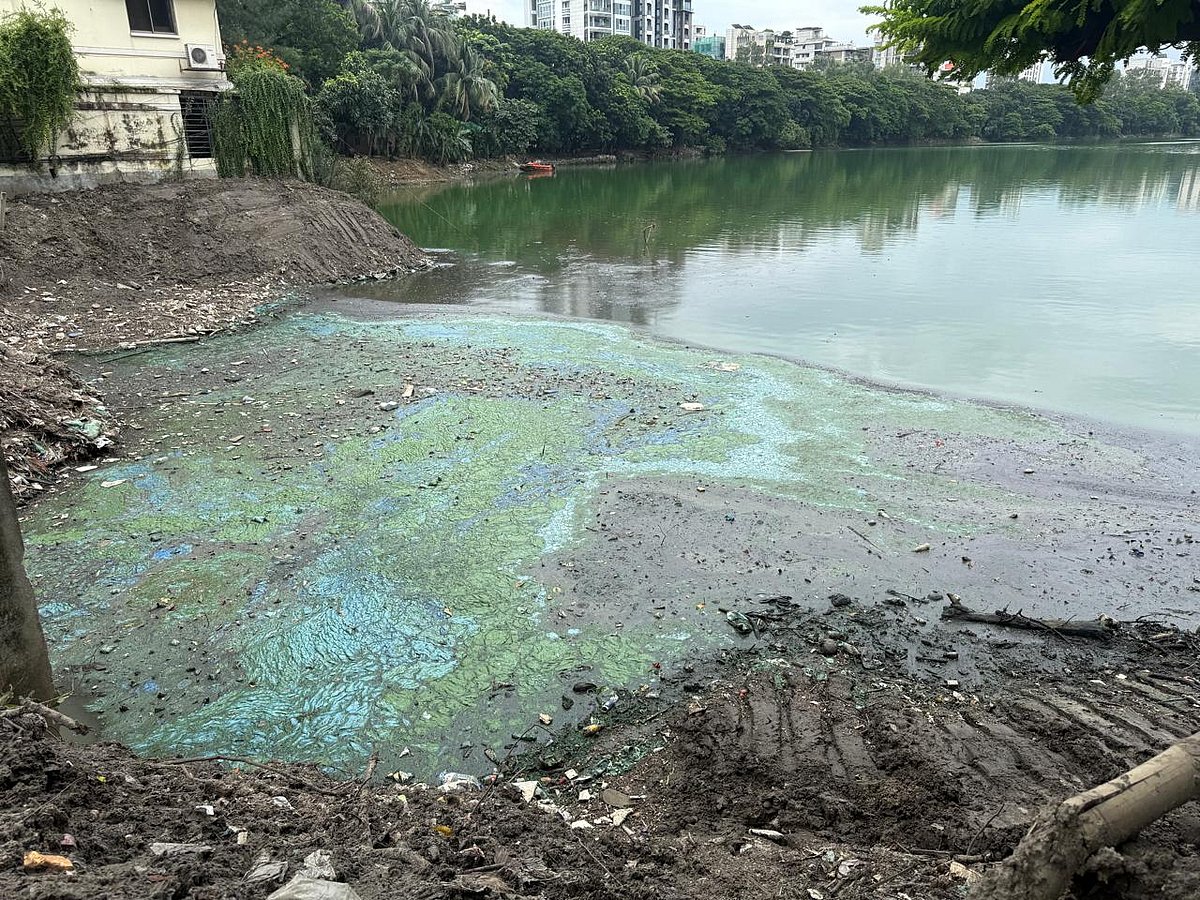
Photo Collected
The recent transformation of the lakefronts in Dhaka’s Gulshan and Banani neighborhoods has introduced paved walkways, seating areas, and improved landscaping, offering residents a modernized urban space. However, this aesthetic progress is increasingly overshadowed by a persistent environmental crisis. While the surface-level infrastructure has been upgraded, the water itself remains heavily contaminated with floating plastic waste and sewage, emitting a pungent odor that deters many visitors from utilizing the new facilities.
The project, spearheaded by the Capital Development Authority (RAJUK), was initiated in 2010 to reclaim land, enhance water retention, and improve urban aesthetics. Over the years, the scope of work expanded to include dredging, shoreline stabilization, the construction of “Lake Drive” roads, and the installation of walkways and lighting. Despite a significant budget hike—rising from an initial 410 crore BDT to 555 crore BDT—the project has failed to address the foundational issue of water pollution.
According to a report by the Ministry of Planning’s Implementation Monitoring and Evaluation Division (IMED), while the project has yielded positive results in citizen mobility and infrastructure, its primary environmental objective remains unmet. The report highlights that the failure to disconnect existing sewage lines and establish an alternative waste disposal system has fundamentally undermined the project’s ecological goals. RAJUK officials admit that approximately 85 percent of the water inlets connected to the lakes are currently conduits for untreated domestic sewage.
The responsibility for this mismanagement has become a subject of contention between city authorities and the Dhaka Water Supply and Sewerage Authority (WASA). While WASA cites an incomplete pipeline network for the underutilization of the Dasherkandi Sewerage Treatment Plant, municipal officials argue that the root cause lies in inadequate oversight during building construction, which allows property owners to dump waste directly into storm drains.
Urban planning experts maintain that these efforts are incomplete without a holistic approach to waste management. Architect and urban planner Adil Muhammad Khan emphasizes that viewing the lake merely as an aesthetic site is a critical error. He asserts that unless the sewage connections are severed and the water flow is restored, the multi-crore investment will fail to preserve the city’s essential natural water reservoirs.
In response to these systemic failures, the Prime Minister’s Office convened a meeting in early July to mandate stricter coordination between the Dhaka North City Corporation, RAJUK, and other relevant bodies. The focus has now shifted toward enforcing mandatory septic system compliance for surrounding buildings and developing targeted strategies to manage waste from high-density areas like Karail. Until these infrastructural and administrative gaps are bridged, the “beautification” of the Gulshan-Banani-Baridhara lakefront risks remaining a superficial project in the face of deep-seated environmental neglect.
0%
0%
0%
0%