
Sarjis Alam Warns of Potential Political Instability Amid Rising Tensions Over Opposition Power Struggles
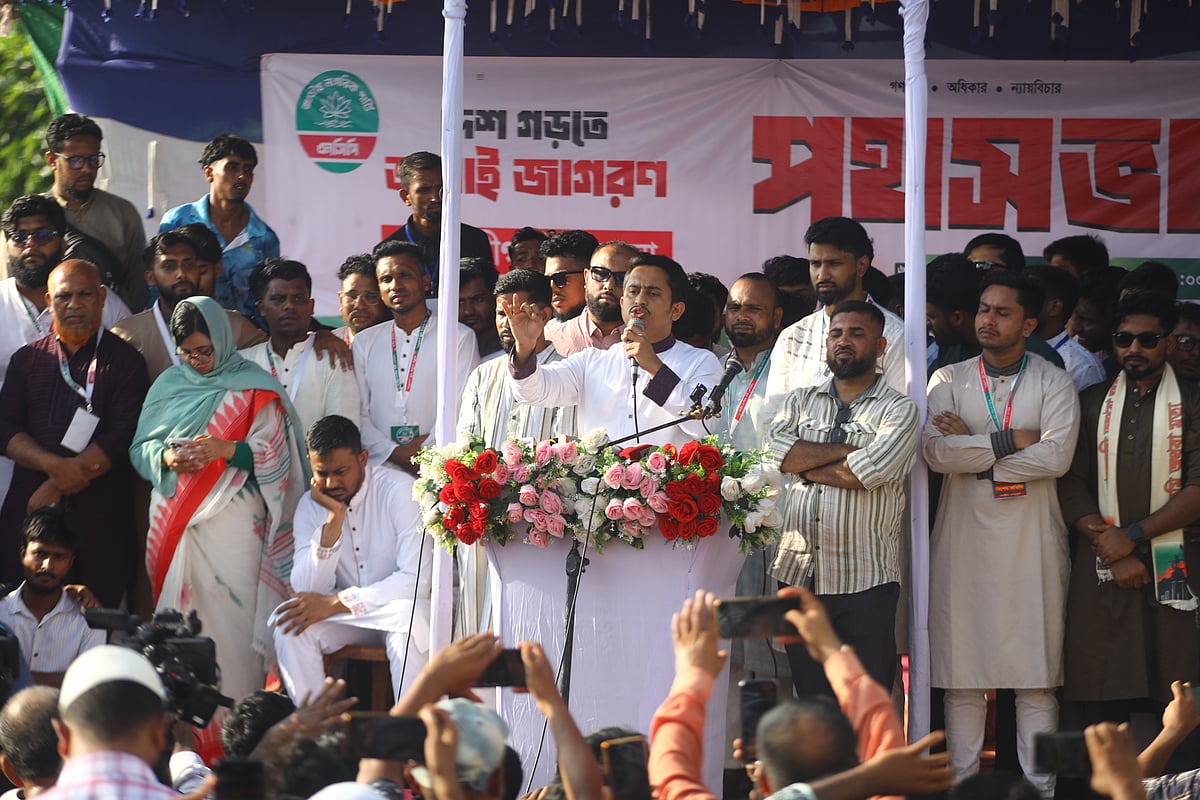
Photo Collected
National Citizen Party (NCP) northern region chief organizer Sarjis Alam has issued a stern warning against the resurgence of political violence, cautioning that internal power struggles within the Bangladesh Nationalist Party (BNP) could lead to broader instability. His comments follow a violent confrontation in Habiganj last Tuesday, where BNP activists allegedly attacked NCP members, resulting in a severe eye injury to student leader Alif Chowdhury. Medical reports indicate that Chowdhury has permanently lost vision in his left eye, while his right eye remains clouded.
Visiting the injured student in the hospital, Alam expressed deep concern over the behavior of certain BNP factions. He argued that a minority of individuals—whom he estimated at about five percent of the party’s membership—are tarnishing the organization’s reputation through extortion, tender manipulation, and illicit control over public institutions. Alam challenged the majority of BNP members to distance themselves from these actions, stating that the public should not have to bear the cost of such predatory behavior, which disrupts healthcare, education, and infrastructure.
Drawing parallels to the seventeen-year period of repression under the previous Awami League government, Alam emphasized that the NCP would not tolerate a shift toward authoritarianism by their former protest allies. He asserted that regardless of political stature, the NCP remains committed to holding any future government officials accountable for misconduct. He noted that the same party which endured systemic abuse and joined the July uprising must not replicate the patterns of the regime it helped topple.
Addressing the broader political landscape, NCP chief coordinator Nasiruddin Patwari rejected the reliance on appointed advisors to govern the nation. He called for a fundamental shift in leadership, urging young people to take direct control of their local communities to dismantle existing extortion syndicates and restore order. Patwari encouraged the youth to bypass traditional party politics in upcoming local government elections, suggesting that the absence of party symbols provides a unique opportunity to build power based solely on public mandate rather than political affiliation.
0%
0%
0%
0%