



Dengue Spreads Across 58 Districts as Bangladesh Scales Up Countermeasures
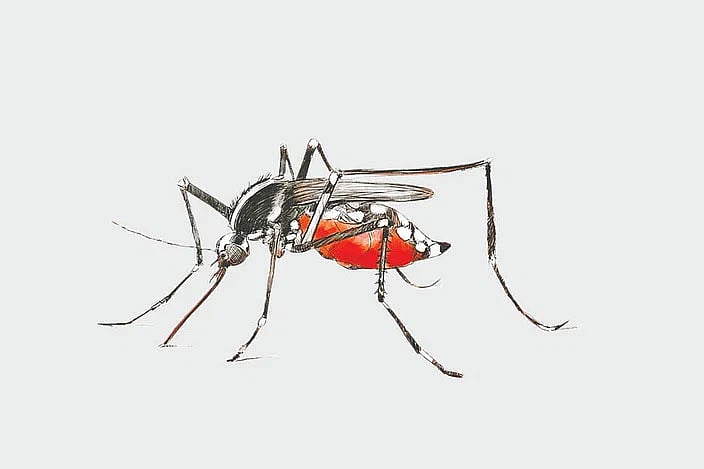
Photo Collected
Dengue fever continues to spread across Bangladesh, with health authorities confirming cases in 58 of the country’s 64 districts as of June 19. While the current infection rate remains lower than during the same period last year, experts warn that the persistent upward trend—particularly in the Barisal and Khulna divisions—requires urgent intervention to prevent a seasonal spike.
Data from the Directorate General of Health Services (DGHS) indicates that 4,680 patients have been hospitalized nationwide since January 1, with seven fatalities recorded. By comparison, the country faced a more severe outbreak during the first six months of last year, which saw 7,077 hospitalizations and 30 deaths. Despite these lower figures, health officials remain on high alert as the monsoon season typically creates conditions conducive to Aedes mosquito breeding.
বিজ্ঞাপন
The government has implemented a multi-faceted response strategy, including the deployment of mobile courts to identify mosquito breeding grounds and the establishment of dedicated “dengue corners” in sub-district hospitals. To manage potential patient surges, a field hospital has been prepared at the Dhaka Medical College Hospital grounds, with plans to expand capacity if necessary. The DGHS has also formed a specialized monitoring cell comprising experts from the Institute of Epidemiology, Disease Control and Research (IEDCR) and the hospital wing to coordinate containment efforts.
Proactive measures extend to clinical resources as well. According to DGHS officials, one million bags of saline have been stockpiled, and private healthcare providers have been directed to reserve 10 percent of their beds for dengue patients. Furthermore, diagnostic centers are mandated to offer an 80 percent discount on dengue-related testing. With support from UNICEF, the government has updated its standardized treatment protocols and initiated training programs for physicians nationwide.
বিজ্ঞাপন
Entomologists observe that dengue has shifted from a seasonal illness to a year-round threat, though infections typically peak between April and October. This year, cases began an upward trajectory in April, with June seeing a sharp increase of 1,483 admissions in the first 19 days alone. Public health experts, including former IEDCR chief scientific officer Mushtaq Hossain, anticipate that the surge will continue through the peak months of July and August, noting that containment is vital to ensure the outbreak does not persist beyond October.
Geographic data highlights a significant concentration of cases in the southern regions. The World Health Organization’s recent surveillance report identifies the Barisal and Khulna divisions as primary hotspots. While Dhaka remains a major urban center for transmission—recording 1,601 cases—the intensity in Barisal has drawn particular concern from experts.
Professor Kabirul Bashar of Jahangirnagar University, a leading entomologist, suggests that the proliferation of dengue in areas like Barisal is driven by a convergence of environmental factors, virus transmission, and human population movement. He emphasized that the cycle of infection can only be broken through rigorous vector control and the strict isolation of infected patients, asserting that such measures remain the most effective strategy to mitigate the public health risk across all regions.
0%
0%
0%
0%


