
Let Haor’s cry stop
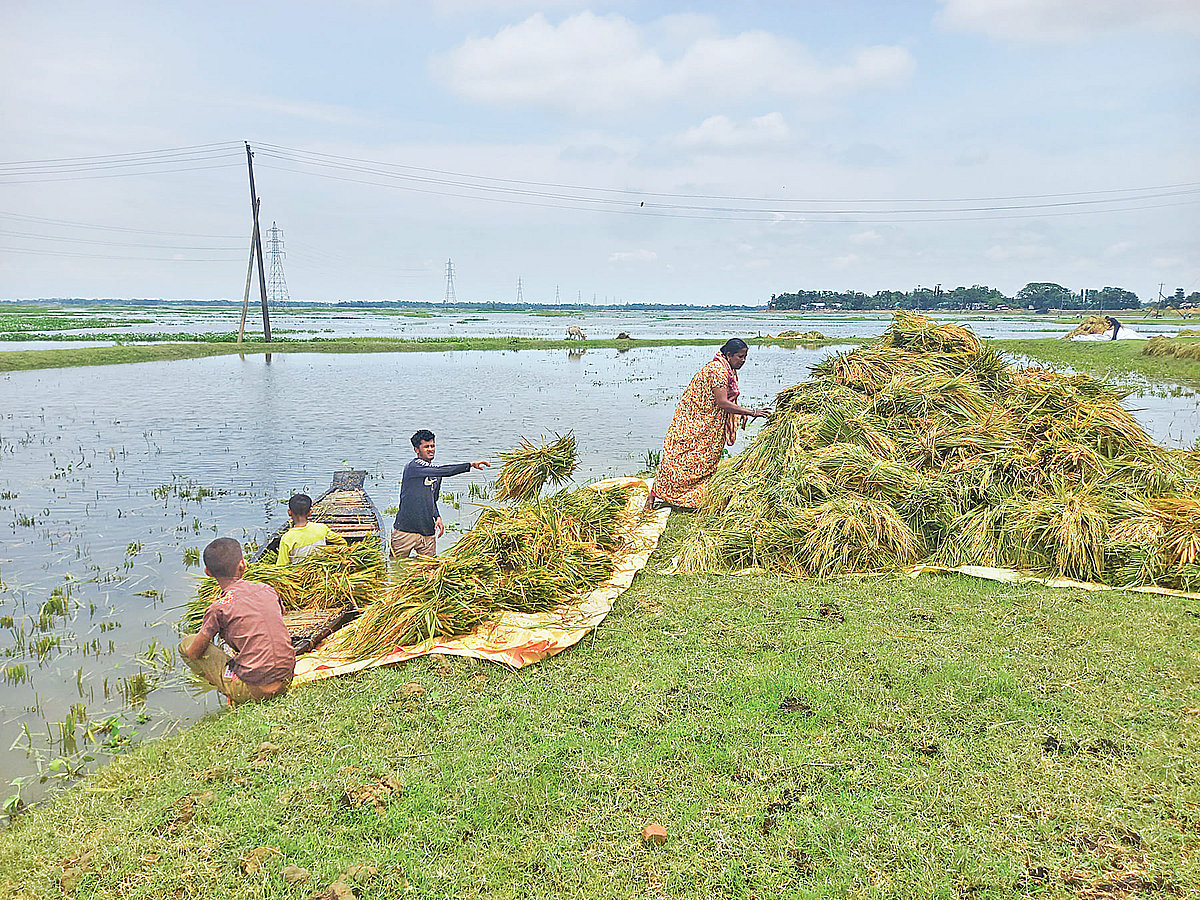
Photo Collected
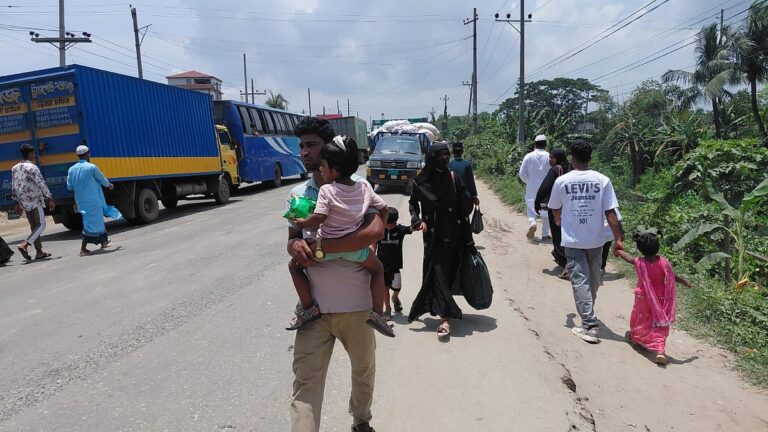
Rain has reduced in all the Haor areas of the country including Kishoreganj. the sun is up Farmers are seeing a glimmer of hope again. From the last few days I was remembering the fear of Qayyum Mia, Asia Banu of Howor. When they went to Howrah to see the construction of the dam last February, they said, “Let’s go during the school day.” Ahan judi far hai dhal nami tay ae ban di fani ahaltan na jai ta, we are worried.’
I wrote about them last March 15 in Prothom Alo. (Haor’s Dam: ‘We start, not finish…’) The apprehensions finally came to fruition. Many of them will come to join the human chain in front of the Dhaka Press Club on Saturday (May 2).
It has also been discussed in Parliament. Meanwhile, Member of Parliament for Sunamganj-5 Constituency (Chatak and Doarabazar) Kalim Uddin Ahmed drew the attention of the Prime Minister and made a statement in Parliament about the situation in Haor. Howar residents are hoping that other parliamentarians will also raise their voice.
Incidentally, all the seats in Sunamganj and Kishoreganj (the independent candidate who won in Kishoreganj is also a BNP rebel) are now in the hands of the ruling party. Freedom fighter Fazlur Rahman, the member of parliament elected from Itna, Mithamin and Ashtagram (Kishorganj-4) upazila of Hower, has promised Qayyum Mia, Asia Banu that he will talk about the sustainable system of howor’s crops in the parliament.
The most difficult task is to make weather forecasts human and reach people. The second difficult task will be to find the affected farmers. Although there is an account of the land owners, no one keeps a list of the actual cultivators. These floods do not cause any loss to the land owners. They take money in advance and give it to the farmer to cultivate. Farmers grow crops by borrowing. Be it three months assistance or one time assistance, none reaches the affected farmers. In the absence of effective local government, factional violence can occur here.
People really want to see sustainable dam system, not relief. I want to see that those who commit corruption in dam management should be tried, which no one has ever done.
At one time, private companies, especially CARE and BRAC, were involved in the construction and management of the Howor Dam. But they were not direct contractors for the construction of large dams; Rather, the community worked on participatory management.
In the 1990s, the government and development agencies felt that it would be difficult to maintain Haor Dam properly with government agencies alone. Therefore, community-based management was introduced experimentally in some areas. Their tasks were:
That is, they did social organization and management, not major engineering works. Sir Fazle Hasan Abed, the founder of BRAC, participated in this initiative with great interest and played a major role in developing the model.
Many experts feel that the earlier community-based model of Hower dam management is more effective than the current PIC (Project Implementation Committee) system. Some important reasons behind this are:
The CARE-BRAC model involved direct participation of local farmers and fishermen from project planning to implementation. The people of the village themselves decided where the dam was needed. When to repair How will it work? As a result, people saw the project as their own resource, not just a government job.
In the community model there was social surveillance within the village itself. If the work was bad, local people would ask directly. The committee was accountable to the people of the village. The current PIC system often leaves committees in the hands of a locally powerful few, thereby weakening social control.
The local farmers have long experience in water flow, river mouths, canals, etc. This local knowledge was used in the Care–Brack model.
As a result, where the dam will block the water, where it will break, these decisions would be more realistic.
Tasks in the community model were usually short and quick. The delay would be less. The dam would have been built before the start of the season. In the current system, administrative approvals, allocations, formation of tenders or PICs—these are time wastages.
The Care-Brac model typically used small budgets, local labor, and local materials. As a result, the scope for corruption was relatively low as there was little big contractor or political influence.
In the community model, dams are not only built but also maintained by the community. People regularly repaired cracks, planted grass, strengthened weak spots.
In the current PIC system, the committee becomes inactive at the end of the work. It cannot be allowed to happen.
0%
0%
0%
0%