

Interim government proposed anti-disappearance law worse than Awami League era: Tajul Islam
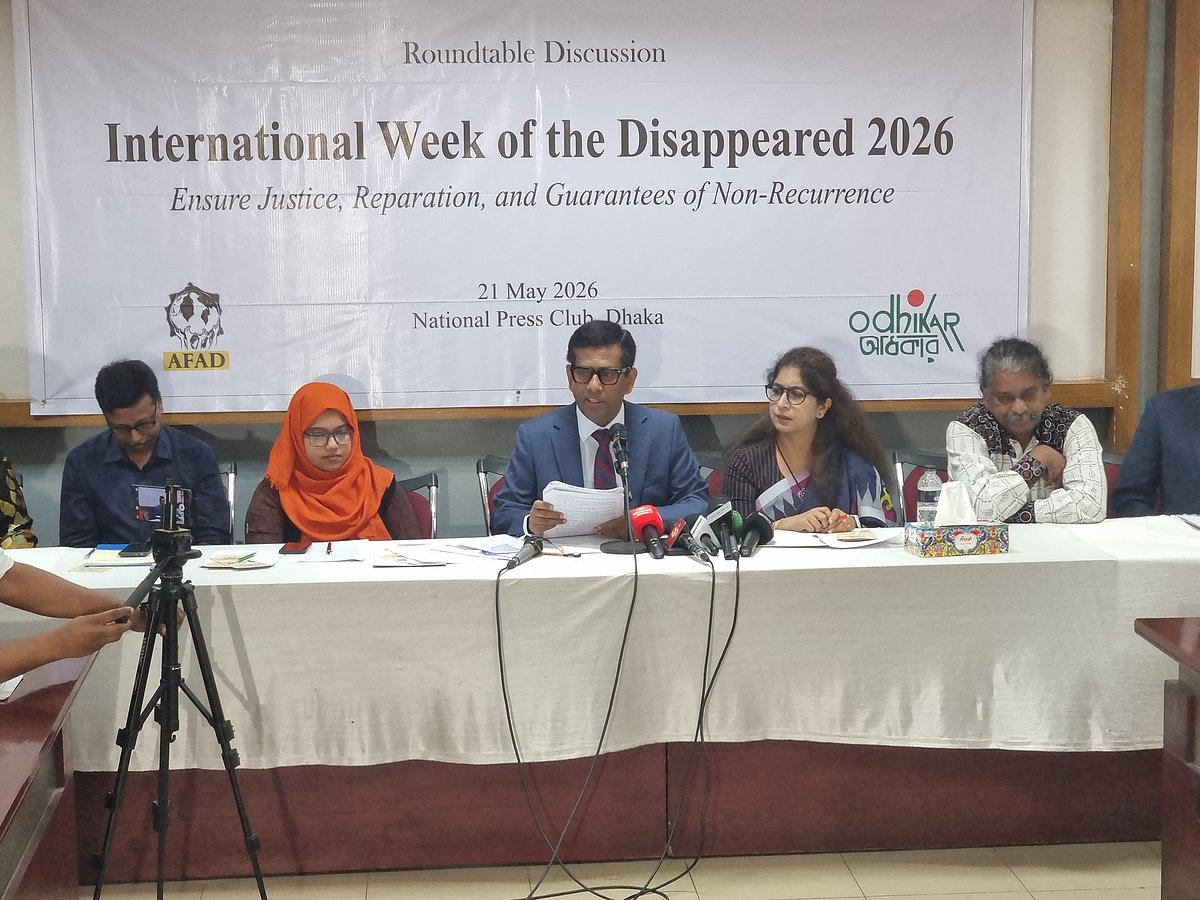
Photo Collected
Tajul Islam, the former chief prosecutor of the International Criminal Tribunal, has demanded effective and transparent legislation to completely stop the culture of disappearance in the country. He said that the anti-disappearance law proposed by the interim government is worse than the law during the Awami League government. He warned that if the law is weak, the culture of disappearance may return to the country.
Tajul Islam said, “Unfortunately, the new law has become worse than the law during the Awami League government. It is not possible to prevent disappearances in Bangladesh with this law. It seems that those who were involved in the disappearance wrote the laws.
বিজ্ঞাপন
He said this at a round table meeting organized by human rights organization ‘Adhikar’ on the occasion of International Prevention of Disappearance Week at Tafazzal Hossain Manik Mia Hall of National Press Club on Thursday. At the event, people who returned from disappearances and relatives of those who are still missing shared their experiences.
Tajul Islam said, “I am telling the government with a strong voice, please do not do something that will bring back the culture of disappearance in Bangladesh.” If this “disappearance” event is not recognized by the state, if the criminals are not identified by the state, then what is the revolution? That revolution will fail.
বিজ্ঞাপন
Stating that there can be no compromise on the justice issue of disappearances, this former prosecutor said, those who gave birth to this dark chapter, must be ensured justice. Otherwise similar crimes will happen again in the future.
Tajul Islam believes that if the culture of disappearance is not stopped, anyone can become a victim of it in the future. He said, ‘Today I am safe, tomorrow I may be gone. Tomorrow my children will be gone. No one stays in power forever. Those who are ministers and MPs today will not be in power one day.
BNP leader Ilyas Ali, ex-army officer Abdullahil Aman Azmi, retired lieutenant colonel Hasinur Rahman, former ambassador Maruf Zaman and other missing victims said, “Important people of the society have also gone missing. But the state recognition and trial of these incidents have not yet been confirmed.
He also criticized the provision of investigation by a Sub-Inspector (SI) of the police station when a complaint of disappearance is lodged against law enforcement personnel. In his words, ‘How can an SI conduct an impartial investigation when a complaint is made against a senior officer? We have faced many obstacles in the investigation of the International Criminal Tribunal.
Jatiya Nagrik Party (NCP) member secretary Akhtar Hossain addressed the round table meeting. He said that there is a need for a law that is not arbitrary and transparent in the field of prevention of disappearances, protection of human rights, and independent judiciary. Those who disappeared and murdered for 16 years, should be arrested and brought to justice.
Akhtar Hossain said, “Even if a small part of the forces are involved in the disappearances, they also need to be brought to justice. Just because a few are involved doesn’t mean the whole force is involved. An effective and transparent law should be made so that no one can go missing or be murdered in Bangladesh.
Shariful Islam, a former member of the Human Rights Commission, said that people are not so stupid, people are watching everything. If the desire for revolution is destroyed, everyone will have to pay the price. He alleged that the Human Rights Commission is being weakened. A strong human rights commission was needed. But the commission is being rendered ineffective.
AB Party Chairman Mujibur Rahman Manju, former missing Brigadier General Abdullahil Aman Azmi, Lieutenant Colonel Hasinur Rahman, United Nations Human Rights Officer Zahid Hossain, human rights activist Nabila Idris and others also spoke on the occasion.
In the meeting, the family members of the missing victims highlighted their experiences and said that for a long time they have been seeking justice for their relatives. But still many incidents are not resolved. They demanded speedy justice and effective law.
0%
0%
0%
0%