Erosion devours vital all-weather road in Kishoreganj as government agencies trade blame
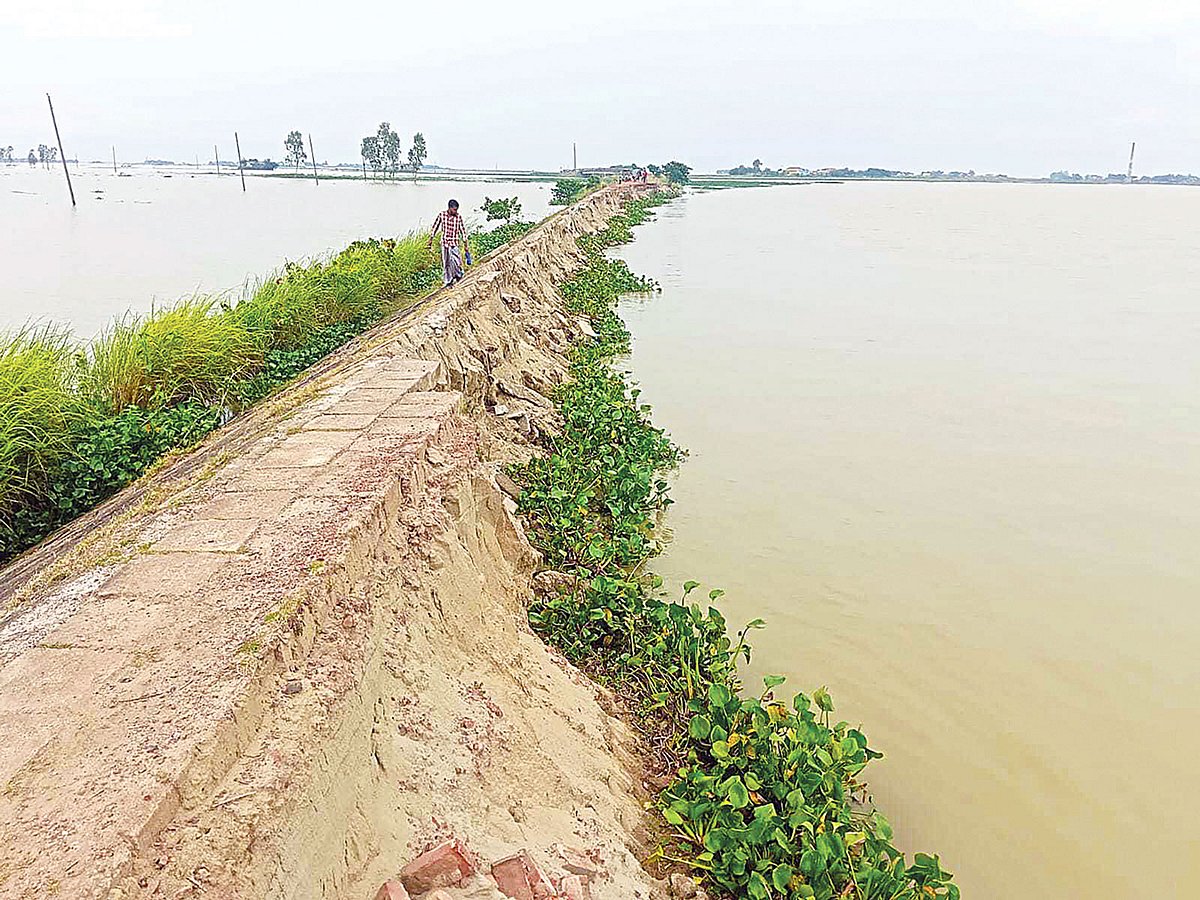
Photo Collected
An “all-weather” road in Kishoreganj’s Ashtagram Upazila has collapsed into a river, severing critical transport links for thousands of residents in Bangalpara Union. Nearly 90 percent of a 1.5-kilometer stretch of the road has been submerged, leaving the area isolated from the Upazila and district headquarters for the past two weeks.
Constructed in 2017 at a cost of 44 million BDT, the 10.5-kilometer-long and 16-foot-wide road was designed to ensure year-round connectivity. However, nine years after its completion, the infrastructure is failing, with residents reporting that the road has become dangerously narrow, resembling a thin line in certain sections. The erosion has also swallowed approximately 400 acres of land and displaced 10 families, while depriving local auto-rickshaw drivers of their primary source of income.
The collapse has cast doubt on the future of a broader infrastructure project, including a 177 million BDT bridge currently under construction. This bridge is intended to connect Ashtagram with Nasirnagar Upazila in Brahmanbaria, potentially creating a streamlined route to Dhaka. Locals state that the road runs alongside the Dholeswari River, a tributary of the Meghna, where inadequate protective measures against erosion have left the structure vulnerable to seasonal water currents.
A jurisdictional dispute between government departments has further hindered recovery efforts. The Local Government Engineering Department (LGED), which built the road, maintains that riverbank protection falls under the mandate of the Bangladesh Water Development Board (BWDB). Conversely, the BWDB argues that it bears no responsibility, asserting that it was never consulted or asked for a No Objection Certificate (NOC) during the planning phase. BWDB Kishoreganj Executive Engineer Sajjad Hossain stated that the road design failed to account for river flow dynamics and water pressure, noting that the infrastructure is not even recognized in their formal river protection master plans.
LGED Ashtagram Upazila Engineer Mozammel Haque acknowledged that while the road featured bridges and culverts to manage water flow, the river’s changing course and siltation patterns have significantly altered the landscape since construction. He admitted that the BWDB was not formally consulted during the initial phase but contended that the board raised no objections at the time.
Previous attempts by the Bangladesh Inland Water Transport Authority (BIWTA) to divert the river’s current through dredging proved unsuccessful. Local representatives, including Bangalpara Union Parishad Chairman Moniruzzaman, have criticized the lack of inter-agency cooperation, suggesting that timely coordination could have prevented the disaster.
Member of Parliament for Kishoreganj-4, Fazlur Rahman, expressed frustration regarding the ongoing bureaucratic impasse. While he emphasized that the Ministry of Water Resources bears the responsibility for protecting the road from riverbank erosion, he noted that repeated assurances from officials regarding repairs have failed to materialize, resulting in the eventual loss of the road to the river.
0%
0%
0%
0%