From Debt to Success: How Golap Sardar Built a Popular Affordable Eatery in Rajshahi
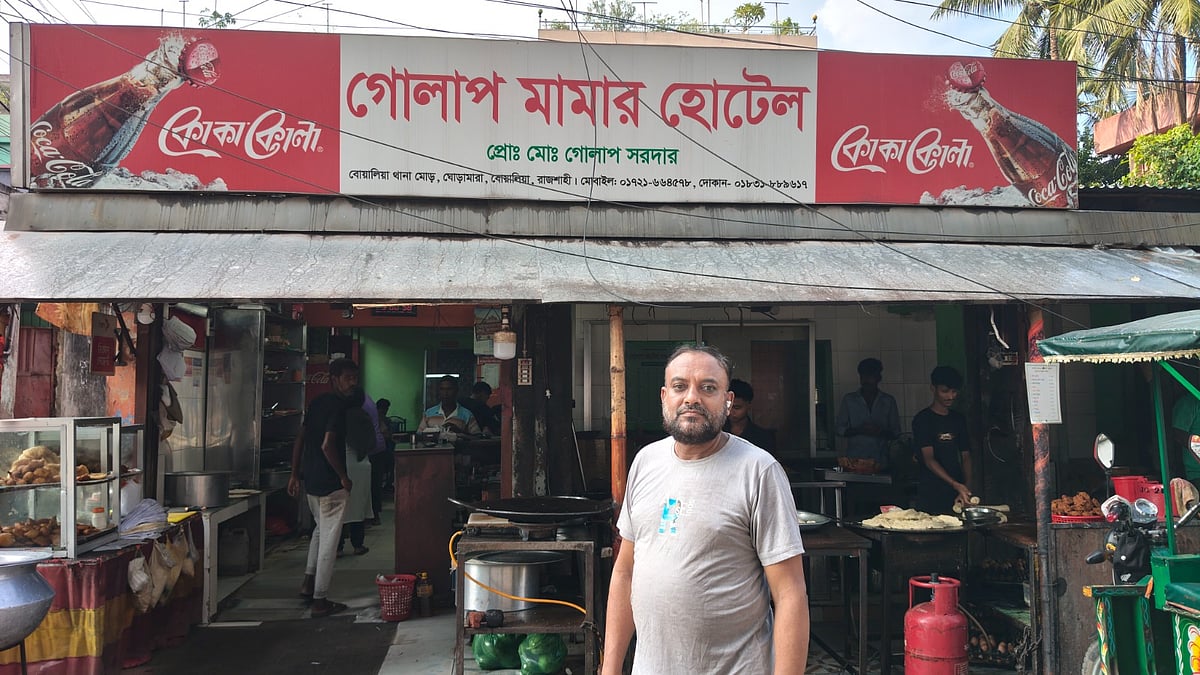
Photo Collected
RAJSHAHI – In the bustling streets outside the Boalia Model Police Station, a modest eatery has become a landmark for Rajshahi’s workforce and students alike. At the heart of this thriving enterprise is Md. Golap Sardar, 48, a native of Koyra in Khulna, whose journey from a debt-ridden migrant to a successful restaurateur is defined by resilience and community service.
Known to his patrons simply as “Golap Mama,” Sardar’s path to success began in 2003. After suffering multiple business failures in his home district and struggling with a debt of 60,000 taka—a significant sum at the time—Sardar left his family behind and boarded a train to Rajshahi. He spent his first week sleeping at the local railway station before finding work as a hotel employee. He eventually decided to settle in the city, describing the transition as finding peace in his mother’s arms.
The moniker “Golap Mama” emerged during his early years as an employee, born from the warm, friendly rapport he developed with local students. In 2015, driven by a desire for independence, he launched his own business with a modest capital of 15,000 taka and a rented storefront. The business flourished quickly, evolving from a small stall to a major eatery employing 30 to 35 people, including seven women. The daily wage bill for his staff now averages 19,000 taka, while the monthly rent has grown from 5,000 taka to over 50,000 taka.
Sardar attributes his success to fair pricing and a commitment to social responsibility. His menu offers over 30 items, with staples such as a plate of khichuri priced at 20 taka, and a full meal of rice, vegetables, and lentils available for under 40 taka. The hotel remains open from 7:00 a.m. to 2:00 a.m., serving a steady stream of students, laborers, and low-income residents.
The restaurant serves as more than just a place to eat; it is a community hub. Sardar maintains a compassionate policy toward students, frequently allowing those short on funds to eat for free. This altruism has fostered long-lasting bonds; many former students who frequented his shop as undergraduates now return with their own families to visit him once they have secured professional careers elsewhere.
Despite his business growth, Sardar remains grounded in his past. His staff members, such as long-term employee Md. Bachhu, note that Sardar’s background as a former wage laborer shapes his management style, ensuring employees are treated with dignity and paid daily.
Sardar, who has since built his own home in Rajshahi and is currently supporting his children’s higher education, views his role as a provider of employment as his greatest achievement. While he occasionally returns to his ancestral home in Khulna, he invariably finds himself drawn back to the city that offered him a second chance. Reflecting on his journey, he credits his success to maintaining a steady temperament, prioritizing public goodwill over aggressive profit-seeking, and a deep-seated gratitude for the life he has built in Rajshahi.
0%
0%
0%
0%