Election Commission Voter List Revision Scrutinizes Delhi Chief Minister and Prominent Figures Over Discrepancies
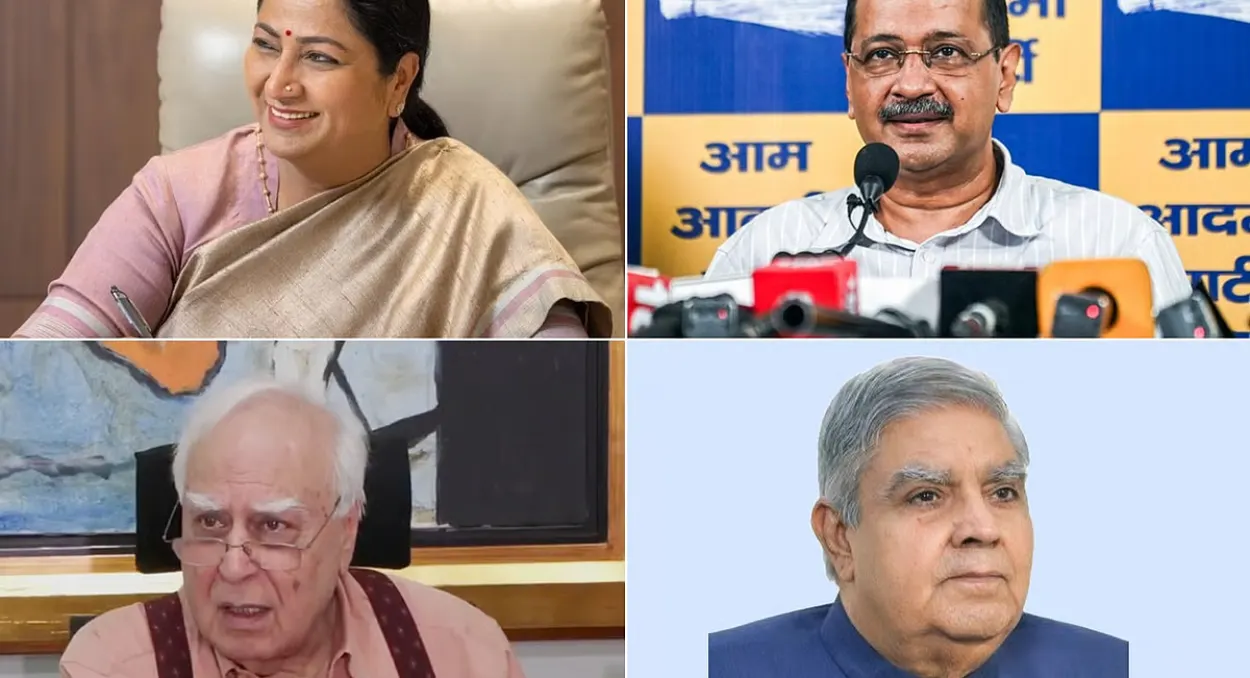
Photo: Collected
An intensive revision of electoral rolls by the Election Commission has swept up prominent Indian political figures, including Delhi Chief Minister Rekha Gupta and former Chief Minister Arvind Kejriwal, sparking widespread controversy and criticism.
According to reports from English daily The Hindu, the scrutiny under the Intensive Revision process has flagged Kejriwal, his entire family, and several other high-profile individuals. The list of those receiving notices includes former Vice President Jagdeep Dhankhar and his wife Sudesh Dhankhar, former Supreme Court judge Madan Lokur, senior lawyer and former Union Minister Kapil Sibal along with his wife Promila Sibal, and BJP leader Subramanian Swamy. Notices were also served to Delhi BJP leader Pravesh Verma, whose father was the late former Chief Minister Sahib Singh Verma, as well as former Delhi BJP chief Virendra Sachdeva, his wife, and brother, due to alleged discrepancies in their submitted documents.
The Aam Aadmi Party expressed outrage late Saturday on social media platform X, questioning how a three-time chief minister and his entire family could face the potential removal of their names from the electoral roll. Kejriwal, alongside his wife Sunita, son Pulkit, father Gobind Ram, and mother Geeta Devi, reside within the New Delhi assembly constituency. The entire Kejriwal family, along with 110 other voters at their polling booth, was classified as unmapped during the audit.
Shortly after the Kejriwal family notices emerged, Chief Minister Rekha Gupta was similarly flagged over logical discrepancies. The Election Commission noted a gap of less than 15 years between Gupta's age and that of her parents. The Chief Minister is a voter in the Shalimar Bagh constituency.
Across Delhi, approximately 3.3 million voters have received such notices due to the revision process. This includes 1,379,785 voters categorized under non-mapping and 1,933,134 voters flagged for logical discrepancies. All affected individuals are required to attend hearings and submit necessary documents to validate their names.
Responding to the controversy, the Election Commission clarified that political leaders and prominent personalities are not required to visit hearing centers; instead, designated election officials will visit their residences to verify documents. The Electoral Registration Officer for Shalimar Bagh confirmed that while the Chief Minister was sent a notice, officials physically verified her documents, and her name has been proven valid. Her name will appear in the final voter list scheduled for release in early November.
Regarding the Kejriwal family, the Commission stated that their enumeration form data was incomplete and failed to match previous revision records, prompting the notice. Their names are expected to be included in the final roll once documents are verified. Delhi Chief Electoral Officer Ashok Kumar told the media that a list of individuals with discrepancies in names and dates of birth has been published online, with a designated window for document submission amid ongoing hearings and objections.
The initiative has drawn sharp criticism, particularly from Kapil Sibal, who condemned the intensive revision process as corrupted, flawed, and a form of vote manipulation, noting that even judges and diplomats are not being spared from mass deletions. Although the Supreme Court has upheld the constitutional validity of the revision process, the manner of its execution remains controversial.
Concerns persist over whether general voters facing similar notices will secure their places on Delhi's final electoral roll. In West Bengal, where similar revision issues previously affected millions of voters, processing delays have left many unable to participate in recent assembly and upcoming by-elections. According to an affidavit submitted by the Election Commission to the Supreme Court, out of 3.41 million applications received to add names to the voter list between December and the first week of August, only 20 percent were accepted. Conversely, the Commission accepted roughly 90 percent of the 639,000 applications submitted to remove names, resulting in the deletion of over 572,000 voters.
Opposition parties have labeled these actions as vote theft, alleging that while legitimate voters face prolonged delays at tribunals—where only 1,023,000 out of 3.82 million applications have been resolved in West Bengal—objections leading to name deletions are prioritized. Legal experts estimate that at the current rate of tribunal resolutions, addressing all pending cases could take up to 15 years, raising serious questions about whether Delhi faces a similar administrative backlog.