US Issues Regional Security Alert Amid Escalation Fears in Saudi Houthi Conflict
Photo: Collected
The United States has issued comprehensive security alerts for its citizens across several Middle Eastern countries amid growing concerns that the conflict between Saudi Arabia and Iran-backed Houthi rebels in Yemen could escalate significantly.
The security advisory was issued late Saturday by the United States Department of State. The warning covers a broad swath of the region, including Israel, Lebanon, Jordan, Iraq, Saudi Arabia, Kuwait, Bahrain, Qatar, the United Arab Emirates, and Oman.
Washington has urged American citizens currently in the Middle East to exercise maximum caution, remaining vigilant against sudden travel disruptions, flight cancellations, and airspace closures. The State Department explicitly called on US citizens to avoid traveling to the region, highlighting that Houthi rebels continue to target civilian airports and other strategic sites inside Saudi Arabia.
The advisory warned that the current military confrontation could quickly turn severe at any moment. Furthermore, officials noted that Iran and its aligned groups could target US citizens, businesses, and interests globally.
This heightened alert comes amid mounting speculation that the United States could launch fresh strikes against Houthi positions in Yemen or against Iran, following reports that Saudi Arabia has requested allied assistance to repel Houthi advances against Yemen's internationally recognized government.
Amid these developments, US media reports indicated that President Donald Trump shortened his weekend stay at Camp David, planning to return to the White House a day ahead of schedule. CNN national security analyst Alex Plitsas, citing sources, reported that Trump held meetings at Camp David specifically to discuss and review potential options for strikes in Yemen. However, ABC News previously reported, citing US officials, that Washington might limit its role to providing intelligence and targeting assistance to Saudi Arabia rather than entering into direct combat.
Tensions have surged as Houthi forces expanded their territorial control in western Yemen over recent weeks, capturing the strategic port city of Mocha and Perim Island near the Bab el-Mandeb strait, a crucial shipping lane connecting the Red Sea and the Gulf of Aden.
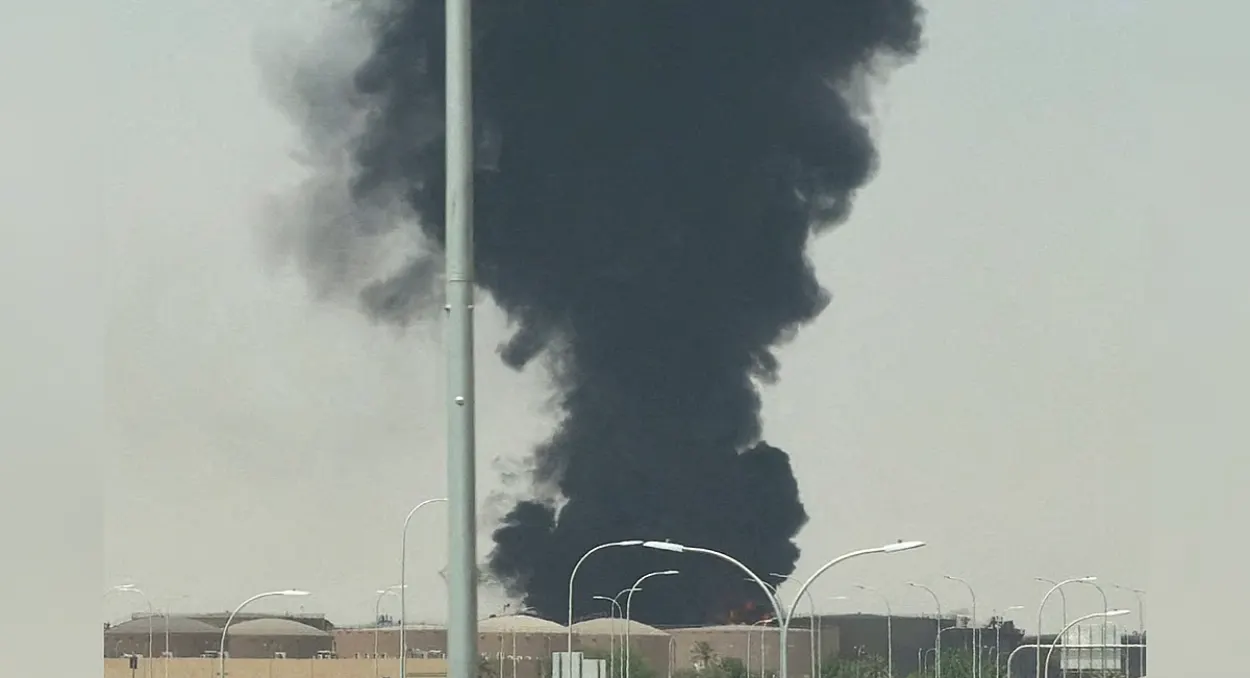
In response to the volatile security situation, Saudi Arabia temporarily suspended oil supplies through its East-West pipeline, also known as Petroline, after a drone attack caused damage. Riyadh attributed the strike to pro-Iranian militias operating in Iraq. The pipeline is the sole conduit for transporting crude oil from Saudi Arabia's eastern fields to the Red Sea port of Yanbu, bypassing the Strait of Hormuz.
The Houthis, who previously declared a naval blockade against Saudi Arabia—denouncing the Saudi-led coalition's blockade on parts of Yemen as illegal—have now established control over the entire Yemeni Red Sea coastline.
Saudi Arabia intervened in the Yemeni civil war in 2015, a year after Houthi rebels seized the capital city of Sanaa. The current escalation represents the most severe flare-up since a United Nations-brokered truce was established in 2022.