

World Bank Report Calls for Reform of Bangladesh Agricultural Subsidy System to Boost Productivity
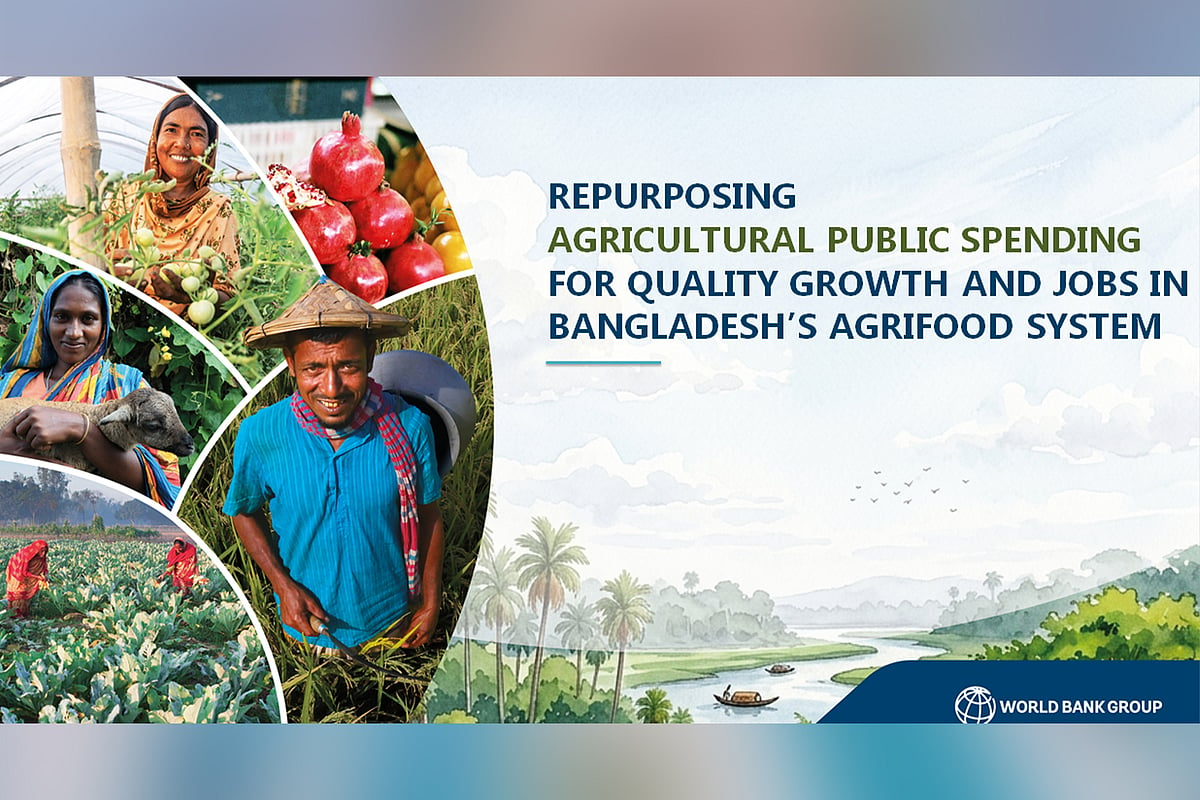
Photo Collected
A new report by the World Bank suggests that Bangladesh must overhaul its agricultural spending to transition from grain-centric subsidies toward more productive, climate-resilient investments. The study, titled “Repurposing Agricultural Public Spending for Quality Growth and Jobs in Bangladesh’s Agrifood System,” highlights that while the government allocates approximately 10 percent of its total budget to the agricultural sector, the current subsidy structure—which is dominated by fertilizer costs—fails to promote productivity or income equality effectively.
According to the report, fertilizer subsidies consume roughly 80 percent of the Ministry of Agriculture’s budget. However, these benefits are disproportionately skewed toward large-scale landowners. Findings indicate that the top 20 percent of landowners capture nearly half of all fertilizer subsidies, while the bottom 40 percent of farmers receive only 15 percent of the total support. Furthermore, current agricultural spending is heavily concentrated on rice production, which occupies 72 percent of the country’s arable land, thereby stalling efforts to diversify into high-value sectors such as livestock, fisheries, and horticulture.
বিজ্ঞাপন
The study warns that the existing model is no longer sufficient to meet the shifting demands of consumers, who are increasingly prioritizing fruits, vegetables, and protein-rich foods. While a significant portion of public funds is locked into commodity-based assistance, critical areas—including agricultural research, market connectivity, extension services, and climate-resilient infrastructure—remain underfunded. Additionally, there is a notable imbalance in soil management, with only about 5 percent of farmers applying balanced nutrient compositions to their crops, representing a major missed opportunity for increasing yield.
Jean-Christophe Maur, a director at the World Bank, underscored the urgency of these reforms, noting that climate risks, global supply chain uncertainties, and shifting dietary patterns have exposed deep weaknesses in the nation’s current agricultural policy. Maur argued that by modernizing support mechanisms and redirecting expenditure toward more productive investments, Bangladesh can build a more resilient system capable of generating better-paying jobs and sustained growth.
বিজ্ঞাপন
To address these systemic inefficiencies, the World Bank recommends a phased reform approach. In the short term, the report advocates for the expansion of soil testing, enhanced advisory services for farmers, and the implementation of digital tools like “farmer cards” and e-vouchers to ensure aid reaches the most vulnerable and climate-impacted regions. Long-term strategies emphasize moving away from broad-based subsidies in favor of investments that incentivize diversification and technological adoption.
Mansur Ahmed, a senior economist and co-author of the report, noted that modernizing the design and distribution of fertilizer subsidies offers a dual advantage. By refining these mechanisms, the government could save significant foreign currency, improve soil health, and ensure that limited resources are directed toward the smallholder farmers who need them most.
0%
0%
0%
0%