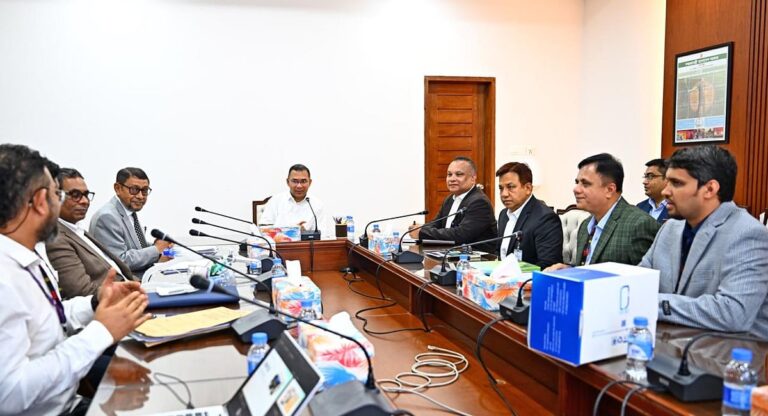


Health Minister Attributes Newborn Deaths at Ad-Din Hospital to Medical Negligence and Oxygen Shortage

Photo Collected
Health and Family Welfare Minister Sardar Md. Sakhawat Hossain informed the national parliament on Sunday that the recent deaths of six newborns at Ad-din Hospital were the direct result of oxygen shortages and gross medical negligence. Addressing the opposition during the general discussion on the proposed 2026-27 national budget, the minister detailed how the infants succumbed to carbon dioxide poisoning in an environment where basic life-saving equipment and medical supervision were absent.
According to the minister, investigations revealed that the nursery lacked oxygen supplies, and the ventilation system had failed, trapping the newborns in a stifling, unmonitored room. He recounted that while several mothers pleaded for assistance, no medical staff arrived to intervene. Furthermore, the minister stated that his subsequent visit to the facility confirmed the staff’s admission of neglect, noting that the hospital’s ownership failed to respond appropriately to the crisis.
বিজ্ঞাপন
Defending the government’s decision to suspend the hospital’s license, Hossain emphasized that the move was intended to enforce accountability rather than shutter the facility permanently. He addressed concerns regarding the hospital’s affordable dialysis services, asserting that while the institution provides vital low-cost care, that does not excuse the systemic failures or the clinical malpractice that led to the tragedy.
The minister also raised alarms regarding the hospital’s internal management, citing significant fire hazards, including the presence of an unauthorized bakery operating within the building and the accumulation of hazardous plastic waste. He alleged that the owner’s mismanagement and stubbornness prompted a restructuring of the board of directors, which resulted in the owner’s wife being appointed as the chief executive officer.
বিজ্ঞাপন
Hossain reiterated that the government remains uncompromising in its pursuit of discipline within the healthcare sector. He stressed that protecting the lives of the country’s 180 million citizens is the administration’s primary obligation, adding that the state will not tolerate instances where children die due to a lack of medical care.
Shifting focus to the broader national budget, the health minister described the fiscal plan as a qualitative roadmap designed to reduce the financial burden on the public. He highlighted strategic initiatives aimed at lowering the costs of cancer treatment and dialysis, with an overarching goal of reducing the “out-of-pocket” healthcare expenses currently borne by the poor.
In addition to healthcare reforms, the minister highlighted the government’s commitment to environmental sustainability through the Prime Minister’s “One Child, One Tree” initiative. He explained that by encouraging primary school students to plant trees in their homes or schoolyards, the government aims to foster long-term environmental protection and mitigate the impacts of climate change.
0%
0%
0%
0%