

Vigilante Groups Attack and Expel Alleged Drug Dealers in Faridpur Amid Police Inaction
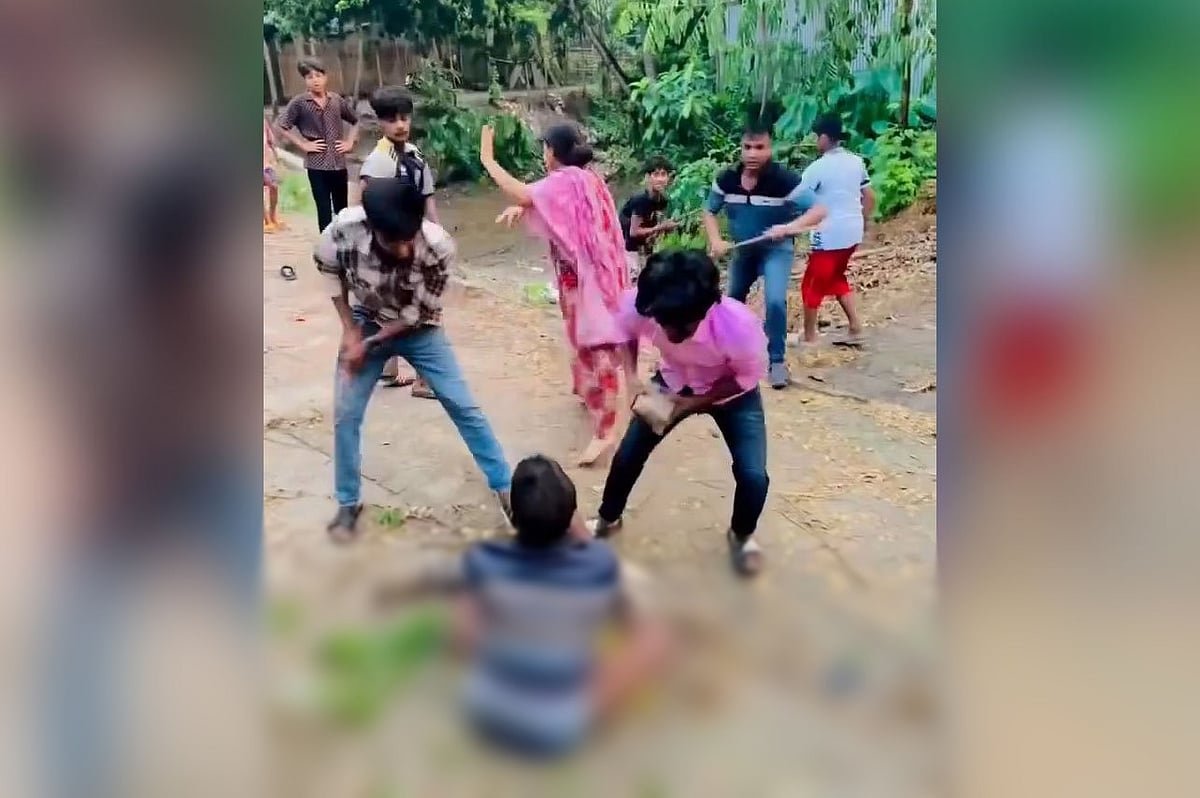
Photo Collected
A wave of vigilante violence has swept through Faridpur’s Bhanga upazila, as groups of residents launched coordinated attacks against suspected drug dealers, leading to the destruction of homes and physical assaults. Throughout last Friday, incidents were reported in the Chondidasdi neighborhood of Bhanga municipality, as well as the villages of Hamirdi and Brahmanpara, as local groups took matters into their own hands under the guise of an anti-narcotics campaign.
The perpetrators, acting under the banner of “concerned youth,” systematically targeted those they labeled as drug traders. In Chondidasdi, a group led by several prominent local figures—including a retired army major and a local lawyer—ransacked two houses belonging to Ayub Sheikh. Attackers used crowbars and sledgehammers to destroy the structures before setting furniture ablaze. Despite the location being just one kilometer from the local police station, law enforcement did not intervene during the hour-and-a-half-long assault.
বিজ্ঞাপন
Similar scenes unfolded in Brahmanpara, where a man named Saleh Ahmed was brutally beaten by a mob. A video circulating on social media shows the victim being punched, kicked, and struck with bricks and bamboo sticks as women and children nearby unsuccessfully pleaded for his release. In Hamirdi, another resident, Bisha Munshi, was assaulted before being subjected to a public “arbitration” hearing where he was ordered to leave the area within 12 hours. In all documented cases, the victims and their families have fled their homes, which remain locked and abandoned.
The unrest appears to have been emboldened by local political rhetoric. During an event on Friday afternoon, Faridpur-4 Member of Parliament Shahidul Islam Babul urged residents to take action, stating that he could not handle the drug epidemic alone and encouraging citizens to expel dealers from their neighborhoods. Following the public backlash and the subsequent violence, however, the lawmaker issued a statement on social media warning that such vigilantism is “not desirable” and urging the public not to take the law into their own hands.
বিজ্ঞাপন
Local residents defended their actions by citing a complete lack of faith in the judicial process. Many alleged that even when police arrest suspects, they frequently secure bail and return to their illicit activities immediately, leaving communities feeling helpless. They argued that because police are perceived as ineffective, collective action was the only remaining option to protect their youth from drug addiction.
Bhanga Police Station Officer-in-Charge Mizanur Rahman acknowledged the incidents but noted that no formal complaints had been filed by the victims. He stated that a special police team has now been formed to prevent future instances of mob violence, with instructions to respond to any such reports within 15 minutes.
Civil society leaders have strongly condemned the trend. Shipra Roy, president of the Faridpur chapter of the Transparency International Bangladesh-inspired Citizens’ Committee, warned that inciting mobs sets a dangerous precedent. She emphasized that while drug trade remains a serious concern, delegating law enforcement powers to the public undermines the state, creates chaos that is difficult to contain, and risks being exploited for personal vendettas, which she noted is unacceptable in a civilized society.
0%
0%
0%
0%