The law minister urged not to spread confusion about the ordinances which have not been presented
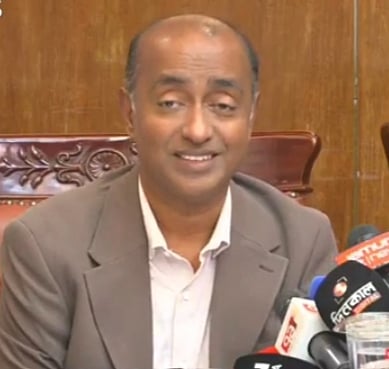
Photo Collected
Law Minister Md. Asaduzzaman said, out of the total 133 ordinances made during the interim government, the 16 ordinances which were not presented in the parliament, need more scrutiny. So they have not been presented yet.
The Law Minister alleged that some circles are spreading confusion saying that the government has ‘dropped these ordinances’. According to him, transparency and accountability are clearly mentioned in the preamble of the laws but many are ignoring them. He also urged not to spread confusion in this regard.
বিজ্ঞাপন
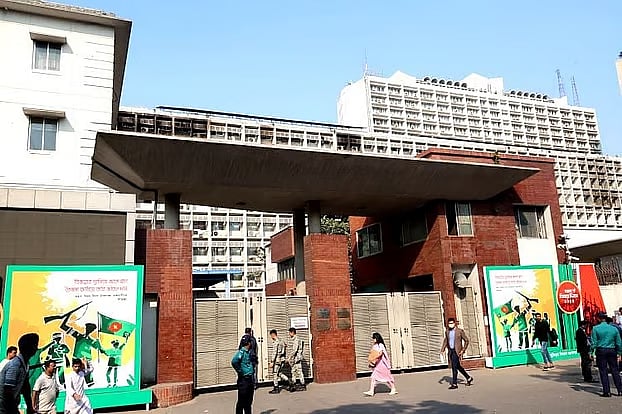
The Law Minister said these things in a press conference organized after the introduction of 133 ordinances made during the interim government in the Thirteenth Parliament. Interior Minister Salahuddin Ahmed and Chief Whip Nurul Islam Moni also spoke to the journalists at the press conference at the Secretariat of the Ministry of Home Affairs at 3 pm today.
Md. Asaduzzaman said, 110 ordinances had to be brought to the parliament in the form of bills, which were presented through 91 bills and they were passed by the parliament. He said, there is no opacity in these laws made by the government; Rather, those ordinances that require further review are clearly mentioned.
বিজ্ঞাপন
The Law Minister said that 97 ordinances have been passed exactly as before. 13 Ordinances were amended and passed and 7 Ordinances were introduced as Repeal Bills. The remaining 16 ordinances were not presented in Parliament.
The Law Minister said, among the ordinances which have been brought as repeal bills, the reasons have been clearly mentioned in the preamble of the respective laws. As examples, he cited the National Human Rights Commission, the appointment of Supreme Court judges and the Supreme Court Secretariat Ordinance. The Bill itself mentions the need for further consultation and scrutiny with stakeholders in these cases.
Md. Asaduzzaman said, the government has not left any ambiguity anywhere. Introducing a bill through Parliament means it becomes law. Even the repeal bill becomes part of the law, with a promise of subsequent scrutiny.
Regarding the missing persons law, the law minister said that there are some ambiguities in the law regarding the definition of missing person and the process of prosecution, which may create legal complications in the future. For this reason, the matter needs to be reviewed in more detail. Similarly, there are questions about some sections of the Human Rights Commission Act—especially the lack of clear guidelines on investigations, fines and compensation, he said. The law minister also said that the government has taken the initiative to start discussions with stakeholders on these issues. A consultation on the Human Rights Commission Act may be held after mid-May.
Of the 122 ordinances issued during the caretaker government from 2007 to 2009, only 54 became laws, while the rest were repealed. Comparatively, the current government has converted more ordinances into laws, as the law minister pointed out in the press conference as an example. He said, “We have clear plans and good intentions for the ordinances that have not yet become laws.”
Source: Prothom Alo Bangla
0%
0%
0%
0%