

Legendary Bangladeshi singer Ferdousi Rahman reflects on her illustrious career, the profound influence of her father, folk icon Abbasuddin Ahmed, and the evolving landscape of Bengali music in a career-spanning interview.
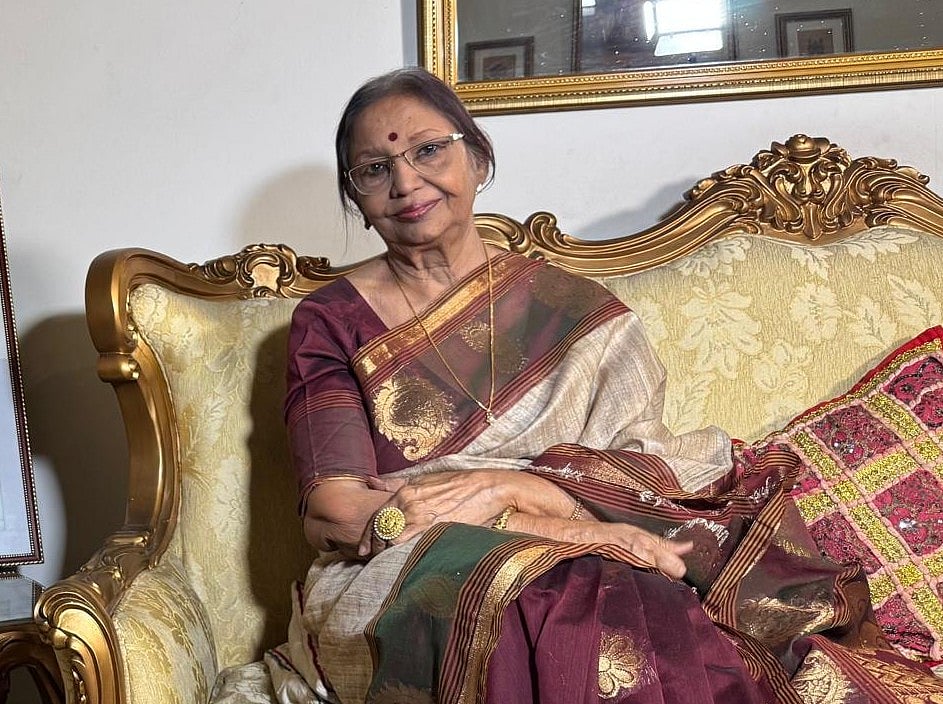
Photo Collected
The legendary Bangladeshi singer Ferdausi Rahman, whose voice has shaped the cultural landscape of the nation for decades, recently reflected on her storied life, her artistic heritage, and the enduring influence of her father, the iconic folk musician Abbasuddin Ahmed. In a wide-ranging interview conducted by writer Anisul Hoque for the “Ovigyotar Alo” series, supported by Crown Cement, the veteran artist provided a poignant look at her childhood and the musical evolution of Bangladesh.
Born in 1941 in Cooch Behar, then part of undivided Bengal, Rahman’s early life was defined by a house filled with the sounds of gramophone records and the presence of stalwarts like Kazi Nazrul Islam. She recalled the deep artistic bond between her father and the national poet, noting that the iconic song “O Mon Romzaner Oi Rozar Sheshe Elo Khushir Eid” remains an inseparable part of the Bangladeshi Eid experience, a testament to their collaborative genius.
বিজ্ঞাপন
Rahman’s journey from those early days in Cooch Behar to her arrival in Dhaka following the 1947 Partition is marked by a blend of nostalgia and cultural resilience. After settling in Narinda, she continued her education and musical training, eventually becoming a household name. She famously balanced a rigorous academic life—including achieving high honors in matriculation—with a burgeoning career in classical, folk, and modern music. Her transition into cinema, particularly through her contributions to early films like “Asia,” helped popularize the hauntingly beautiful Bhawaiya genre, a legacy she expanded alongside her brother, the late cultural personality Mustafa Zaman Abbasi.
Reflecting on her career, Rahman highlighted the unplanned nature of her path. Despite her initial reluctance to teach music, her series “Esho Gaan Shikhi” became a foundational institution, training generations of Bangladeshi artists. She credited her father’s unwavering vision and guidance for her success, noting that her achievements were often the realization of dreams he held for his children. “When I receive an award or recognition, I always think of how happy my father would have been,” she said.
বিজ্ঞাপন
Addressing the current state of music, Rahman observed that while contemporary artists possess immense vocal talent, the industry struggles to produce songs that match the lyrical and melodic quality of the past. She emphasized that meaningful lyrics remain the bedrock of a great composition. Despite health challenges in recent years, her passion remains undiminished.
Looking back on her childhood, Rahman expressed a deep longing for the landscapes of her youth—the ponds, the fields, and the communal warmth of Cooch Behar. As she watches the next generation, including her own relatives like Naashid Kamal and Armeen Musa, continue to make their mark on the international stage, she remains optimistic. For Rahman, her legacy is not just in the songs she sang, but in the enduring spirit of the culture she helped define.
0%
0%
0%
0%