
Justice for July: Families of uprising victims demand accountability as legal delays persist
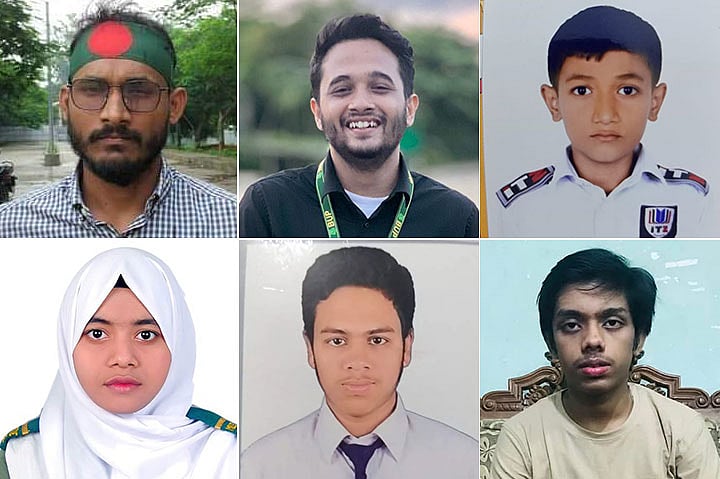
Photo Collected
The families of those killed during the 2024 July uprising in Bangladesh continue to grapple with the trauma of loss and a growing sense of frustration regarding the pace and outcomes of judicial proceedings. Across the country, relatives of the 843 victims officially recognized by the government remain locked in a pursuit of justice, often finding themselves trapped between the grief of their losses and the procedural hurdles of the international crimes tribunals.
For many, the nightmare began with coercion. Abul Khair, the father of seventh-grader Rakib Hassan, recounted how authorities pressured him to sign a document effectively waiving his right to pursue legal action against the perpetrators. Under the threat that his son’s body would otherwise be disposed of as unclaimed, Khair signed the papers while in a state of shock. Rakib, who was killed by gunfire on July 19, 2024, had been wearing a school uniform and carrying the physical marks of what hospital records described as a “grenade blast” head injury. Today, while Khair has received government recognition and financial compensation as a parent of a martyr, his primary concern remains the accountability of those responsible for his son’s death.
The legal landscape has proven equally complex for the family of Mir Mahfuzur Rahman Mugdho, whose death while distributing water to protesters became a defining image of the movement. Following a six-month investigation and the submission of video evidence to the International Crimes Tribunal, prosecutors have filed formal charges against 26 individuals, including senior police officials and a former member of parliament. Despite the progress, the victim’s brother, Mir Mahmudur Rahman Dipta, remains critical of the delays, emphasizing that the burden of gathering evidence fell primarily on the grieving family.
Similar sentiments echo among families of female victims, such as 14-year-old Naima Sultana, who was killed by a bullet while standing on her balcony in Uttara. Her mother, Ainun Nahar, continues to mourn a daughter who had just days earlier posted messages in support of the student movement. For families like Naima’s, the legal process is not merely a bureaucratic requirement but a necessary step to address the void left by their children.
Judicial interventions have sparked mixed reactions. While the International Crimes Tribunal has issued death sentences and prison terms in cases involving the deaths of protesters such as Shahariar Khan Anas and Abu Sayeed, many families have expressed dissatisfaction with the severity of the sentences handed down to lower-ranking officers. In the case of Anas, whose final letter to his mother reflected a profound sense of self-sacrifice, his parents joined others in petitioning for a review of the verdicts, arguing that the punishments were insufficient given the gravity of the crimes. The Supreme Court has since intervened to stay the release of certain convicted officers pending appeal, a move reflecting the volatile intersection of judicial process and public expectation.
As cases like that of Imam Hasan Bhuiyan Taim—whose father is a police official—reach their final stages, the recurring theme remains a deep-seated distrust in the system’s ability to ensure swift accountability. With several accused still at large or capable of securing bail despite overwhelming evidence, the families of the victims warn that justice must be both transparent and final. For these families, the struggle for truth continues, fueled by the memory of their loved ones and a refusal to allow these deaths to be forgotten in the transition toward a new political era.
0%
0%
0%
0%