


Jaggerys Signature Scent Fades
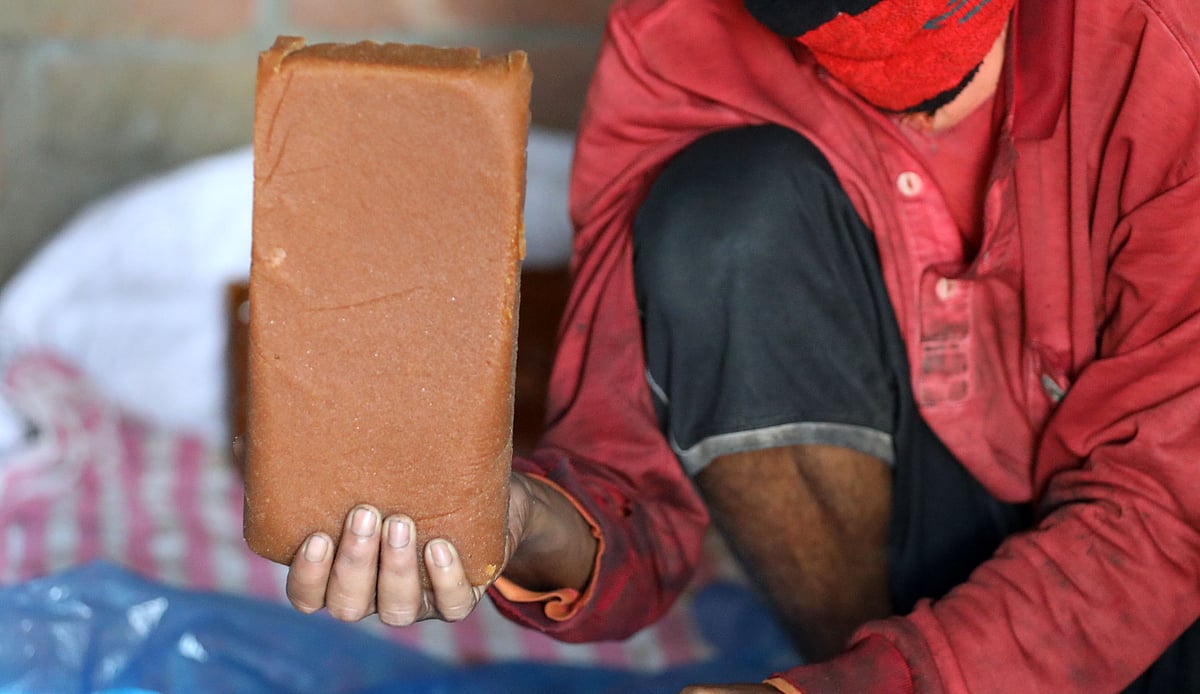
Photo Collected
Once integral to Bangladesh’s winter mornings, the sweet aroma of fresh jaggery complementing steamy pitha (rice cakes) has largely faded from rural homes, leaving behind a poignant reminder of a diminishing culinary heritage and a once-thriving marketplace. This decline is starkly visible at Torki port, an ancient trading hub on the Palordi River in southwestern Bangladesh, where a bustling jaggery trade has dwindled to a shadow of its former self over the past 15-20 years.
Jaggery, more than just a sweetener, historically embodied the warmth of Bengali hospitality and tradition, its presence woven into the fabric of daily life and celebrated in literature. Poets like Jashimuddin invited friends to enjoy simple village fare with jaggery, while acclaimed novelist Bibhutibhushan Bandyopadhyay depicted it as a staple of rural existence in works such as “Pather Panchali” and “Ichhamati.” From a child’s delight in a piece of patali jaggery with puffed rice to a common villager’s daily repast, it symbolized an “ambrosial” treat.
বিজ্ঞাপন
The Torki port, nestled at the confluence of the Torki-Bashail and Torki-Sauder canals on the border of Madaripur and Barisal districts, was once a major commercial center in southern Bangladesh. Weekly market days transformed the port into a vibrant human tide, with stacks of jaggery jars (“jala”) and the captivating scent of sugarcane and date palm jaggery filling the air. This hub boasted at least 34 wholesale warehouses and hundreds of retailers. Today, only two of those warehouses remain operational, their former grandeur reduced to a fading memory.
Among the few survivors is “Rahul Store,” formerly known as “Saha Babu’s Jaggery Shop,” a family business with a legacy spanning generations. Brothers Ratan Saha and Swapan Saha, along with their children, now manage the century-old establishment, continuing a lineage that began with their father, Jagadish Chandra Saha, who established the permanent shop after their ancestors traded in the open market.
বিজ্ঞাপন
Swapan Saha recalls a bustling past where market days required multiple clerks (“sarkar”) and eight to ten robust laborers to load and unload jaggery jars from barges. Now, the once-massive operation relies on just one clerk and one laborer. In its heyday, the port received thousands of “patil gur” (jaggery in clay pots, each weighing one maund) via river from Narail during peak season. However, declining cultivation of traditional sugarcane varieties, coupled with the lower sweetness of high-yielding variants, has eroded jaggery’s authentic taste and aroma. Similarly, a reduction in the number of date palm trees has significantly cut the supply of date palm jaggery.
The plight of retail vendors is even more acute. Ninety-year-old Hossain Khan, who has sold jaggery at Torki’s old toll house for 40 years, lamentingly notes his struggle to sell even a kilogram of jaggery in a day, a stark contrast to the five or six maunds he once sold on market days. Shoppers like Suresh Das, despite medical advice, are drawn by nostalgic memories of warm rice porridge with a piece of jaggery, yet concede that the authentic, unadulterated product is increasingly hard to find amidst a proliferation of chemical additives and impurities.
As modernity and the dominance of packaged foods and refined sugar reshape dietary habits, the traditional role of jaggery has been relegated to the periphery. The Saha brothers express little desire for their children to continue the dwindling trade, hinting that the last remaining warehouses at Torki port may soon close. With their closure, the sweet aroma that once defined rural Bengali mornings will vanish, leaving behind only echoes of Torki’s lost golden era in the stories of its elders.
0%
0%
0%
0%