

Invasive Red-Eared Slider turtles threaten Dhaka aquatic ecosystems
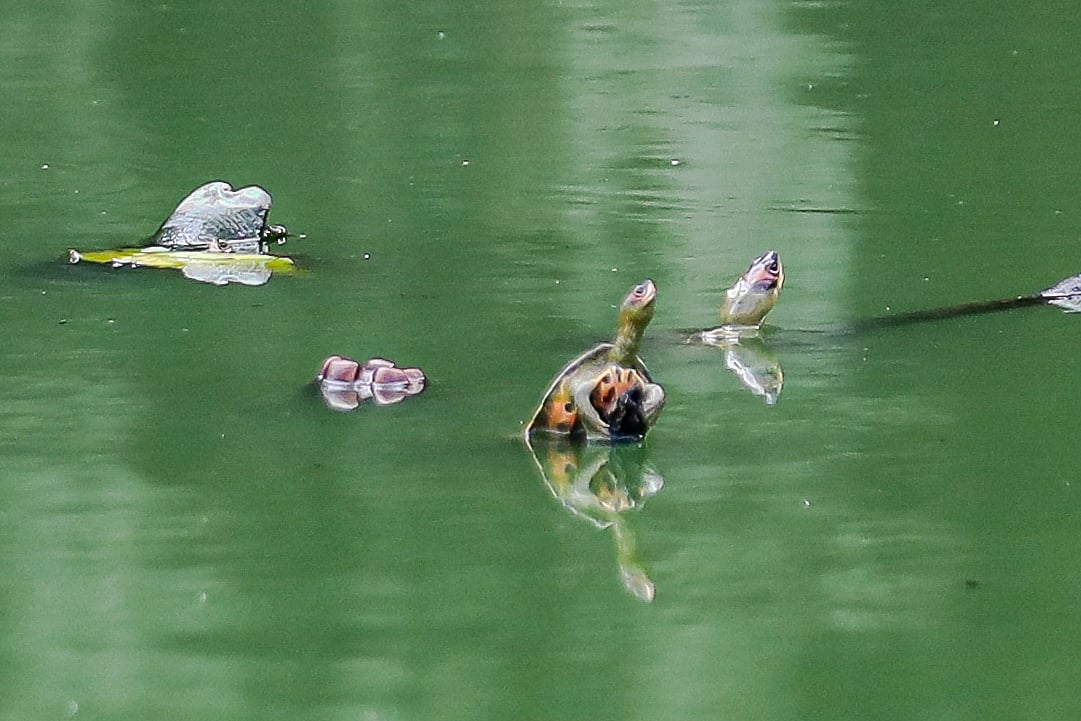
Photo Collected
Dhaka’s Hatirjheel, a vital urban wetland ecosystem, faces an escalating ecological threat from the presence of the red-eared slider, an invasive turtle species native to the Mississippi River basin in the United States. Conservationists warn that if left unchecked, these reptiles could mirror the environmental devastation caused by the proliferation of the non-native sucker fish, which has already permeated major river systems across Bangladesh.
The red-eared slider is increasingly visible across the capital, sunning on logs and debris within Hatirjheel and several university campus ponds. According to wildlife experts, the crisis is largely driven by the exotic pet trade. Many residents purchase the turtles as juveniles for home aquariums, only to abandon them in public water bodies once they outgrow their tanks.
বিজ্ঞাপন
The scale of the illicit trade was underscored on July 3, when the Wildlife Crime Control Unit raided a location in Mirpur, Dhaka. Officials recovered over 1,100 wild animals, including 846 red-eared slider hatchlings and 56 common snapping turtles—another aggressive, non-native species capable of growing up to 40 kilograms. Inspectors noted that the animals are frequently smuggled into the country through airports and land ports via complex trafficking networks that leverage social media for distribution.
The threat posed by these species is multidimensional. As omnivores, red-eared sliders compete aggressively for food and habitat, potentially decimating native aquatic plants and animal populations. Furthermore, the species is known to carry pathogens such as Salmonella, which pose public health risks and can be transmitted to indigenous wildlife. The turtles’ high reproductive rate—with females capable of laying up to 30 eggs per clutch, six times a year—facilitates rapid population growth once established in the wild.
বিজ্ঞাপন
The World Wildlife Fund has consistently warned that releasing these turtles outside their natural range inflicts long-term damage on local biodiversity. Jahangirnagar University zoology professor M.A. Aziz emphasized that the situation is critical, noting that the same negligence allowed the sucker fish to spread from urban canals to major river basins like the Turag and Meghna.
Authorities acknowledge that existing surveillance systems at points of entry are insufficient to curb the influx of these exotic animals. Experts are now calling for a comprehensive government response, including tighter monitoring of online marketplaces, enhanced detection technology at airports, and robust legal enforcement to stop the illegal importation of invasive wildlife before they permanently alter the nation’s fragile aquatic ecosystems.
0%
0%
0%
0%