


Howre Dhankata: To deal with the labor crisis, sand extraction is being stopped in Jadukata river
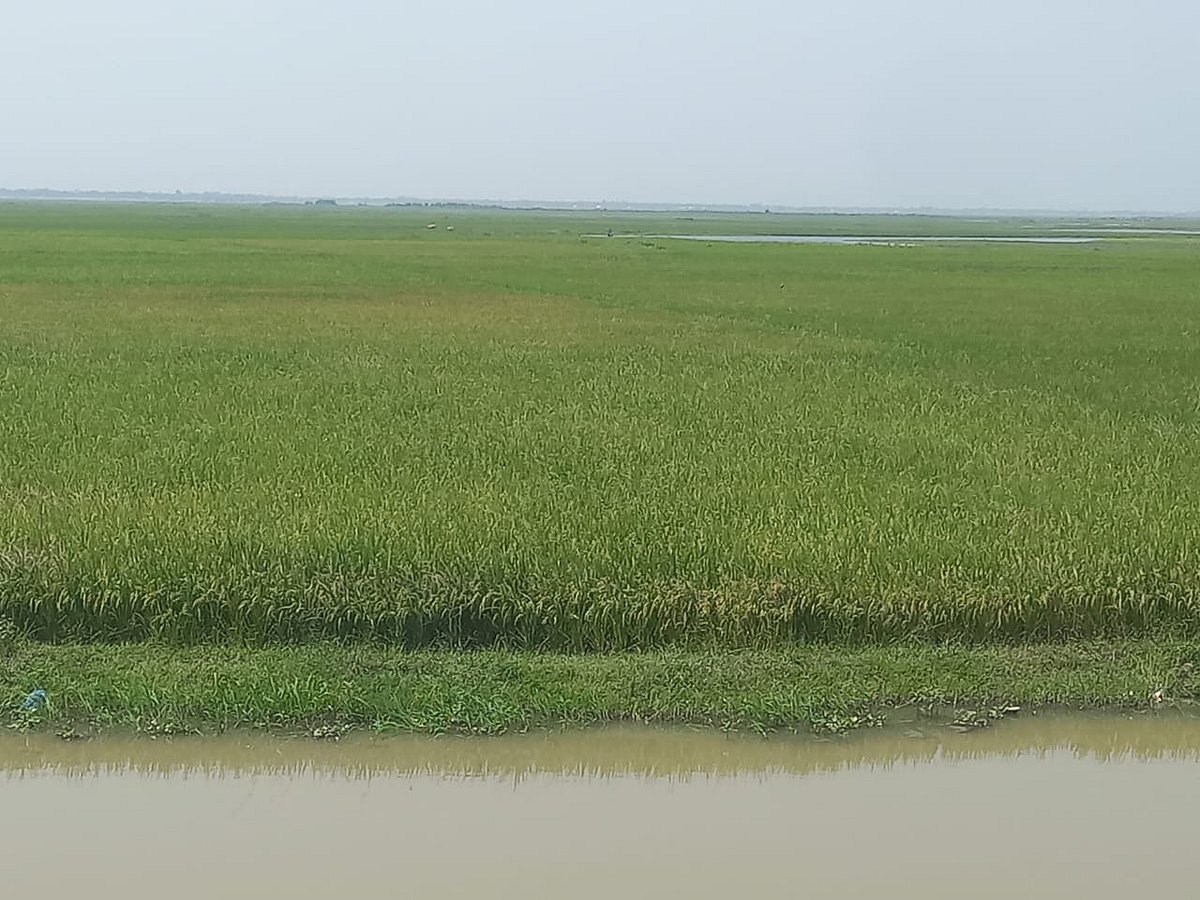
Photo Collected
Harvesting of boro paddy has started in Haor of Sunamganj. However, rainwater has accumulated in many places. Due to this, there is a problem in harvesting paddy with a combined harvester. Meanwhile, there is a labor crisis.
In this situation, for the convenience of farmers, it has been announced that sand extraction and transportation in the big Jadukata river of the district will be stopped from Monday to April 30. It is believed that 10-15 thousand workers will be involved in paddy harvesting in Howar. Jadukata river is located in Tahirpur upazila.
Yesterday afternoon on Saturday afternoon Sunamganj-1 Constituency (Tahirpur, Dharmapasha, Jamalganj and Madhyanagar) Member of Parliament Kamruzzaman Kamrul directed the upazila administration to take a boat on the river in this regard. Tahirpur Upazila Executive Officer (UNO) Mehdi Hasan Manik confirmed this information.
An officer of the upazila land office conducted miking. He said that harvest of Boro paddy has started. In order to deal with the labor crisis in paddy harvesting and for the benefit of the farmers, under the direction of the Member of Parliament, the extraction and transportation of sand in Jadukata river will be stopped for 10 days. If anyone violates this order, action will be taken as per existing law.
Farmers said that it has been raining in Sunamganj since the beginning of Chaitra month. First light and then heavy rains caused waterlogging at various places. Many haor paddies are submerged in water. Somewhere the paddy has sunk. Rain water is accumulated in the lower part of the haors. Farmers have tried to drain the water by cutting dams to protect the crops of several haors in the district. Again, some places have tried to drain the water by installing pumps on their own initiative. But because there is water in Haor’s land, there is a problem in harvesting paddy with combine harvester or reaper.
Farmers say that laborers used to come to Haor from different parts of the country to harvest paddy. There were also local rice harvesters. The influx of foreign workers has decreased. Again, as the rice harvester was introduced, the local workers no longer cut rice as before.
Abdul Qayyum, a farmer of Ichagari village in Sadar Upazila’s Hawarpar, said, “Now there is no way without machines. The amount of paddy that can be cut and threshed in one day by one machine is not possible with a hundred workers.
According to the sources of the District Agriculture Extension Directorate, 2 lakh 23 thousand 511 hectares of land have been cultivated in 137 haors of Sunamganj. Out of this, 1 lakh 65 thousand 275 hectares are in the deep part of Haor and 58 thousand 236 hectares in relatively higher parts without Haor. The production target of paddy is about 14 lakh metric tons.
According to the information of the Agriculture Department, there are 577 combined harvesters in operation for harvesting paddy in Sunamganj. Apart from this, there are 108 which can be utilized if renovated. Owners and companies have been instructed to activate the devices. There are 146 Reapers. This time, it has been determined that machine owners will charge 1 thousand 900 taka for harvesting and threshing paddy of one bigha (33 centuries) of land with Howre harvester. No machine owner can charge more than this from farmers.
Mohammad Omar Farooq, deputy director of the district agriculture extension department, said that it will be difficult to cut paddy with machines in areas where there is more water. If there is 8-10 inches of water then machine harvesting is possible.
Member of Parliament Kamruzzaman Kamrul said, ‘People in Sunamganj are dependent on Boro rice. This paddy is all we have. So farmers will be given all kinds of support to raise paddy. We are on the side of the farmers.
Source: Prothom Alo Bangla
0%
0%
0%
0%