


Former Bangladesh Police Chief Benazir Ahmed Arrested in Dubai

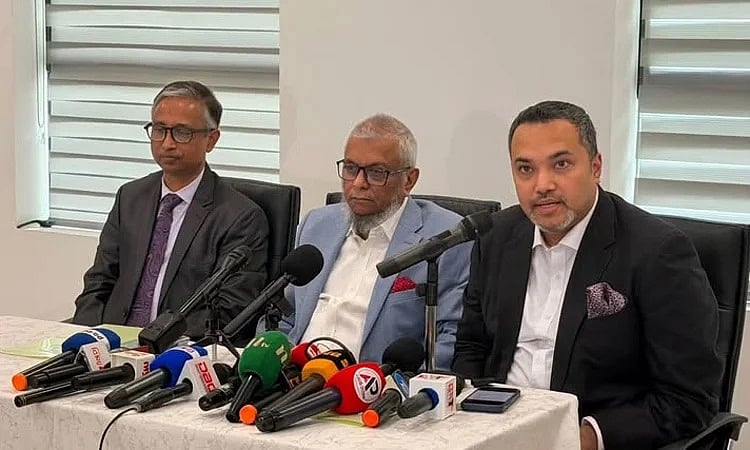
Photo Collected
Former Bangladesh Inspector General of Police Benazir Ahmed, once the nation’s most powerful law enforcement official, has been arrested in Dubai, United Arab Emirates. The arrest, confirmed by the UAE government to Bangladeshi authorities on June 12 via email, marks a significant development in the pursuit of a figure whose alleged criminal record is described by peers as unprecedented in the history of the country’s police force.
Home Minister Jahangir Alam confirmed the development, noting that the arrest followed the issuance of an Interpol Red Notice. Speaking in parliament on Sunday, the minister framed the capture as a historic milestone for the Bangladesh Police, signaling a decisive shift toward ending the culture of impunity. The Anti-Corruption Commission (ACC) is currently coordinating efforts to facilitate Benazir’s repatriation to face multiple pending charges.
Benazir’s downfall follows a career marked by allegations of systemic abuse of power, large-scale corruption, and human rights violations. During his tenure as Dhaka Metropolitan Police commissioner, head of the Rapid Action Battalion (RAB), and subsequently as Inspector General of Police from 2020 to 2022, he was a key figure under the now-ousted Awami League government. In 2021, the United States imposed sanctions on him and several RAB officials over allegations of serious human rights abuses.
Investigations by the ACC, initiated in April 2024, revealed an immense portfolio of illicit wealth held by Benazir and his family members. Court records indicate that he, his wife, and two daughters accumulated assets—including roughly 800 bighas of land, four luxury apartments in Dhaka, 33 bank accounts, and shares in 19 companies—far exceeding their known sources of income. Much of this land, particularly in Gopalganj, was allegedly seized from local Hindu landowners through intimidation and coercion.
Among his most high-profile assets was the “Savanna Eco Resort and Natural Park” in Gopalganj, a massive project built on over 600 bighas of land. Following the revelations of corruption, the court ordered the seizure of these properties. Local authorities have since moved to take control of the site, with the resort’s ponds and agricultural land recently leased to public agencies to generate government revenue.
Beyond financial crimes, Benazir faces severe criminal charges, including allegations of enforced disappearances and extrajudicial killings. He is named in a case involving the 2013 crackdown on Hefazat-e-Islam at Motijheel’s Shapla Chattar, an operation that resulted in dozens of deaths. He is also a defendant in a separate ongoing trial at the International Crimes Tribunal concerning forced disappearances allegedly carried out by RAB’s Task Force Interrogation (TFI) cell.
Controversy also extended to his academic and administrative conduct. Dhaka University suspended his Doctor of Business Administration (DBA) degree after investigations concluded he failed to meet the mandatory academic eligibility criteria. Additionally, he faces an ongoing ACC probe for passport forgery, stemming from an incident in 2016 where he allegedly bypassed official protocols to obtain a passport while serving as the RAB chief.
Benazir fled Bangladesh on May 4, 2024, shortly after the ACC launched its inquiry. Critics and former colleagues argue that his actions were enabled by high-level political patronage, which shielded him from accountability for years. As the legal proceedings move to the next stage, analysts suggest his prosecution will serve as a litmus test for the integrity of the nation’s justice system.
0%
0%
0%
0%