Economist Anu Muhammad Warns Against Rising Anti-Creative Forces Following July Mass Uprising
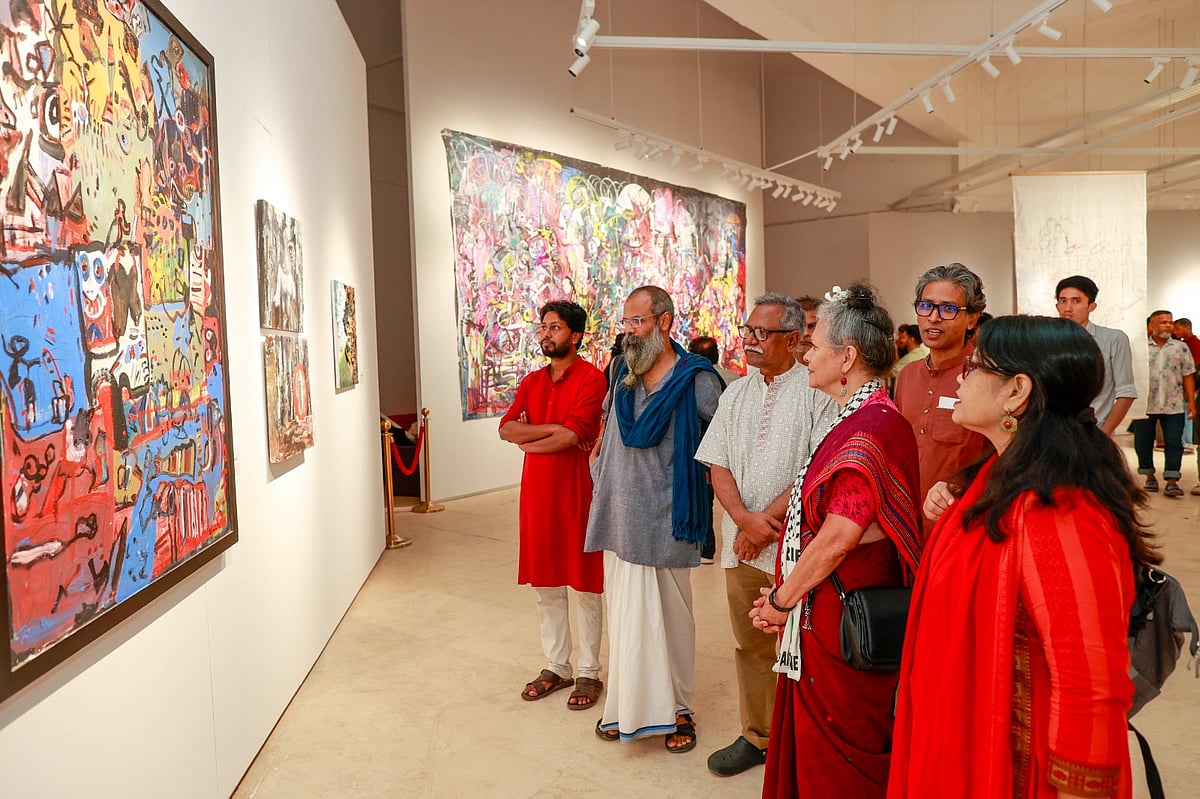
Photo Collected
Economist and professor Anu Muhammad has warned that the creative momentum ignited by the July mass uprising is under threat from anti-artistic forces. Speaking at the inauguration of an art exhibition titled “Juler Dak” (Call of July) at the National Museum in Dhaka on Friday, the academic expressed concern over the rising intolerance toward cultural expression.
Anu Muhammad noted that since the uprising, certain groups have actively obstructed musical performances, painting, sculpture, and film screenings. He described this trend as a dangerous subversion of the very spirit that fueled the mass movement. The exhibition, hosted by the cultural organization Samageet Sanskriti Angan in collaboration with City Bank, marks the lead-up to the second anniversary of the July uprising and commemorates the martyrs of the movement.
According to the economist, the exhibition serves as more than a retrospective of the 2024 uprising; it chronicles a long history of human suffering, resistance, and the relentless struggle against oppression. He emphasized that the history of Bangladesh is defined not only by cycles of tyranny and betrayal but also by the persistent power of construction and public defiance.
During his address, Anu Muhammad leveled criticism at the current administration, suggesting that the government appears to be acting against the popular mandate and the interests of the people. Citing the historic Phulbari movement, he argued that the state risks aligning itself against public will, contrasting this with the vibrant creativity expressed through music, graffiti, and digital media during the July uprising.
Writer Rehnuma Ahmed also addressed the attendees, asserting that the role of an artist is to challenge the status quo, provoke thought, and serve as the conscience of society. She remarked that the displayed works not only confront the viewer with the reality of past and present oppression—symbolized in some pieces by the “helmet forces”—but also inspire a collective resolve to move forward.
Artist Amal Akash, who contributed to the collection, stated that the exhibition features works from 25 artists. The pieces specifically highlight the aftermath of the uprising and the recent surge in attacks on cultural practitioners.
The four-day exhibition is being held at the Nalini Kanta Bhattasali Gallery. It is open to the public daily from 3:00 p.m. to 8:00 p.m. and will conclude on Monday. The opening ceremony was moderated by Bithi Ghosh, vice-president of Samageet, with additional remarks provided by the organization’s president, Rebeka Neela.
0%
0%
0%
0%