
Bangladesh Nationalist Chhatrodol Launches Educational Initiative for Underprivileged Children Near Jagannath University
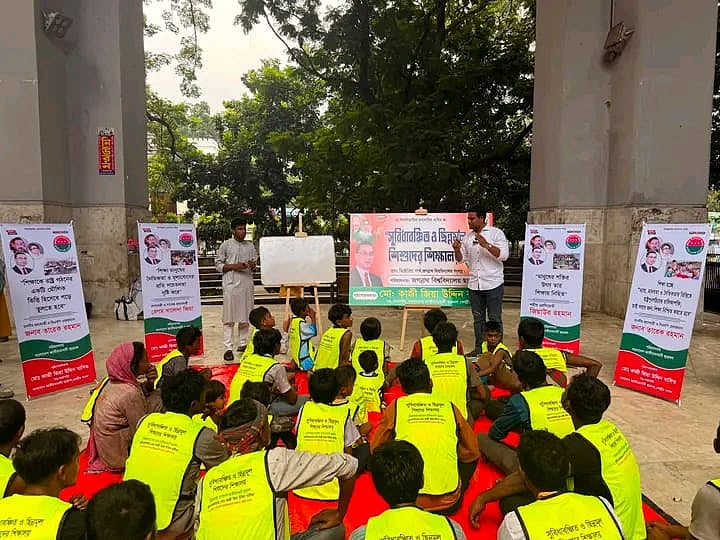
Photo Collected
A volunteer-led initiative has been launched to provide education and social guidance to underprivileged children living near Bahadur Shah Park, adjacent to Jagannath University. The makeshift school, established by the Bangladesh Nationalist Party’s student wing, Chhatra Dal, operates every Saturday and Tuesday to offer basic literacy and values-based instruction to children who lack access to formal schooling.
The program aims to address the needs of children who spend their days in the park, often struggling to support their families or living without parental supervision. Beyond basic academics, the curriculum emphasizes hygiene, discipline, and fundamental human rights. Two Jagannath University students serve as permanent instructors for the program, tailoring their lessons to the individual capabilities and requirements of each child.
Kazi Zia Uddin Basit, a vice president of the central Chhatra Dal, conducted a formal inspection of the initiative today. During the visit, he reviewed the academic progress of the students and distributed new books, prizes, and recreational equipment. The visit concluded with the distribution of midday meals to the children.
According to organizers, the project was initially launched to commemorate the birthday of Tarique Rahman. The initiative is currently managed by various tiers of Jagannath University Chhatra Dal leadership. Basit stated that the primary objective is to safeguard these vulnerable children from exploitation by individuals or groups who might otherwise use them for illicit purposes. By integrating them into the educational system, the organizers hope to provide these children with a pathway to a more stable and secure future.
Mohammad Irfan, a ten-year-old participant who frequents the park area, expressed his appreciation for the program. He noted that many children in his community lack the opportunity to attend school or have lost their parents, making the access to books and regular instruction a significant change in their lives.
Looking ahead, organizers intend to expand the scope of the program. Currently, monthly assessments are conducted to monitor student development, and incentives are provided to encourage continued interest in their studies. The long-term goal remains to transition these children from the periphery of society into the mainstream educational framework.
0%
0%
0%
0%