
Bangladesh moves to revive Japanese-backed infrastructure projects amid cost-reduction talks
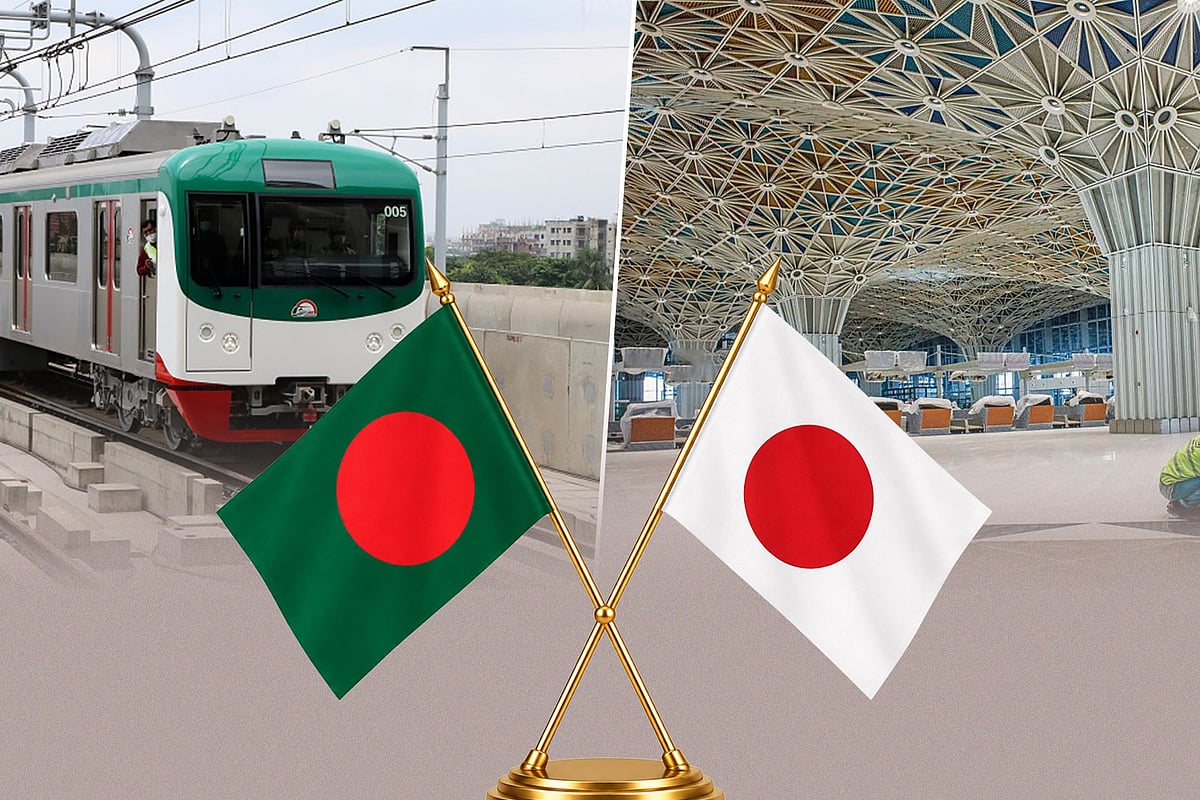
Photo Collected
The current government is moving to mend diplomatic and economic ties with Japan, seeking to resolve a period of friction that stalled key infrastructure projects under the previous interim administration. As part of this realignment, authorities have decided to proceed with two major Metro Rail initiatives—MRT Line-1 and MRT Line-5—while simultaneously finalizing the transfer of ground-handling operations for the Third Terminal of Hazrat Shahjalal International Airport to a Japanese consortium.
The shift follows a strategic review of development cooperation with Japan, which remains one of Bangladesh’s primary creditors. Official data from the Economic Relations Division (ERD) indicates that Japan accounts for 18% of Bangladesh’s total foreign debt, which stood at $77.28 billion as of June 2025. Despite this deep financial partnership, concerns over the ballooning costs of Japanese-funded projects had previously brought negotiations to a standstill.
বিজ্ঞাপন
The two Metro Rail projects, originally approved in 2019, faced significant scrutiny after projected costs surged. According to proposals from the Japan International Cooperation Agency (JICA), the estimated budget for MRT Line-1 rose by 84% to 96.5 billion taka, while MRT Line-5 saw a 113% increase to 88 billion taka. Critics have pointed out that these costs far exceed international benchmarks, with analysts noting that Metro Rail construction in countries like India typically costs significantly less per kilometer.
To address these financial discrepancies, the government has formed a seven-member technical committee, led by Emeritus Professor M. Shamimuzzaman Basunia, to evaluate the justification for the cost hikes. State Minister for Road Transport and Bridges, Habib Rashid, confirmed that while the government is committed to utilizing Japanese funding, rigorous negotiations with JICA are underway to ensure fiscal accountability.
বিজ্ঞাপন
JICA has defended the price increases by citing technical complexities, such as the extensive underground portions of the new lines, rising material costs, and expanded station designs compared to the initial 2019 plans. Conversely, Bangladeshi officials have raised concerns regarding procurement processes, which they argue often limit competitive bidding by favoring a small rotation of Japanese firms.
Parallel to the rail discussions, the government has moved to resolve the long-standing uncertainty regarding the management of the airport’s Third Terminal. Negotiations are in the final stages to sign a contract with a Japanese consortium—comprising Japan Airport Terminal Co., Sumitomo Corp., Nippon Koei, and Narita International Airport Corp. Under the proposed terms, the Japanese entities will manage ground-handling operations, with a revenue-sharing model granting Japan 73% and Bangladesh 27%.
The push for better terms comes as Japan has raised its interest rates on foreign loans, with the rate climbing from 2.9% to 3.6% as of April. Finance Minister Amir Khosru Mahmud Chowdhury has formally requested that his Japanese counterpart maintain lower, flexible rates for the next three years to assist Bangladesh as it prepares for its transition out of the Least Developed Country (LDC) status.
As JICA President Tanaka Akihiko visits Dhaka this week, the focus remains on balancing these vital geopolitical and economic partnerships with the necessity of fiscal discipline. Economists note that while Japanese expertise is highly valued, the government must remain steadfast in its efforts to optimize project costs to ensure sustainable development.
0%
0%
0%
0%