Bangladesh Launches New Women-Only Pink Bus Service Featuring Female Drivers and Conductors
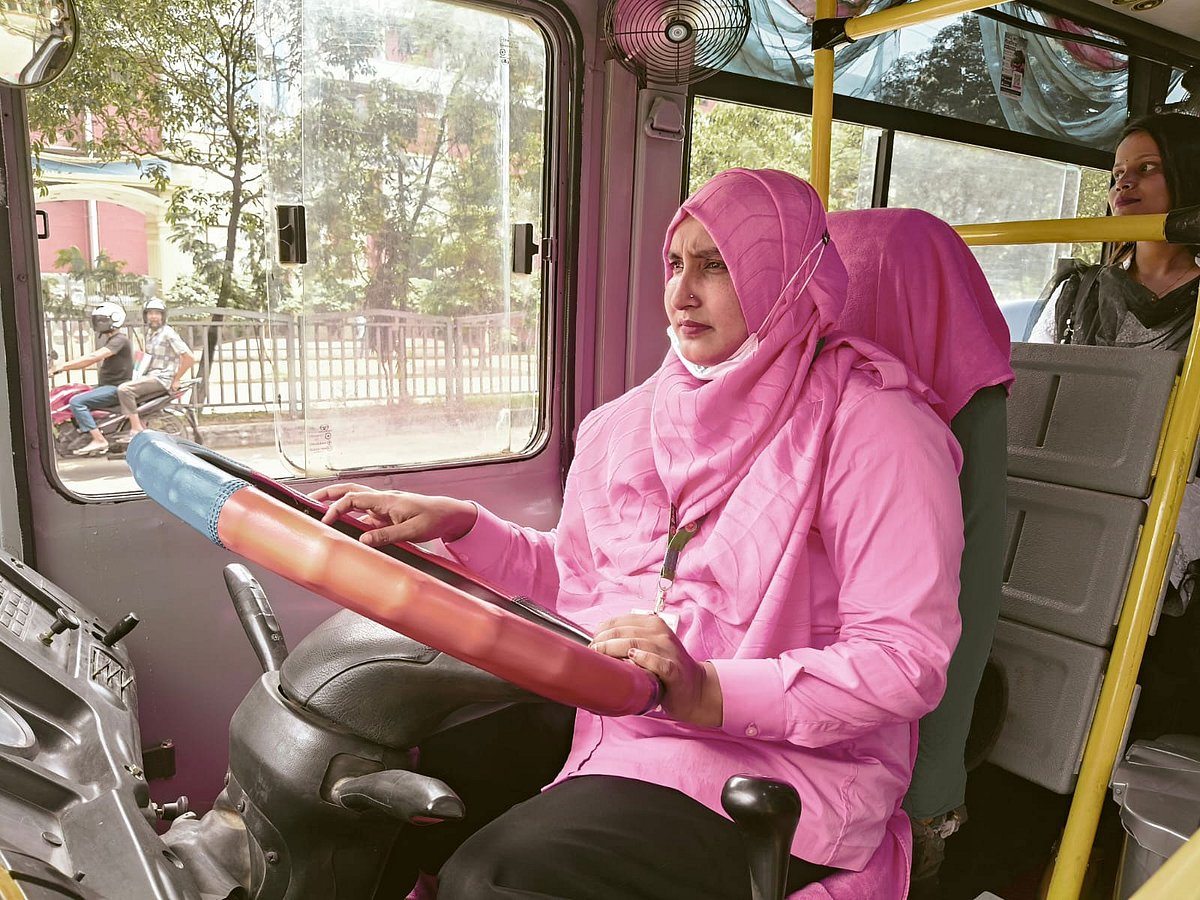
Photo Collected
The Bangladesh Road Transport Corporation (BRTC) has officially launched a women-only bus service, known as the “Pink Bus,” aimed at providing safe and harassment-free public transportation for female commuters. The service, operated entirely by female drivers and conductors, was inaugurated on Tuesday by Road Transport and Bridges Minister Sheikh Rabiul Alam at the BRTC truck depot in Tejgaon, Dhaka.
The initiative currently operates 14 buses across 13 routes in Dhaka, Chittagong, and Bogra, with stops at 134 designated locations. Dhaka hosts 10 routes, while Bogra and Chittagong operate two routes each. The project is part of a 180-day government action plan to enhance women’s safety in public transit. To ensure security and efficiency, the buses are equipped with electronic ticketing systems, vehicle tracking systems (VTS), and closed-circuit television (CCTV) cameras.
Minister Sheikh Rabiul Alam emphasized that the service fulfills a key election pledge to create a women-friendly environment in public transport. Addressing concerns regarding the harassment and discomfort women frequently face on conventional buses, the minister stated that the government plans to expand the fleet, increase the number of routes, and introduce 100 dedicated electric buses for women in the near future.
Female commuters have welcomed the move, citing relief from the overcrowding and harassment they often encounter on mixed-gender public transit. During the launch, students and working women expressed optimism that the service would allow for safer and more punctual travel. However, many passengers urged the authorities to increase the number of buses, noting that existing transit demands remain high.
The female drivers involved in the program, including Mosammat Rabeya Khatun and Jannatul Ferdousi, expressed pride in the initiative, noting that despite initial societal pushback, they are committed to overcoming gender barriers in the transport sector.
This is not the first attempt by the BRTC to introduce such a service. Similar initiatives were launched in 1998, 2001, and 2009 but struggled due to poor management, insufficient vehicle frequency, and operational failures. Commuters have cautioned that the long-term success of this current phase depends on rigorous oversight and positive public reception.
The designated routes span critical transport corridors, including several paths leading to Dhaka’s Motijheel commercial hub from areas like Abdullahpur, Mohammadpur, and Mirpur, as well as connections from Narayanganj, Bogra, and Chittagong. BRTC officials have confirmed that they aim to introduce 50 additional buses within the next three months to further stabilize the service.
0%
0%
0%
0%