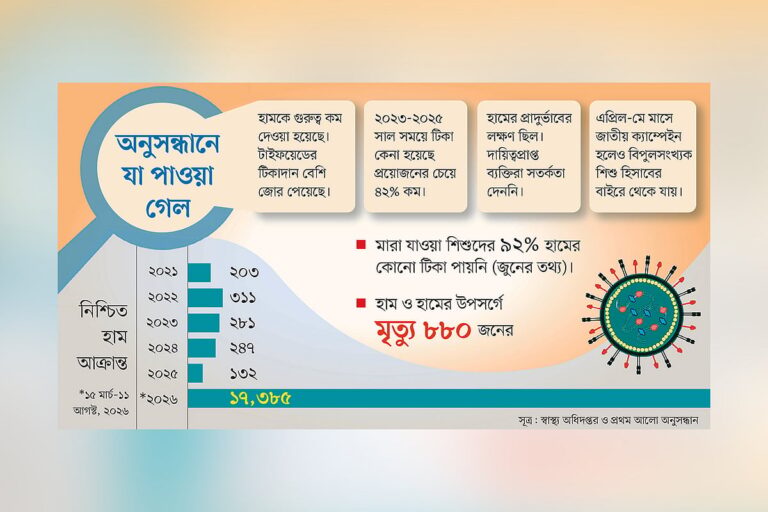

Measles Outbreak Persists in Bangladesh With Over 800 Deaths Reported Since March
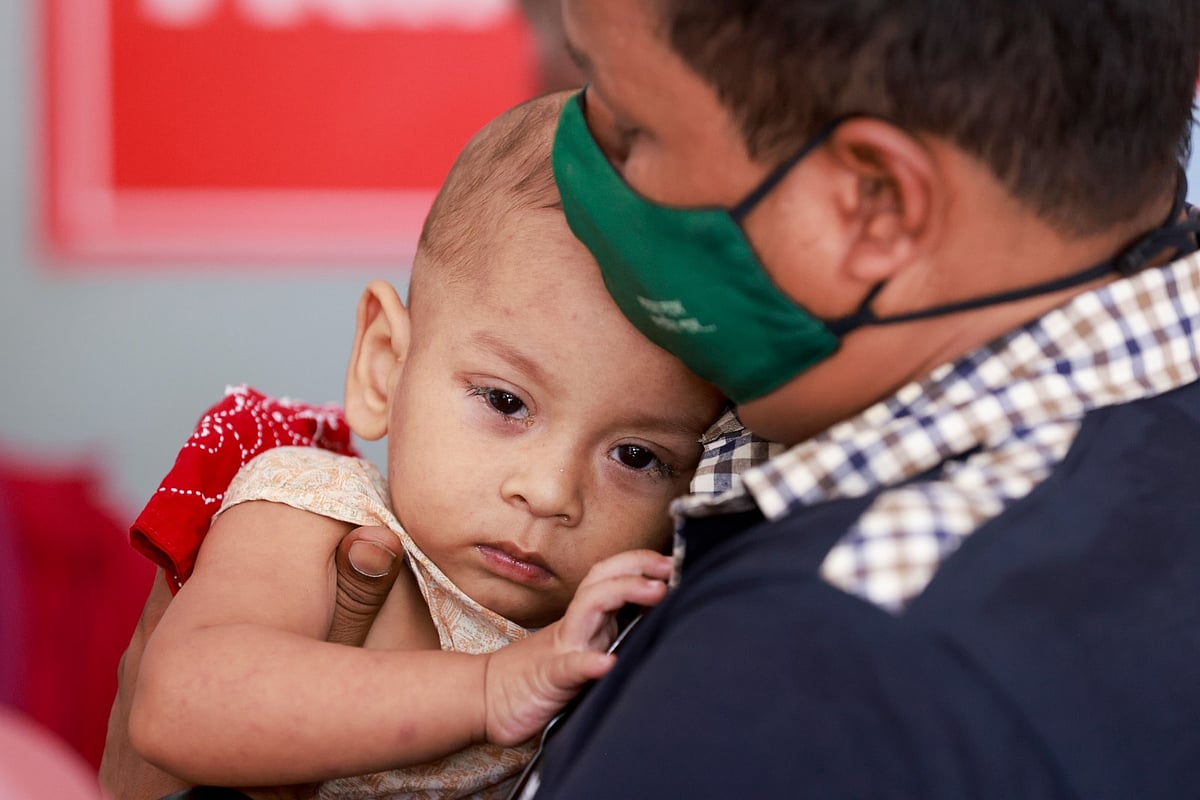
Photo Collected
Measles continues to claim lives and infect thousands across Bangladesh three months after a mass vaccination campaign, marking an unprecedented health crisis that experts describe as both abnormal and preventable.
In the 24-hour period ending Wednesday morning, five children died from measles and its associated symptoms, while 1,025 new cases were reported. Since March 15 of this year, the outbreak has resulted in 885 deaths and 156,594 infections. Health officials note that these figures represent the highest mortality and morbidity rates recorded in the country in at least two decades.
Public health experts have identified four critical systemic failures that have exacerbated the outbreak: the cancellation of the 2024 special measles-rubella immunization campaign, lapses in routine vaccination efforts during the tenure of the interim government, a failure to declare the outbreak a public health emergency, and the exclusion of approximately 4 million children during the recent mass vaccination drive.
Bangladesh previously held an international reputation for its success in controlling infectious diseases through rigorous routine immunization and targeted national campaigns. However, experts warn that a regression in these programs has dismantled hard-won progress.
Public health specialist Be-Nazir Ahmed characterized the absence of a 2024 measles-rubella campaign as a significant strategic oversight. He further noted that inconsistencies in routine vaccinations throughout 2025, compounded by the failure to reach 4 million children during the most recent immunization initiative, have created dangerous gaps in national immunity.
According to Ahmed, this breakdown has left vulnerable populations, including infants under nine months and children over the age of five, at heightened risk. The lack of comprehensive coverage has also expanded the threat of infection to older demographic groups who were previously shielded by wider community immunity.
0%
0%
0%
0%