Rights groups and experts voice concerns over proposed National Human Rights Commission Act 2026 citing risks to accountability
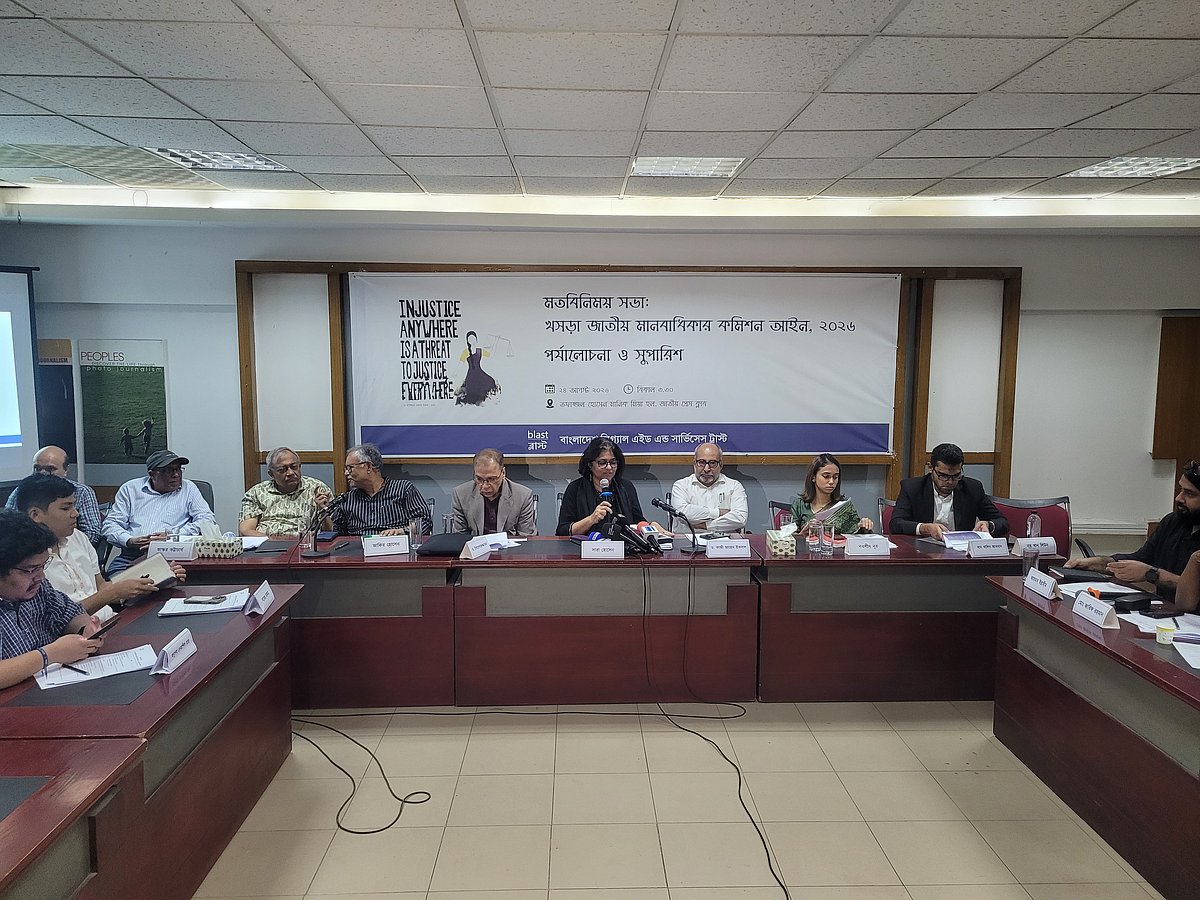
Photo Collected
Human rights activists, lawyers, and representatives from civil society have expressed deep concern over the draft National Human Rights Commission Act, 2026, warning that the proposed legislation could inadvertently protect perpetrators of human rights abuses rather than the victims.
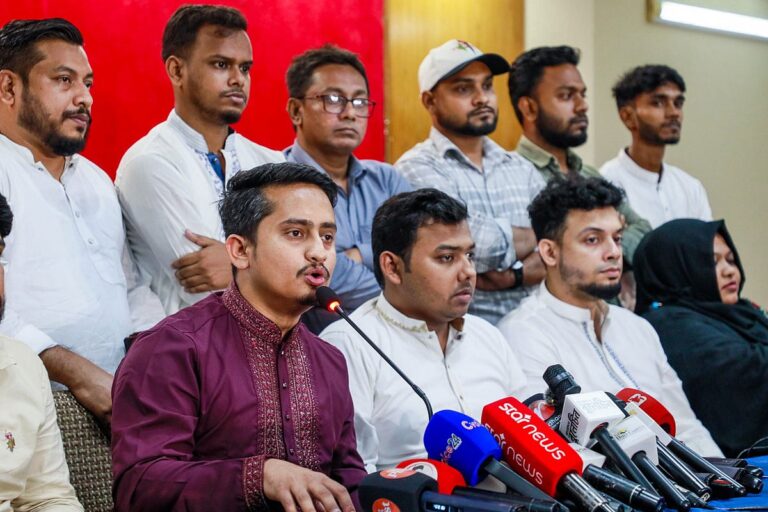
The concerns were raised on Monday during a discussion titled “Draft National Human Rights Commission Act, 2026: Review and Recommendations,” held at the Tofazzal Hossain Manik Miah Hall of the National Press Club. The event was organized by the Bangladesh Legal Aid and Services Trust (BLAST).
Speakers at the forum argued that the current draft risks compromising investigations into human rights violations and enforced disappearances if these inquiries remain under the influence of the institutions or individuals implicated in the alleged abuses. They emphasized that the National Human Rights Commission must be granted the authority to conduct independent investigations before law enforcement agencies intervene to prevent the destruction of evidence and the obstruction of justice.
Iftekharuzzaman, Executive Director of Transparency International Bangladesh (TIB), stressed that the bill should undergo rigorous public scrutiny before being passed in parliament. He urged lawmakers to refer the draft to a parliamentary committee for an exhaustive review, noting that the proposed law vests investigative powers in the very institutions that are frequently the subject of human rights complaints. According to Iftekharuzzaman, implementing the law in its current form would create a structural safeguard for rights violators rather than a mechanism for accountability.
Supreme Court lawyer and BLAST Honorary Executive Director Sara Hossain argued that the Commission’s mandate must be expanded beyond specific incidents like torture, disappearances, and extrajudicial killings. She advocated for a broader scope that includes protecting the right to life, personal liberty, freedom from torture, freedom of expression, and the elimination of discrimination. Hossain further criticized the bill for its limited jurisdiction when the alleged offender is an official state entity, labeling this disparity a fundamental and unacceptable flaw. She cautioned against a rapid passage of the bill via voice vote, calling instead for a comprehensive debate that integrates feedback from activists and victims.
Former National Human Rights Commission member Nur Khan echoed these sentiments, asserting that the commission requires absolute autonomy to investigate custodial deaths, extrajudicial killings, and disappearances. He cited the recent case of Miraz Sheikh’s disappearance in Mongla, Khulna, where allegations have been leveled against the Coast Guard. Khan noted that the local police have failed to inspect the site, seemingly deterred by the influence of the accused agency. He emphasized that for the commission to be effective against law enforcement, it must be staffed by courageous and impartial professionals, and the selection process for its members must be strictly independent.
The discussion also featured contributions from journalist Sohrab Hassan, inclusion advisor Bhaskar Bhattacharya of Young Power in Social Action, researcher and author Anupam Debashish Roy, Bangladesh Indigenous Youth Forum International Affairs Secretary Satej Chakma, Supreme Court lawyers Kazi Zahed Iqbal and Khan Khalid Adnan, and researcher and human rights activist Naushin Noor.
0%
0%
0%
0%
More News from Local