

Study finds one in five coastal Bangladeshis at risk of heart disease amid rising drinking water salinity
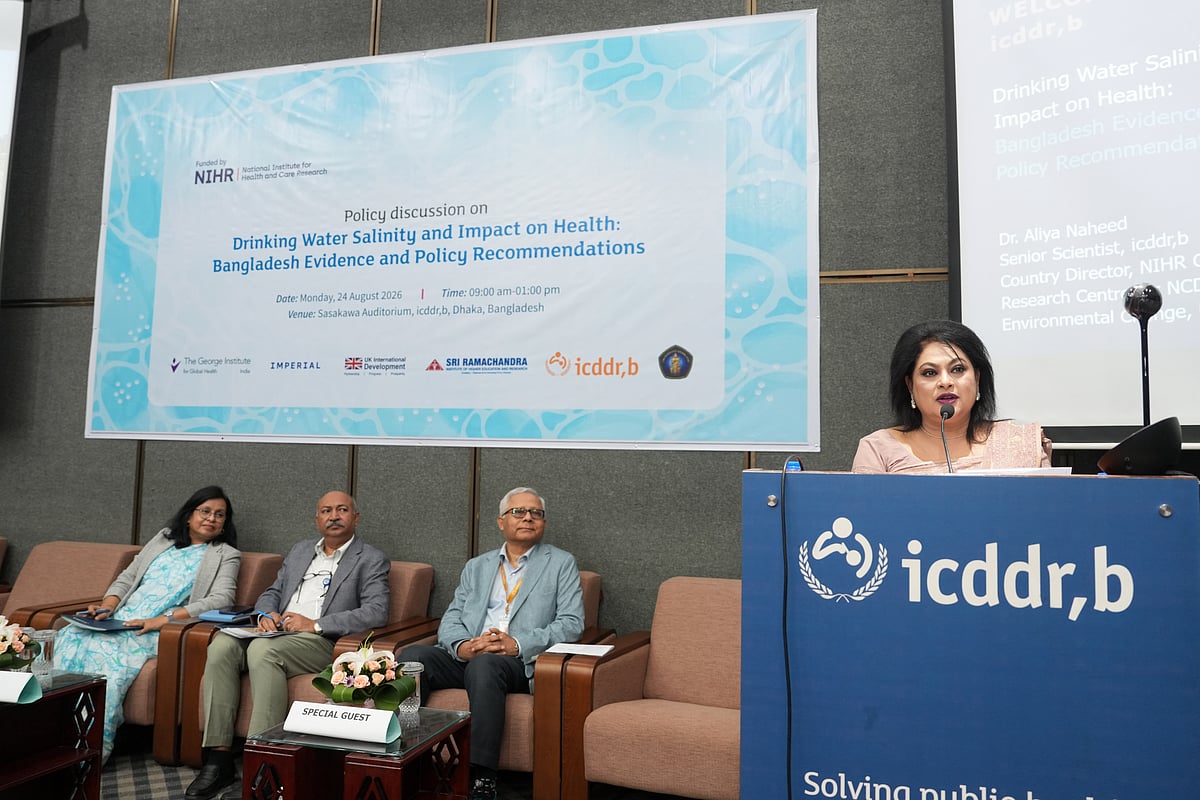
Photo Collected
A new study has revealed that one in five adults aged 40 and older in coastal Bangladesh faces a moderate to high risk of cardiovascular disease—specifically heart disease and stroke—within the next decade. The findings, presented during a seminar in Dhaka on Monday, highlight a concerning correlation between high salt levels in local drinking water and the health of coastal populations.
The research was conducted by the International Centre for Diarrhoeal Disease Research, Bangladesh (icddr,b) and Imperial College London. It focused on 172 villages across 71 community clinics in the Koyra Upazila of Khulna and the Ashashuni Upazila of Satkhira. Surveying over 27,000 water sources, researchers found that nearly one-quarter are utilized for drinking purposes. Among these, 55.3 percent of drinking water sources in Koyra and 23.3 percent in Ashashuni were found to be saline.
In the health component of the study, researchers assessed 15,471 adults aged 40 or older. The data indicated that 21.6 percent of participants are at moderate to high risk of cardiovascular events over the next ten years. Specifically, the risk rate stood at 19.7 percent in Koyra and 23.6 percent in Ashashuni. While researchers noted that a direct causal link between saline intake and heart disease requires further investigation, they emphasized that the simultaneous presence of high salinity and elevated cardiovascular risk in the same population demands urgent attention.
Aliya Nahid, a senior scientist at icddr,b, noted that the study began in 2023 and is scheduled to conclude in September of next year. Addressing the seminar at the icddr,b Sasakawa Auditorium, Professor Paolo Vineis of Imperial College London stated that there is currently no established health-based limit for salinity in drinking water. He urged for more comprehensive research into the health impacts of sodium and other minerals to help formulate appropriate guidelines.
Experts at the event highlighted that climate change continues to exacerbate coastal challenges, including frequent storm surges that contaminate groundwater and ponds. Professor Adrian Butler of Imperial College London stressed the need for rapid water restoration following disasters, alongside the maintenance and heightening of coastal embankments.
To address these findings, researchers are developing an integrated program to improve access to low-salinity drinking water. The initiative includes plans for rainwater harvesting, pond sand filters, and the digital registration and monitoring of tube wells. Furthermore, the program aims to incorporate screening and management for hypertension, diabetes, and chronic kidney disease into primary healthcare services in these coastal regions.
Fahmida Khanam, Acting Secretary of the Ministry of Environment, Forest and Climate Change, remarked that the data serves as a vital tool for understanding Bangladesh’s climate vulnerabilities. She called for a coordinated effort across the environment, health, water, and local government sectors to implement effective climate adaptation and public health solutions. Other speakers, including representatives from the Department of Public Health Engineering and various academic institutions, echoed the call for inter-ministerial synergy, noting that fragmented approaches to health and climate issues have historically hindered progress in coastal regions.
0%
0%
0%
0%