
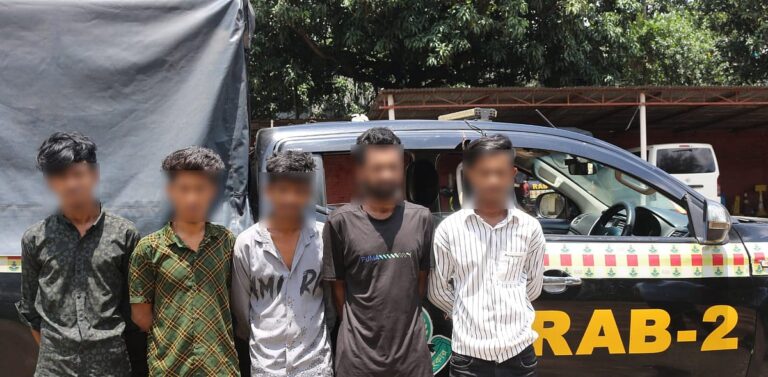
Reign of Terror Grips Sarofbhata as Armed Gangs Force Mass Displacement and Extortion
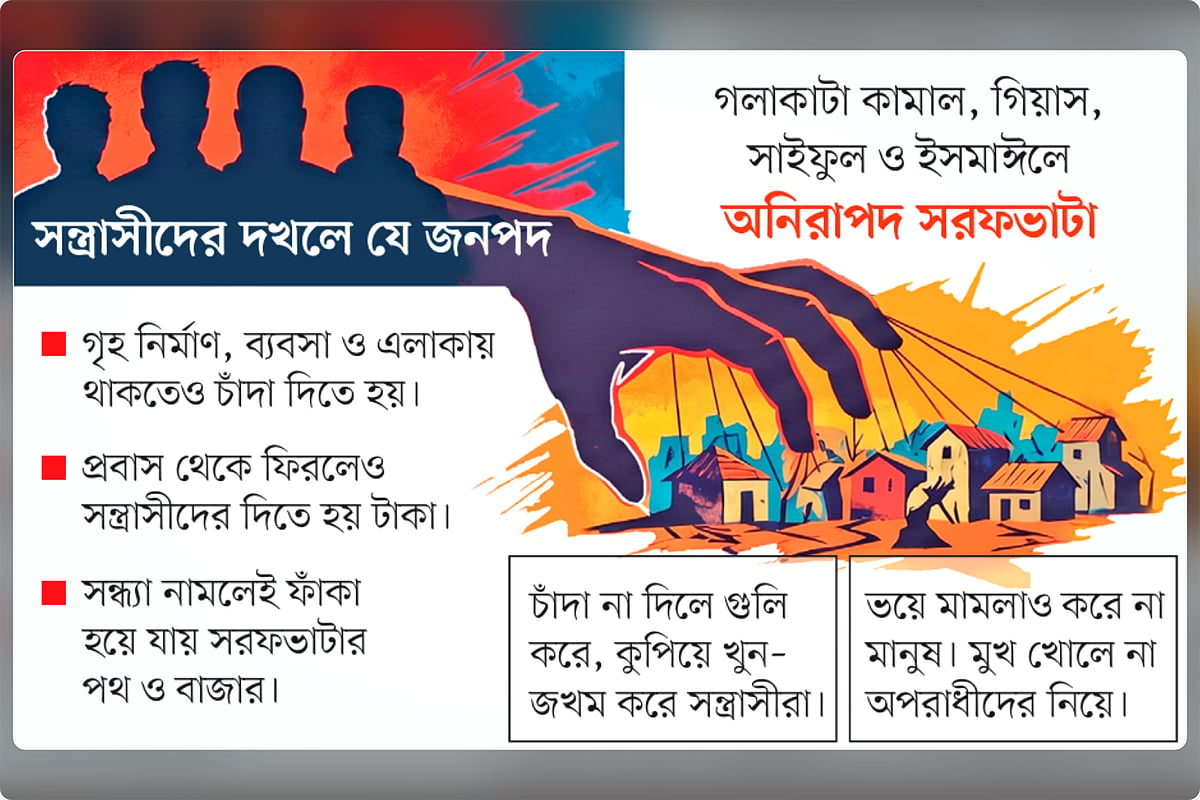
Photo Collected
Terror, extortion, and targeted violence have gripped Sarofbhata Union in Rangunia, Chittagong, forcing an estimated 50,000 residents to live in fear. Local reports and investigative findings indicate that dozens of families have abandoned their ancestral homes to escape a relentless cycle of abductions, murders, and organized racketeering overseen by armed criminal groups.
The situation reached a critical point following the events of March 25, when 70-year-old local businessman Nurul Islam Talukdar was brutally attacked in broad daylight at Mirerkhil Bazar. Witnesses reported that assailants hacked him repeatedly while bystanders, paralyzed by fear, failed to intervene. Islam later died in the hospital. His family, fearing further retribution, chose not to file a police report. “We cannot even visit my parents’ graves because we fear what might happen if we challenge the perpetrators,” said the victim’s son, Mohammad Jamal Uddin Talukdar.
Investigations reveal a sophisticated system of extortion targeting local residents, business owners, and families of expatriates. Criminal factions demand protection money for everything from constructing homes to basic commercial operations. Those who refuse or protest face immediate retaliation, including arson, kidnapping, and physical assault. As a result, many areas, such as the Chiringa market, have been abandoned, with shops remaining closed for years due to the constant threat of violence.
Local leadership, including Professor Kutub Uddin Bahar, President of the Rangunia Upazila BNP, confirmed that residents of Mirerkhil and surrounding villages have fled in droves. Those unable to afford relocation are often coerced into paying monthly “taxes” to criminal syndicates to remain in their homes.
Security forces have struggled to contain the instability. Chittagong District Superintendent of Police Mohammad Masud Alam acknowledged that while the situation is “generally normal,” armed groups continue to exploit the region’s difficult geography—specifically the dense forests and proximity to the Karnafuli River—to launch attacks and retreat into hilly terrain. He noted that the local police station faces significant logistical challenges due to limited manpower and the vast, rugged landscape.
The violence is allegedly fueled by a struggle for control over local resources, including river sand, hilly soil, and land grabs. Authorities identify two long-standing armed groups led by individuals known as “Golakata Kamal” and a faction associated with Gias and Saifullah. Since August 2024, reports suggest that a new group aligned with Ismail Hossain Talukdar, a local political figure, has further complicated the security landscape by seizing properties previously held by the now-banned Awami League cadres.
The cumulative toll of this violence is extensive, with local representatives estimating that over 100 families have fled the region entirely, while some sources claim the displacement figure in western Sarofbhata alone exceeds 500 families. Many victims have ceased seeking justice, citing a total loss of faith in the judicial process.
For survivors like Mohammad Sekandar Ali, who was abducted and brutally maimed by armed men in 2022 for refusing to pay extortion money, the fear persists long after the initial assault. “I filed a case, yet I cannot return to my own home,” Sekandar said, noting that his house has remained locked for four years. The prevailing sentiment among the residents of Sarofbhata is one of profound helplessness; as one local woman put it, the fear of being targeted for speaking out is far greater than the hope for legal protection.
0%
0%
0%
0%