


Ice Cream Vendor Keeps Childrens Education Dreams Alive Through Decades of Struggle
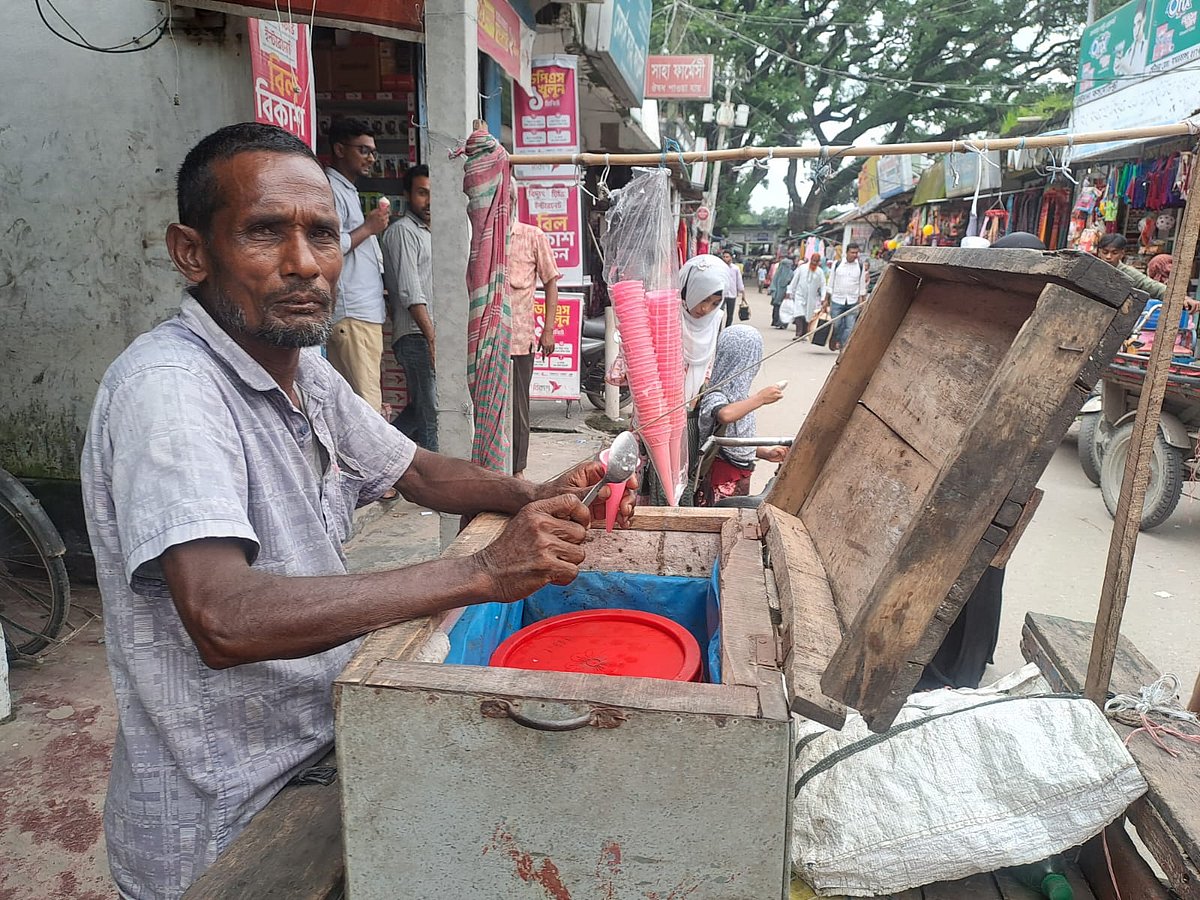
Photo Collected
At 58, Nure Alam’s daily routine is a testament to unwavering paternal resolve. For three decades, the resident of Satgiri Hirobazar village in Gaibandha’s Sundarganj upazila has navigated a grueling path to sustain his family, selling ice cream during the warmer months and trading scrap materials in the winter. His modest income has not only maintained his household but has served as the sole lifeline for his three children’s education, a mission he adopted after his own schooling was cut short by poverty.
Alam’s journey began long before his current trade, rooted in a promise he made to himself decades ago. Having reached the tenth grade, he was forced to abandon his studies when he could not afford the fees for his secondary school examinations. Determined that his own children would not face the same fate, he transitioned from day laboring to mobile vending to ensure a steady, albeit meager, stream of income.
বিজ্ঞাপন
The family’s financial reality remains precarious. His eldest son, Sabuj Mia, holds a master’s degree in political science from Carmichael College in Rangpur but has yet to secure formal employment. His daughter, Luna Akter, is currently in her third year of a Bengali honors program at Begum Rokeya Government College, while his youngest son, Shihab, is a tenth-grade student. To support Luna’s education alone, Alam must set aside 3,000 taka monthly, often forcing the family to cut back on essentials or rely on loans during exam periods. To help bridge the gap, Luna contributes by tutoring students.
Economic shifts have compounded the family’s struggle. The proliferation of household refrigerators and the ubiquity of stationary shops have eroded Alam’s ice cream sales, which have dropped from a daily profit of 600 taka to roughly 200 to 300 taka. His scrap metal business has similarly faced a downturn, leaving the family to navigate the rising costs of basic commodities on an increasingly strained budget.
বিজ্ঞাপন
Despite these hardships, Alam remains steadfast in his commitment. Living on a 13-decimal plot of land with his wife, Shahinur Begum, he views his struggle as a necessary sacrifice until his children can stand on their own. His wife and children remain his primary motivation, with Sabuj Mia expressing deep admiration for his father, acknowledging him not only as the backbone of their family but as a man who embodies the dignity of parental sacrifice. For Alam, the work will continue until his children achieve the stability he was once denied.
0%
0%
0%
0%