


University Students Call for 5 Percent GDP Allocation to Education in Upcoming National Budget
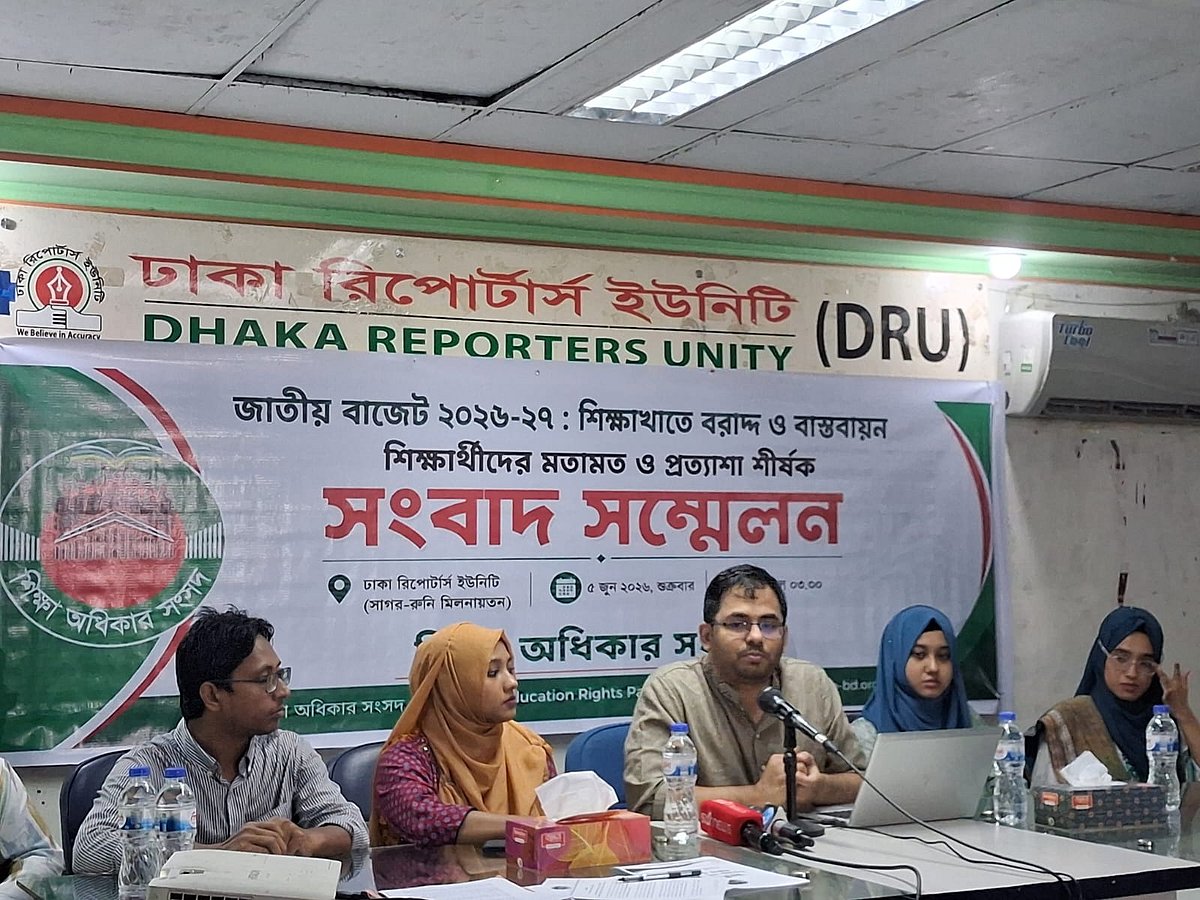
Photo Collected
University students across Bangladesh are calling for a significant increase in the national education budget, urging the government to allocate at least 5 percent of the country’s gross domestic product (GDP) to the sector in the upcoming fiscal year. A survey conducted by the Shiksha Odhikar Sangsad, a prominent education advocacy group, revealed that 62 percent of participating students believe current funding levels are insufficient to meet national needs or achieve sustainable development goals.
The findings, presented by the organization at a press conference at the Dhaka Reporters Unity, were based on input from 350 undergraduate and postgraduate students from various public and private universities. Representing the organization, Shahnewaz Khan, an assistant professor at Jagannath University, emphasized that the student body views the strengthening of primary education as the most critical priority. Students argued that without a robust foundational level, qualitative improvements in higher tiers of the education system remain unattainable.
Beyond foundational education, the survey highlighted an urgent need for the modernization of secondary and higher secondary curriculums. To achieve these systemic improvements, students recommended merit-based teacher recruitment practices, paired with the establishment of competitive salary structures designed to attract and retain top-tier talent. This approach is seen as essential for reducing educational disparities, particularly in rural and marginalized areas where the deployment of skilled educators is currently lacking.
The students also advocated for increased investment in strategic sectors to align with the demands of the Fourth Industrial Revolution. Key areas for priority funding include technical and vocational training, research and development, artificial intelligence, and the STEM disciplines of science, technology, engineering, and mathematics.
Despite the call for higher financial commitment, respondents expressed deep concern regarding the efficiency of current spending. The survey identified systemic obstacles to effective budget implementation, citing corruption, administrative bottlenecks, political interference, and inadequate oversight as primary barriers. Ultimately, the students stressed that increasing budget allocations must be coupled with strict transparency, accountability, and improved governance to ensure that public funds are utilized effectively for the betterment of the national education system.
0%
0%
0%
0%