

Farmers race to harvest and dry paddy under renewed sunshine after four days of rain.
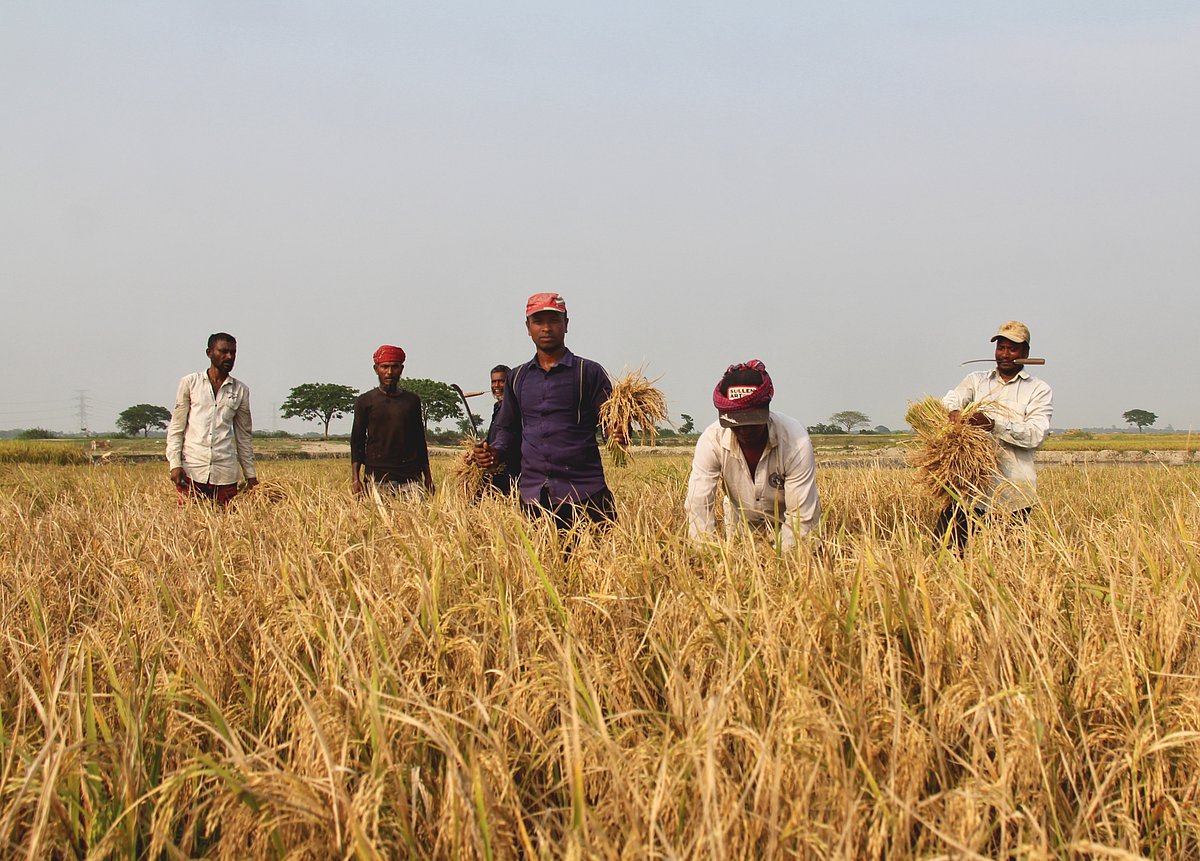
Photo Collected
KISHOREGANJ, Bangladesh – A welcome sun broke through the clouds Thursday morning in Kishoreganj after four days of continuous rain, bringing a wave of relief to farmers anxious about their harvested Boro paddy. The respite has allowed agricultural workers to return to the fields, diligently cutting and processing the grain.
From morning until noon across the districts of Nikli, Karimganj, and Bajitpur, laborers were seen harvesting ripe paddy. Cut stalks were transported via trucks and smaller vehicles to threshing grounds, where farmers meticulously spread the grain under the sun to dry. Even the wet straw was being laid out on roadsides and open fields to dry. A palpable sense of relief and renewed activity has settled over the region.
বিজ্ঞাপন
Majlishpur Khola, a significant drying hub located beside the Nikli-Karimganj road, had fallen silent during the four days of inclement weather, a stark contrast to its usual bustling season. By Thursday morning, it had regained its vibrancy, with men and women working tirelessly by late morning, seemingly without a moment to spare.
Rois Uddin, a farmer, recounted his worries. “I was more concerned about the five to six hundred maunds of paddy piled in the threshing yard than the submerged crops,” he said. “I had stacked it to dry last Saturday, and it would have been dry in a day. But heavy rain and storms for four consecutive days kept us away. Now that the sun is out, we can finally spread the stacked paddy. Although there’s some damage, we are grateful to God for saving us from a major loss.”
বিজ্ঞাপন
In Karimganj’s Khoyrat Haor, a team of nine laborers worked together to cut paddy. Their leader, Arzu Mia, explained their predicament. “We came to Kishoreganj from Netrokona two weeks ago to cut paddy. Things were going well initially, but for four days, we couldn’t venture into the fields for fear of lightning strikes. The four-day standstill has caused us significant losses. We’ve started cutting again today and pray for continued sunshine in the coming days.”
Sajjad Hossain, executive engineer at the Kishoreganj Water Development Board (WDB), noted that the return of sunlight and cessation of rain have led to a considerably slower rise in water levels compared to the previous day. While the Dhonu-Boula rivers in Itna saw a 49-centimeter increase yesterday, the rise has slowed to 14 centimeters today. In contrast, the Maghra river at Chamra Ghat in Karimganj, which had risen by 63 centimeters, has now seen a decrease of two centimeters. The Kalani river in Astagram experienced a modest one-centimeter rise today, down from 69 centimeters yesterday. Similarly, the Meghna river in Bhairab, which had risen by 55 centimeters on Wednesday, has seen a three-centimeter drop today. “Given the sunshine,” Hossain stated, “our directive from the WDB is to ensure farmers harvest all remaining paddy as quickly as possible.”
Mohammad Sadiqur Rahman, deputy director of the District Agriculture Extension Department, reported that adverse weather and heavy rainfall had submerged 4,754 hectares of paddy fields in Itna, Mithamain, Astagram, and other sub-districts as of 5 p.m. Wednesday. A final assessment of the total loss is expected by 5 p.m. Thursday. However, he expressed cautious optimism, suggesting that if further rainfall is avoided, farmers might not face catastrophic losses. He added that for submerged fields, a receding water level could potentially allow farmers to salvage some of the crop.
0%
0%
0%
0%