

Khulna Farmers Embrace High-Yield BRRI-108
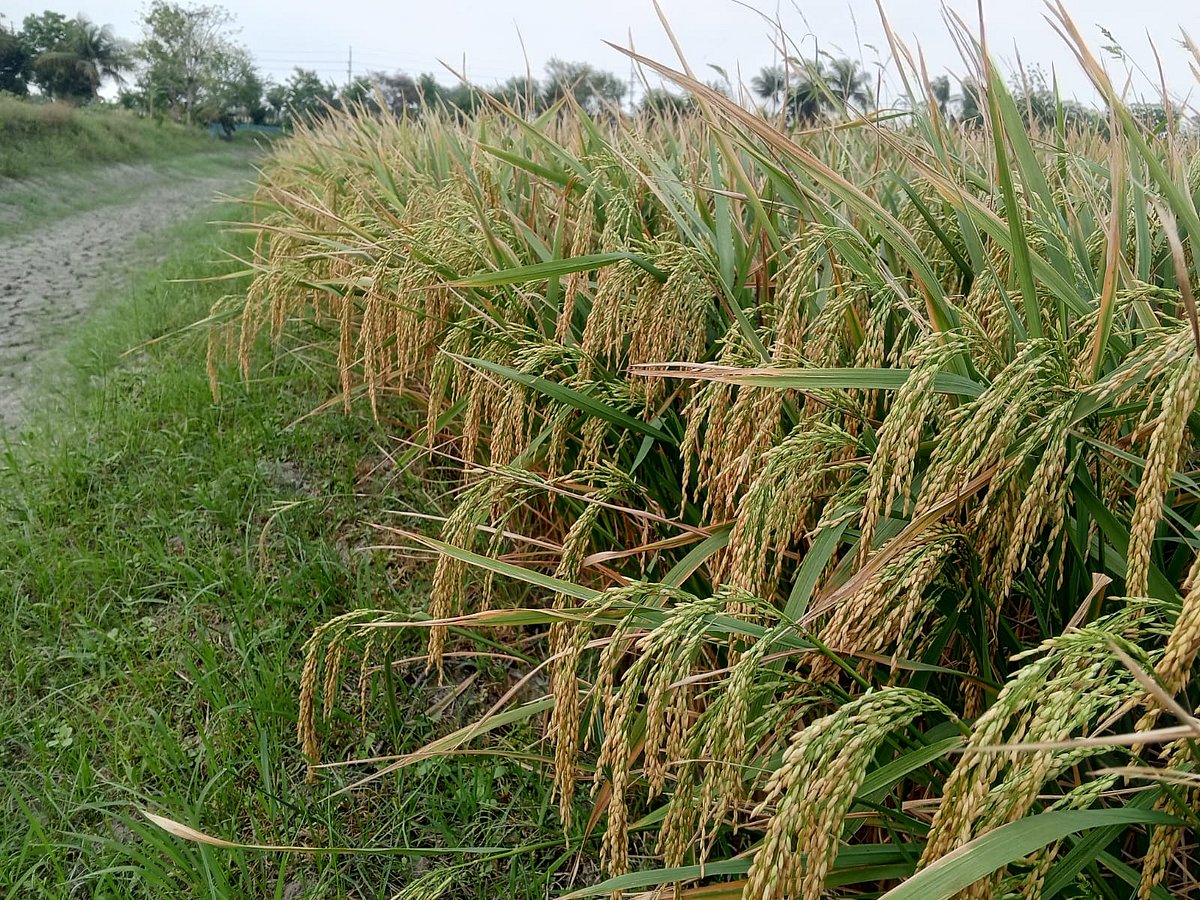
Photo Collected
KHULNA, Bangladesh – Farmers in Bangladesh’s southwestern Khulna region are increasingly embracing BRRI-108, a new high-yielding rice variety developed by the Bangladesh Rice Research Institute (BRRI), lauded for its superior grain quality, robust growth, and significant market potential during the current Boro cultivation season.
Approved by the National Seed Board in 2024, BRRI-108 boasts an average yield of approximately 8.7 metric tons per hectare, with the potential for even higher yields under optimal conditions, according to sources from the Agriculture Department. The variety’s appeal extends beyond its yield to its distinctive grain characteristics. Its rice is notably slenderer than popular varieties like Katari, Nazir Shail, and Jira Shail, resembling polao rice. With a protein content of about 8.8 percent, it cooks into a fluffy, flavorful meal that maintains its quality for extended periods after cooking, a feature expected to boost its acceptance among consumers.
বিজ্ঞাপন
Beyond the kitchen, BRRI-108 exhibits strong agronomic traits beneficial to farmers. Its sturdy stalks resist lodging even in strong winds, and the plant shows relatively high resistance to common diseases. Each panicle yields between 250 and 270 grains. The plant’s larger leaf size also results in a greater quantity of straw, providing an additional benefit for cultivators.
The expansion of BRRI-108 cultivation this season follows successful limited-scale field trials last year, which yielded promising results and favorable market prices. BRRI, in collaboration with the Department of Agricultural Extension and the Bangladesh Agricultural Development Corporation (BADC), is actively promoting the rapid expansion of this variety through demonstration plots and seed multiplication programs across various sub-districts nationwide.
বিজ্ঞাপন
S.M. Atiar Rahman, an enthusiast farmer and former public relations director at Khulna University, was among the first to experiment with BRRI-108. He cultivated the new variety in Kartikdanga Bill near Mechagona village in Dumuria Upazila last year, after acquiring seeds directly from BRRI. Rahman, who has been cultivating premium BRRI-developed varieties for 16 years since BRRI-50 (Banglamati) in 2010, noted that while BRRI-28 remains popular, newer varieties like BRRI-50, 58, 63, 90, 100, 102, 104, and BINA Dhan-25 are steadily gaining ground.
Rahman described the taste of BRRI-108 rice as reminiscent of traditional Dadkhani rice, a quality that led him to unofficially dub it “new Dadkhani rice” even without an official Bengali or commercial name. He noted that uncooked rice from this variety remains fresh for 12 to 14 hours after cooking, while boiled rice stays good for 8 to 10 hours. Rahman added that his fields attracted many local farmers, who are now expressing interest in cultivating BRRI-108 in upcoming seasons.
Echoing this sentiment, Abu Said, a farmer from Mechagona village in Dumuria, confirmed the variety’s success. “BRRI-108 yielded well last year, and we’ve had a bumper harvest this time too. We will definitely cultivate this variety again in the future,” he stated.
While the enthusiasm for BRRI-108 is high, widespread commercial availability and accessibility for general consumers may take several more years, according to those involved in its development and promotion. Currently, with limited market supply, uncooked BRRI-108 rice is priced between 90 and 100 Bangladeshi Taka per kilogram, and boiled rice between 80 and 90 Taka per kilogram.
Bishwajit Karmakar, Chief Scientific Officer at BRRI, underscored the variety’s dual appeal. “BRRI Dhan-108, being high-yielding and of superior quality, will find acceptance among both farmers and consumers,” he said. Karmakar added that the potential for good market prices promises increased profitability for farmers. During the current Boro season, hundreds of demonstration plots are being cultivated, alongside targeted seed production and expansion efforts for BRRI-108 in designated areas.
Source: Prothom Alo Bangla
0%
0%
0%
0%