
Women-led water cooperatives transform access to safe drinking water in coastal Bangladesh
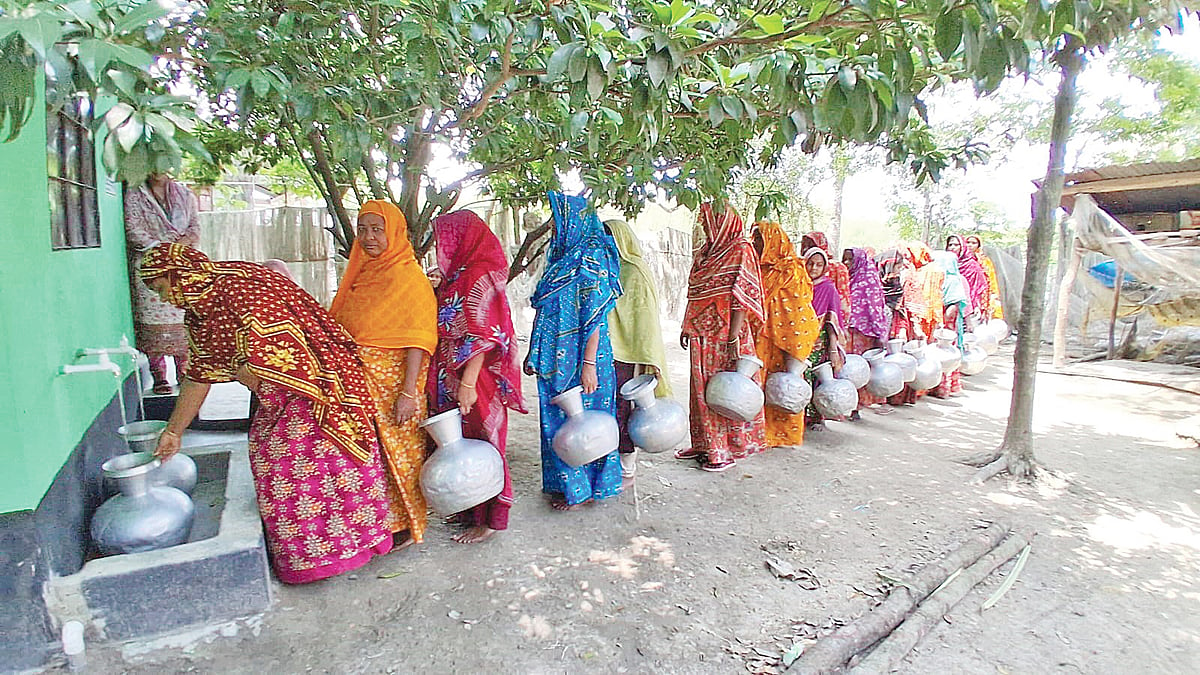
Photo Collected
A grassroots initiative in the Pathorghata sub-district of Barguna is transforming the landscape of water security for thousands of coastal residents. By utilizing community-led surface water treatment plants, the project has successfully addressed chronic water shortages, reducing the prevalence of waterborne diseases and easing the physical burden that once dominated the lives of local women.
Launched in April 2024 with support from Oxfam and MTB Foundation, the project is implemented by the non-governmental organization Nazrul Smriti Sansad (NSS). The infrastructure consists of two large and six smaller water treatment units that filter river and canal water, providing safe drinking water to approximately 8,000 people across 2,500 families. Operating twice daily, the system allows residents to purchase water at 30 paisa per liter—a nominal cost designed to ensure the system’s long-term sustainability while remaining affordable for the local economy.
The financial model relies on community management, with proceeds from water sales deposited into dedicated bank accounts. After covering electricity, maintenance, and operational costs, any remaining funds are distributed among the beneficiary families. According to project data, a large treatment plant costs approximately 850,000 BDT to install and can process 1,500 liters per hour, while smaller units cost 120,000 BDT and provide 50 liters per hour.
Central to the project’s success is the leadership of local women, who oversee production, distribution, accounting, and daily operations. Residents in areas such as Gabbaria, Charduani, and Tafalbaria, who previously relied on distant ponds or unsafe water sources, now report a significant improvement in public health. Families note that incidents of diarrhea, dysentery, and skin diseases have dropped sharply since the plants began operation, sparing children from frequent medical visits and elderly residents from the arduous task of trekking long distances to collect water.
NSS Executive Director Shahabuddin Panna highlighted that the project serves as a vital model for coastal water management, particularly as saltwater intrusion—exacerbated by climate change—continues to render groundwater sources undrinkable. By shifting reliance away from stressed aquifers and empowering local women with technical and financial management training, the initiative aims to build a self-sustaining system. As the project reaches the end of its current phase in December, plans are in place to transition full ownership to the women-led management committees.
Water resource experts suggest that the Pathorghata experience provides a critical blueprint for the future of climate-vulnerable coastal regions. By combining simple, effective filtration technology with deep community involvement, the project offers a practical solution to one of the most pressing environmental challenges facing southern Bangladesh.
0%
0%
0%
0%