
Weaver birds turn Maulvibazar silk cotton tree into architectural sanctuary
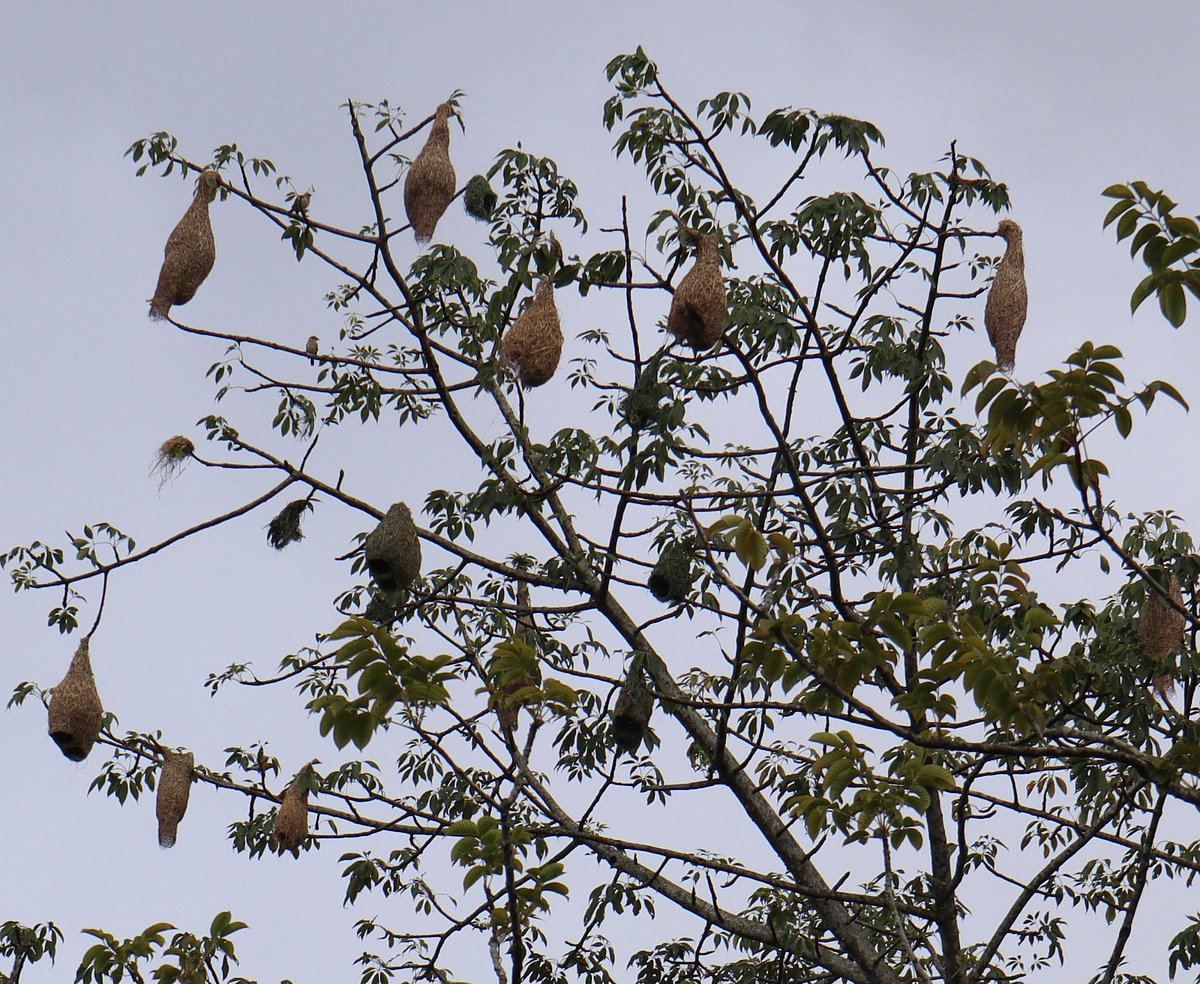
Photo Collected
In the rural landscape of Ajmeru, located within the Mostafapur Union of Moulvibazar, a solitary silk cotton tree has emerged as a bustling sanctuary for a colony of baya weavers. Standing near the local Bird Park and Eco Village, the tree serves as a focal point of intense avian activity, where the birds continue their intricate nesting rituals despite the unpredictable weather patterns of the monsoon season.
The tree, adorned with dozens of pendulous nests in various stages of completion, offers a vivid display of natural engineering. Some nests, weathered and gray, contrast with newer, vibrant green structures still being woven by the birds. Observers can witness a constant flurry of motion as the weavers diligently transport thin fibers in their beaks, meticulously weaving them into complex, durable homes. The scene is one of perpetual motion, with the relentless chirping and movement of the birds breathing life into the branches.
Often referred to as “architect birds” for their sophisticated construction skills, baya weavers create nests that are marvels of functional design. The structures feature specialized chambers for egg-laying, secure entryways, and ventilation systems. To ensure stability against strong winds, the birds frequently reinforce the lower portions of their nests with mud or cow dung, a testament to their survival instincts and architectural precision.
According to Jahed Ahmed Chowdhury, managing director of the nearby Bird Park and Eco Village, while sightings of baya weaver colonies have dwindled across many parts of rural Bangladesh, this specific area has become a thriving refuge. The presence of these birds, coupled with the lush greenery surrounding the site, has transformed the local environment into a significant point of interest for those who appreciate natural craftsmanship.
The breeding cycle of the baya weaver typically unfolds during the summer months, though nesting activity remains visible throughout the season. The male bird initiates the construction process by gathering fibers from palm, date, or paddy leaves. The female evaluates the structural integrity of the half-built nest, choosing a mate only if the construction meets her standards. Once a partnership is established, the pair completes the dwelling, a task that generally spans seven to ten days.
After the female lays her clutch of typically three eggs, the male often begins construction on a new nest, sometimes managing multiple households in a single season. The incubation period lasts between ten and thirteen days, after which the mother bird feeds the hatchlings with insects before teaching them to forage for grain. Within less than three weeks, the young are typically ready for their first flights. As evening falls over the Moulvibazar countryside, the swaying nests provide a glimpse into the resilient and highly disciplined lives of these birds, turning the silk cotton tree into a protected haven for the next generation.
0%
0%
0%
0%