Climate refugees in Coxs Bazar secure permanent housing in state-funded apartment complex
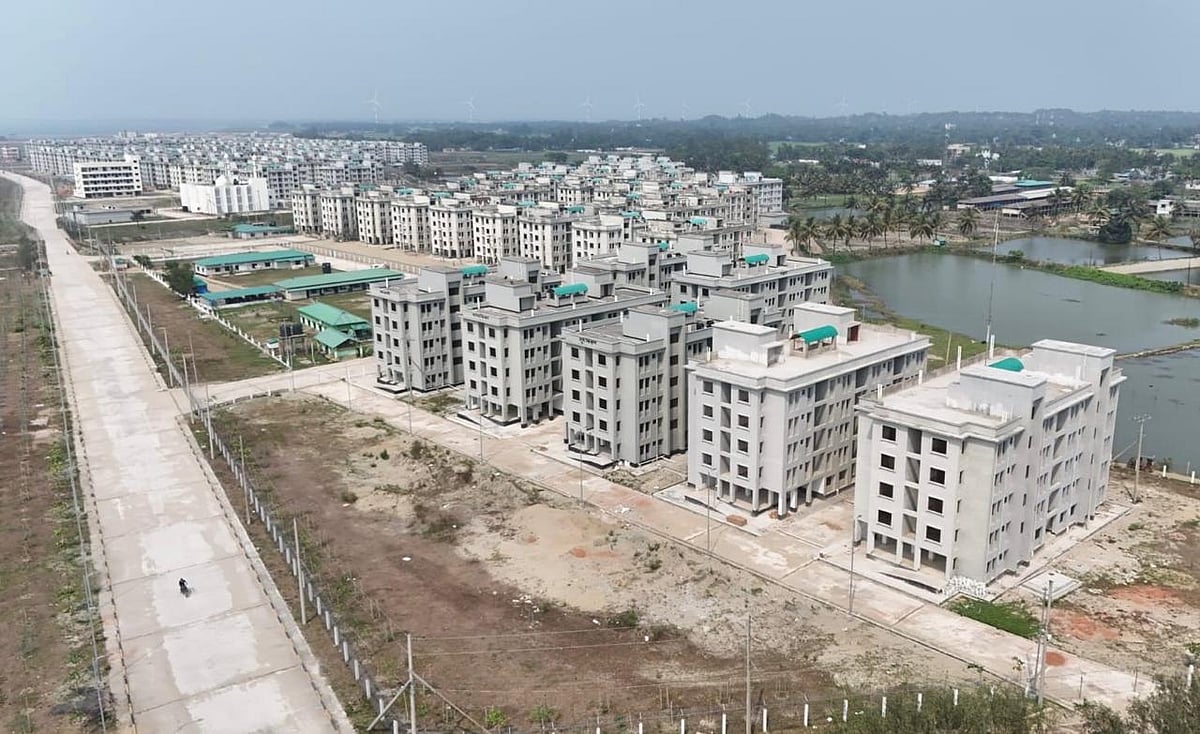
Photo Collected
More than three decades after losing her home to a catastrophic cyclone, Parveen Akter, 50, is finally trading her makeshift shack on government land for a modern apartment. Akter, a woman with a physical disability who has endured years of hardship in a plastic-tarp hut in Cox’s Bazar, was among 730 families selected during a transparent lottery held on Sunday for the Khurushkul climate-refugee housing project.
The lottery, overseen by the local district administration, offered a moment of transformation for thousands of displaced residents, many of whom are low-wage laborers. For recipients like Rezaul Karim, a fisherman originally from Kutubdia, the allocation of a unit in a five-story building represents a transition from persistent uncertainty to stability. The project aims to restore dignity to those who have long lived on the margins, vulnerable to environmental hazards and the elements.
This ambitious initiative, known as the Khurushkul special housing project, is being executed by the 34 Engineer Construction Brigade of the Bangladesh Army under the Prime Minister’s Office. With a budget of 1.457 billion taka, the project is designed to rehabilitate over 4,000 families displaced by the expansion of the Cox’s Bazar airport runway and the ongoing impacts of climate change.
The complex is comprehensive, featuring 128 five-story buildings equipped with essential infrastructure, including street lighting, mosques, temples, community centers, and cyclone shelters. To sustain the local economy, the site also includes a market complex and a dedicated facility for fish drying, allowing residents to leverage the local fishing industry. Infrastructure such as bridges and jetties has been integrated to ensure connectivity, while modern amenities like solar power and water treatment plants aim to foster a sustainable living environment.
Project Director Lieutenant Colonel Mirajul Islam emphasized that the initiative goes beyond mere housing; it is a humanitarian effort to provide climate refugees with a permanent, planned, and environmentally friendly future. According to Islam, the project is on track to be completed by the end of this year, ensuring that quality standards are met while prioritizing the socioeconomic well-being of the inhabitants.
District Administrator Md. Abdul Mannan noted that the lottery process was conducted publicly to ensure accountability and to verify that the most affected individuals received their rightful support. Beyond the initial allocation, local authorities are focusing on the long-term safety and stability of the area. Police Superintendent A.N.M. Sajedur Rahman stated that law enforcement will maintain a persistent presence, including increased patrols and intelligence monitoring, to prevent crime and ensure the social well-being of the residents.
As the second phase of the project concludes, a total of 1,330 families have now been rehabilitated across the site, with the remaining families scheduled to be moved in subsequent phases. For residents like Akter, the shift represents a profound change in trajectory—from a rain-soaked shack to the security of a concrete home.
0%
0%
0%
0%