

Surge in Yaba addiction grips Bangladesh as mental health crisis deepens
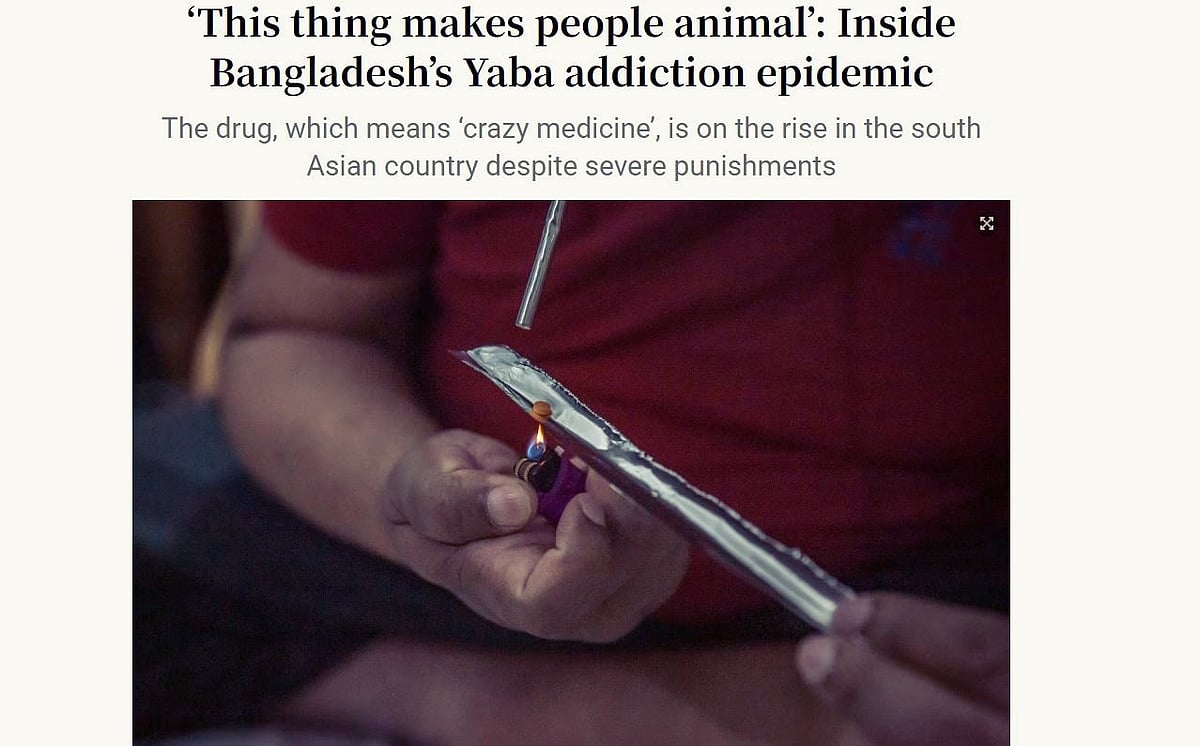
Photo Collected
In the dimly lit bedroom of his Dhaka home, a man in his forties who identifies only by the alias “Metalfrick” reflects on a life once filled with simple joys, like caring for his pet birds, that have been completely hollowed out by addiction. He is one of millions in Bangladesh caught in the grip of Yaba, a potent, cheap, and highly addictive blend of methamphetamine and caffeine that is devastating lives across the nation.
Yaba, a Thai term translating roughly to “crazy medicine,” induces a state of heightened agitation and extreme exhaustion. Users typically inhale smoke from a pill heated over aluminum foil, with each dose providing a chemically induced energy spike lasting up to five hours, often followed by grueling days of wakefulness and subsequent crashes that can stretch into 12 hours of deep, unnatural sleep.
বিজ্ঞাপন
The scale of the crisis is immense. Official reports suggest that approximately 5% of Bangladesh’s 175 million people struggle with substance abuse. The government has attempted to stem the tide through extreme measures, including a 2018 crackdown that resulted in hundreds of extrajudicial killings and mass arrests. Despite these aggressive efforts, international human rights groups, including Amnesty International, have condemned the violence as a failure that terrorized marginalized communities while failing to curb the supply or demand of illicit substances.
Public health experts argue that the solution lies in infrastructure, not just enforcement. Dr. Arifuzzaman, a registrar at the National Institute of Mental Health in Dhaka, notes that the country faces a critical shortage of resources, with only about 350 psychiatrists available to treat a massive, underserved population. According to the latest national mental health survey, nearly 90% of those requiring care never receive it, often due to the persistent social stigma surrounding mental illness.
বিজ্ঞাপন
The illicit trade remains deeply entrenched, with much of the supply flowing from the “Golden Triangle”—the intersection of Myanmar, Thailand, and Laos. The United Nations Office on Drugs and Crime (UNODC) reports record-breaking seizures of methamphetamine across East and Southeast Asia, with Myanmar serving as the primary origin for the Yaba flooding Bangladeshi markets. As street-level availability increases, the drug has effectively supplanted traditional substances like heroin and opium, becoming a fixture of urban life where even casual transactions occur in plain sight.
For users like Metalfrick, the descent into addiction is often fueled by personal trauma, economic instability, and a pervasive sense of hopelessness exacerbated by national political volatility and climate anxiety. He describes Yaba as a source of “false confidence” that distorts reality, often leading users into a spiral of conspiracy theories and social isolation.
Beyond the immediate psychological toll, the physical effects are brutal, ranging from severe dental degradation to cardiovascular failure. Metalfrick observes that for many, the drug acts as a “slow poisoning,” a cycle of instability where the desperate often become low-level dealers just to fund their own consumption. As he stares into the uncertainty of his own future, he acknowledges that in a country struggling with poverty and systemic instability, addiction has become a silent epidemic, stripping away the lives of young people who find themselves unable to survive in an increasingly harsh environment.
0%
0%
0%
0%