
State Minister Bobby Hajjaj Defends Teacher Against Cyberbullying Over Viral Social Media Video
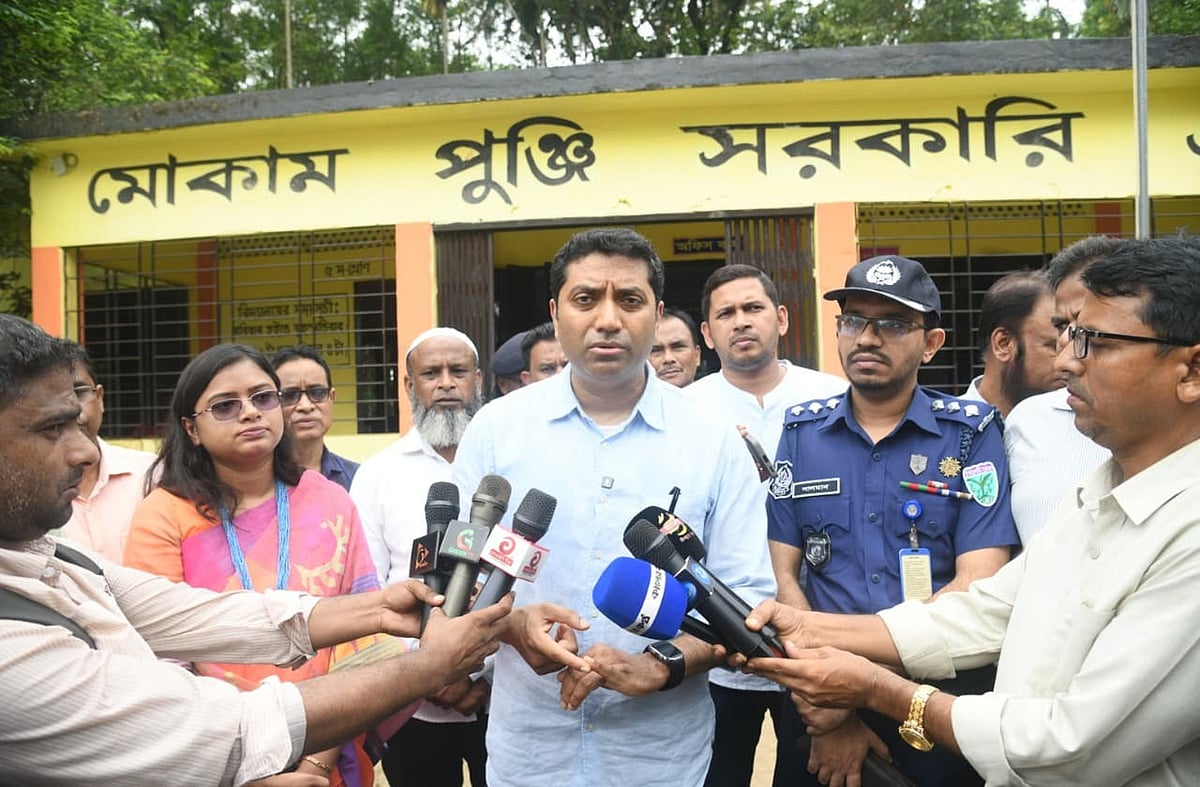
Photo Collected
State Minister for Primary and Mass Education Bobby Hajjaj has publicly dismissed the controversy surrounding a school teacher in Sylhet who became the target of intense cyberbullying after posting a video on social media. Speaking during a visit to primary schools in Sylhet’s Jaintapur and Gowainghat upazilas on Tuesday, Hajjaj asserted that a teacher listening to music or appearing in a video does not warrant public criticism or scrutiny.
The controversy began on July 23, when Beauty Rani Pal, a primary school teacher in Fenchuganj, posted a “reel” on her personal Facebook account featuring a popular song. The video was subsequently taken by an external Facebook page, altered with derogatory context, and circulated widely, triggering a wave of online harassment. In response, educators and citizens across the country launched a grassroots protest by uploading their own videos set to the same song, standing in solidarity with the teacher against the online abuse.
বিজ্ঞাপন
Addressing the incident, Hajjaj remarked that the discourse surrounding the video was driven by unnecessary scrutiny rather than genuine public concern. He reaffirmed his previous stance, stating that he does not consider singing or sharing such content an offense, nor is there any evidence of indecency in the teacher’s actions.
Beyond the ongoing controversy, the state minister highlighted the government’s commitment to overhauling the national education sector. Hajjaj emphasized that the current administration views education as the nation’s most critical investment and is working toward raising the education budget to 5 percent of the Gross Domestic Product (GDP) over the next four years. He noted that the ministry is prioritizing infrastructure development, technological integration, and the implementation of a modern curriculum designed to foster foundational skills in reading and mathematics.
বিজ্ঞাপন
To support these objectives, the ministry is conducting a series of workshops for education officials at the divisional, district, and upazila levels to enhance administrative efficiency. Hajjaj confirmed that these workshops, which focus on new evaluation methods and systemic oversight, are scheduled to conclude across all divisions by August 17.
When asked about education for ethnic minority groups in their mother tongue, the minister stated that the ministry remains open to reviewing formal proposals and will take appropriate action if specific information is provided. The minister’s visits to the regional schools were accompanied by several high-ranking officials from the Department of Primary Education and local administrative leaders.
0%
0%
0%
0%