


Rural Evenings Thrive with Tea and Television
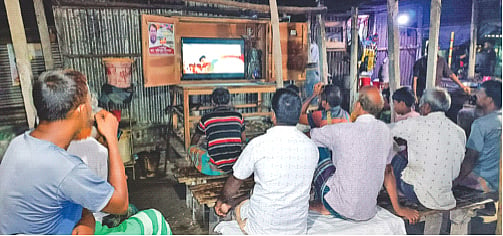
Photo Collected
As dusk settles across Jagannathpur village in Pabna’s Bera Upazila, agricultural laborer Abul Kalam routinely seeks refuge at Abdur Rouf’s tea stall in Hatouria Bazaar, one of hundreds of such establishments across rural Bangladesh transforming into vital hubs of community entertainment. These bustling shops, equipped with large-screen televisions, offer villagers like Kalam free access to films, dramas, and music, provided they occasionally purchase a cup of tea.
This trend is not isolated to Rouf’s shop; over a hundred similar tea stalls dot the rural landscape of Bera Upazila alone. They serve as dual-purpose venues, significantly boosting tea sales for proprietors while filling a growing void in local entertainment options for the rural populace.
Historically, village entertainment revolved around traditional events such as musical gatherings at zamindar estates, fairs, and jatra performances. Winter evenings often saw public spaces or large courtyards host puthipath (scripture recitations) or palagan (folk dramas), drawing crowds from surrounding villages. However, with the advent of modern technology and shifts in lifestyle, many of these traditional forms of amusement have faded. Their place is increasingly being taken by market tea stalls, each typically featuring a large LED television playing movies, dramas, popular songs, or comedy clips, and occasionally news channels. Patrons watch intently as shopkeepers periodically circulate with steaming cups of tea.
Abdur Rouf, the Hatouria Bazaar tea stall owner, notes a dramatic increase in business since installing a television. “Before, I sold 70-80 cups of tea a day,” he said. “Now, it’s over 300 cups. People come not just for tea, but to spend time.”
Abul Kalam Azad, a college teacher from the Bera municipal area, explains the phenomenon further. He points out the absence of cinema halls and a dearth of dramatic or cultural events in Bera and surrounding upazilas. Moreover, many poor and day-laborer families lack televisions at home. “These tea stalls offer at least a little enjoyment,” Azad stated. “This practice has boosted business for shopkeepers and provides joyful leisure for people.”
Investigations reveal hundreds of tea stalls scattered from Bera Upazila headquarters to its most remote villages. While many are small, standing-only establishments without TVs, more than a hundred larger tea shops in various markets proudly display LED televisions. These venues, equipped with rows of benches, allow multiple people to watch films, dramas, or news while enjoying tea. They have become recognized not just as gathering spots but as integral centers for rural entertainment.
Observations at more than ten such tea stalls across different villages in the upazila indicate that while some patrons visit during mornings, afternoons, or evenings, the real crowds gather after sunset, often making it difficult to find a seat.
At the Pechakola river port along the Jamuna River, two of the five or six tea stalls present feature televisions, both bustling after dusk. Ramjan Ali, an elderly local at Sohel Rana’s tea stall, reflected on the change: “In our time, there were palagan and jatra at night. Now those are gone. Everyone gathers at the tea stalls. This is now the village’s new fair.”
Sohel Rana, the shop owner, expressed his satisfaction beyond just commerce. “After sunset, people by the river don’t have much special entertainment. So, since I put in a TV, the crowd has grown a lot,” he said. “But it’s not just about business; it makes me happy to see people sitting together, chatting, and watching movies and dramas. With so many people coming and going, I also learn a lot of new news and information.”
While not entirely replacing the lost traditions of palagan, jatra, or village fairs, these television-equipped tea stalls have largely filled the void. This small evening gathering, accompanied by a steaming cup of tea, has become a new focal point for entertainment, camaraderie, and community for many rural residents.
0%
0%
0%
0%